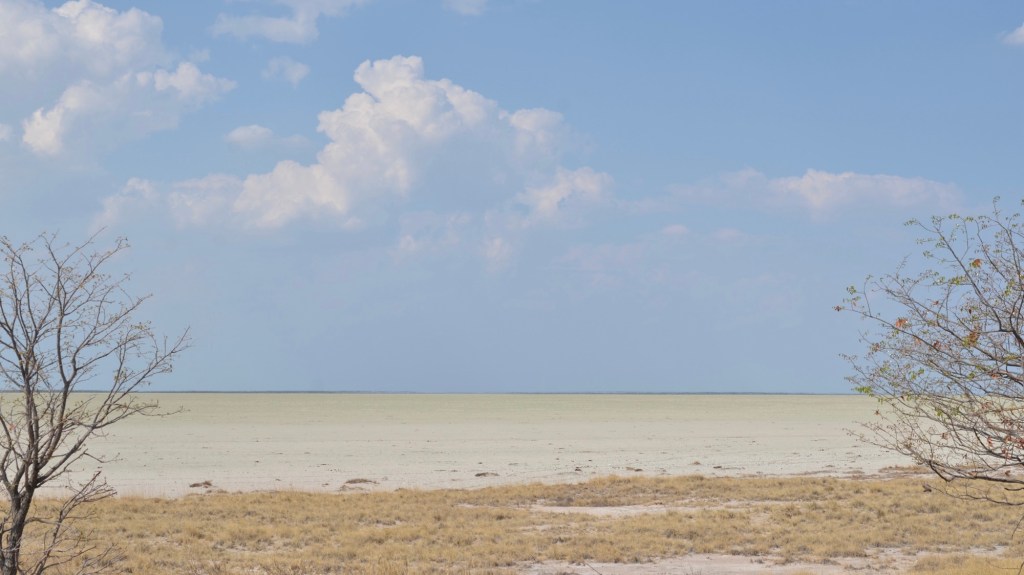
Etosha is white.
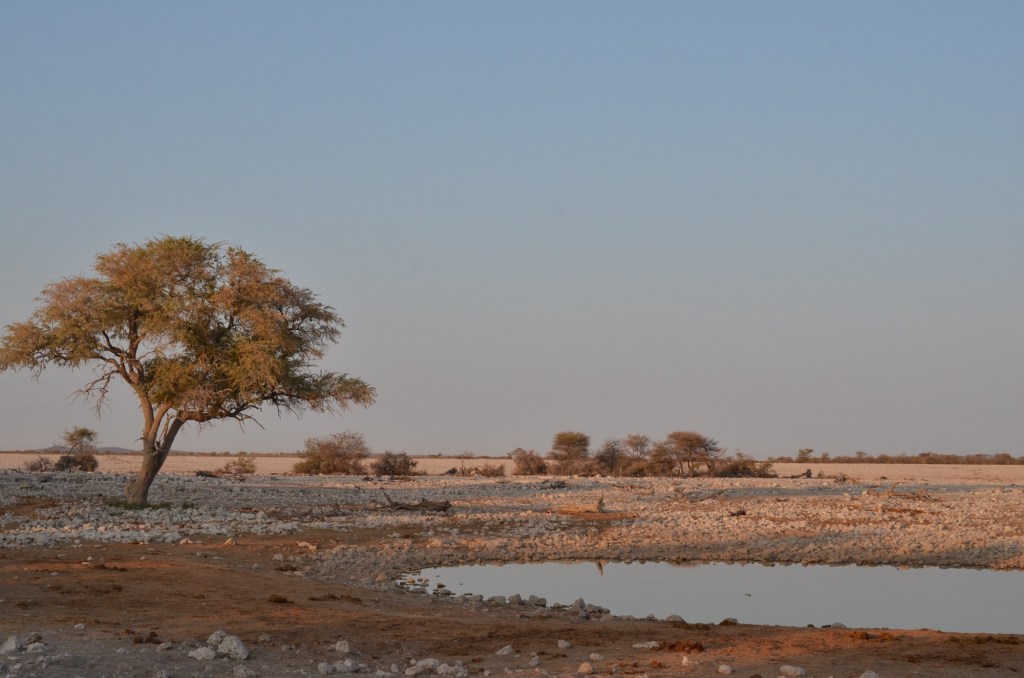
That is the first impression meeting you when entering one of the gates of the park. White, rocky and dry, but still a wonder for those wanting to see animals!
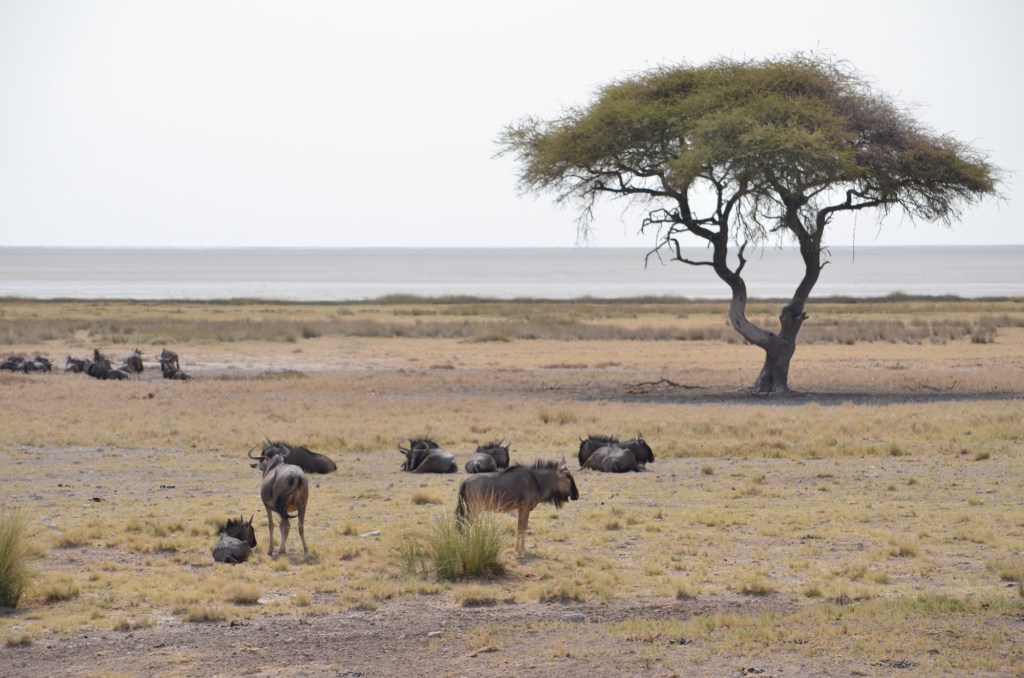
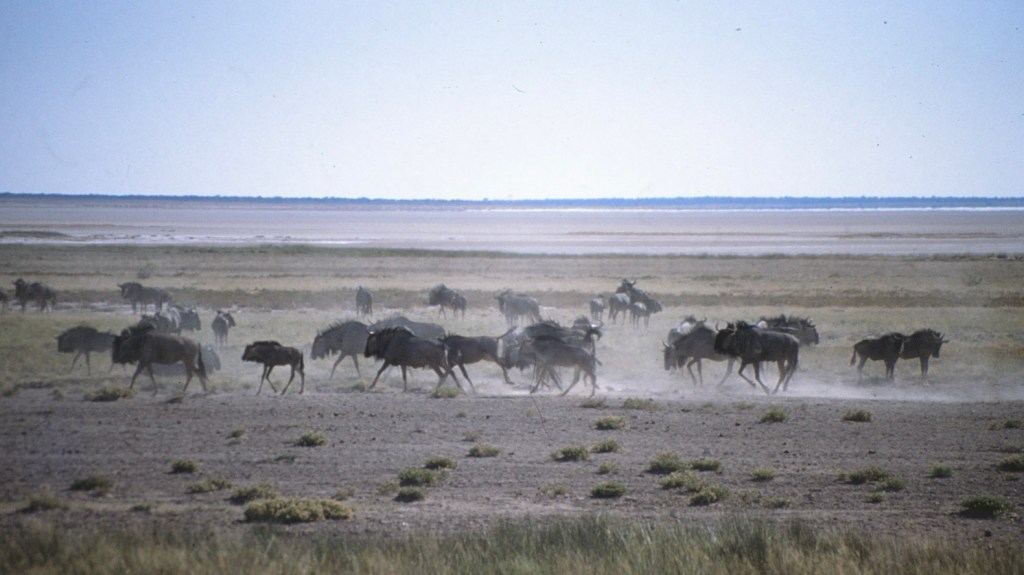
Etosha national park is located around a large dried-up salt pan, which gives the park its special character. On the edge of the pan and other places around the park, you’ll find waterholes, where the animals gather. You will also find large herds of animals grazing in the open fields. You can see animals from far-away as the landscape is so open and the horizon is so wide.




Animal viewing
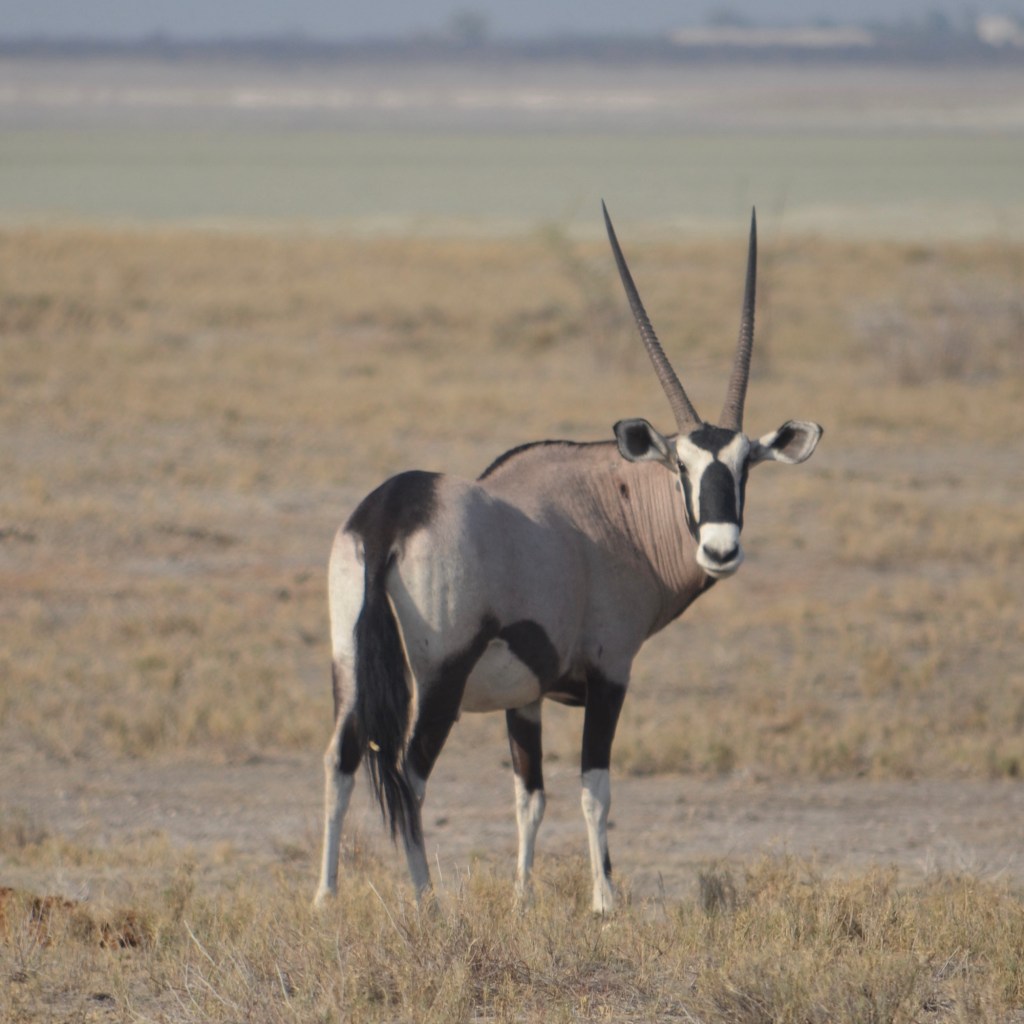
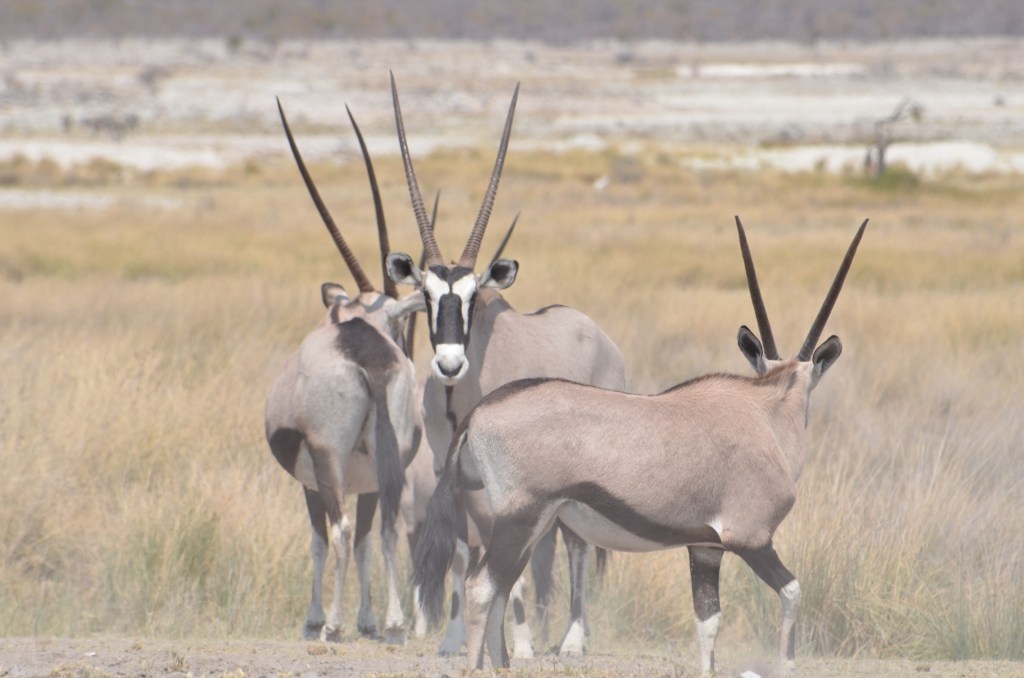
The clue to animal-spotting is all the waterholes, as the animals are seeking there to drink when it’s so dry elsewhere in the park. Many of the animals, are also adjusted to the dry climate, as the fascinating Gemsbok (Oryx Gasella), with its long spear-like horns and black/white face, that can survive for days without water, getting needed moisture from grasses and plants. Oryx have an unusual circulation system in their head. They are able to cool the blood flowing to their brain through the capillaries in their nose as they breathe. They may also raise the temperature of their body to 45 degrees Celsius. This causes heat to leave their body for the surrounding cooler air, rather than losing moisture through sweating or evaporation.
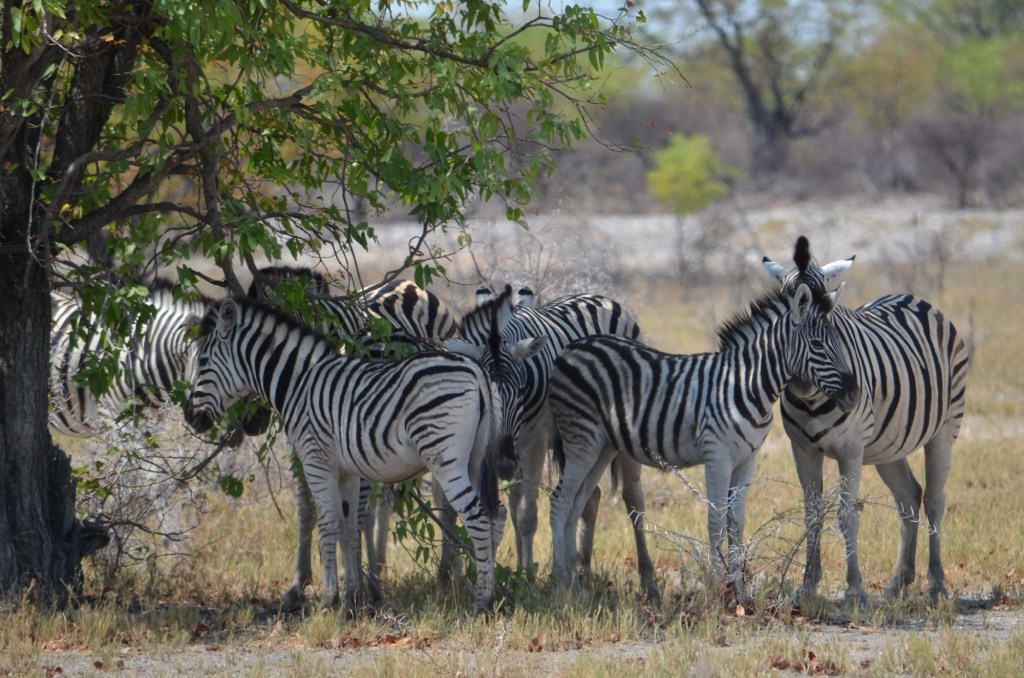
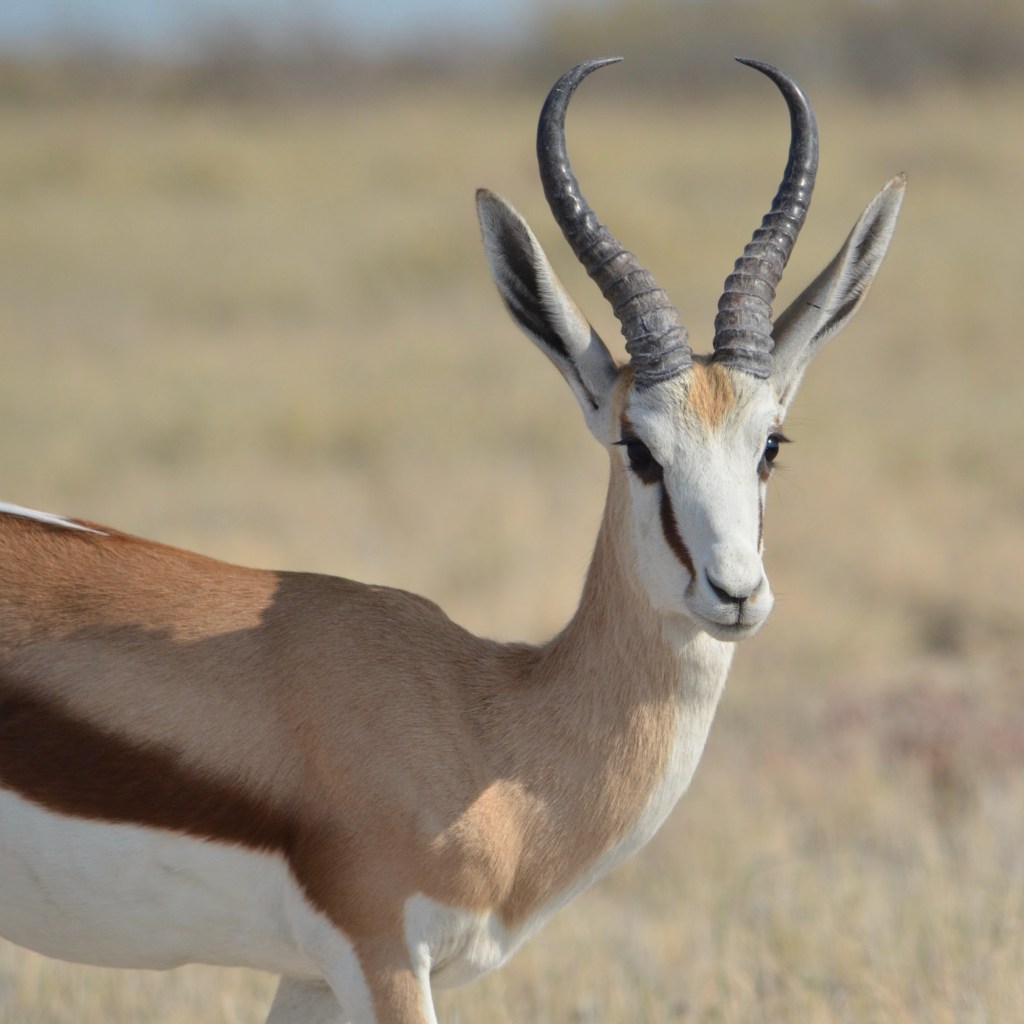
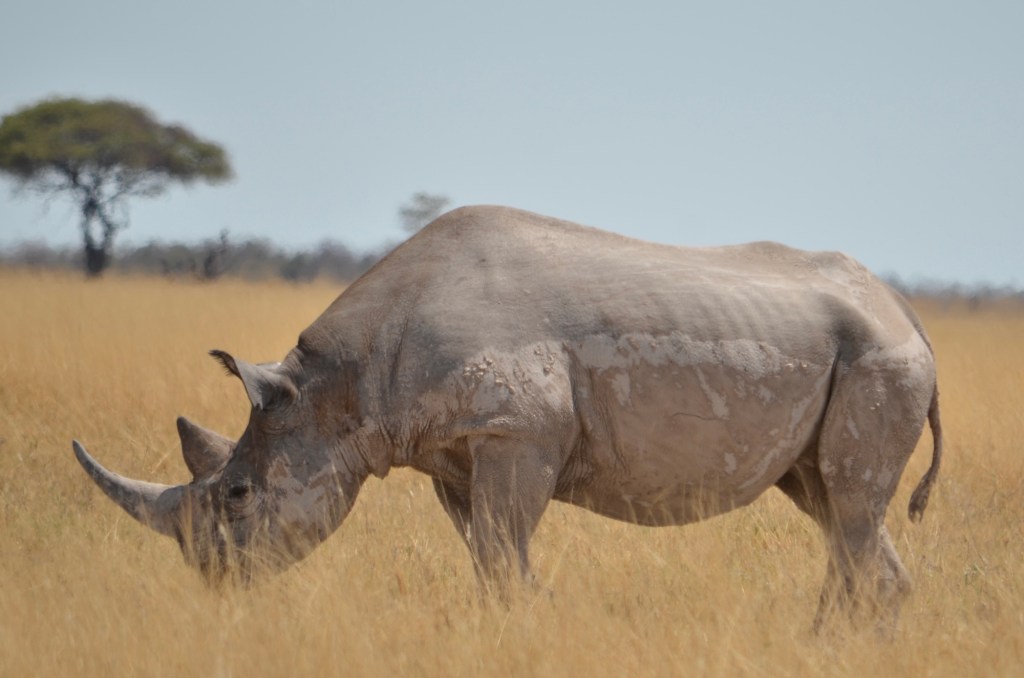
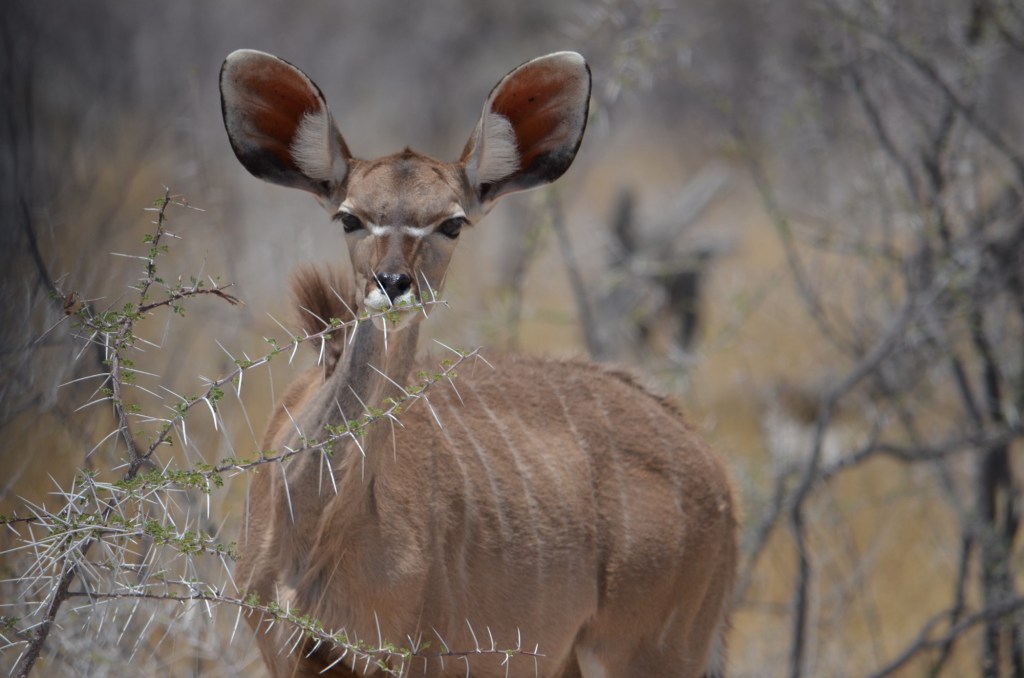
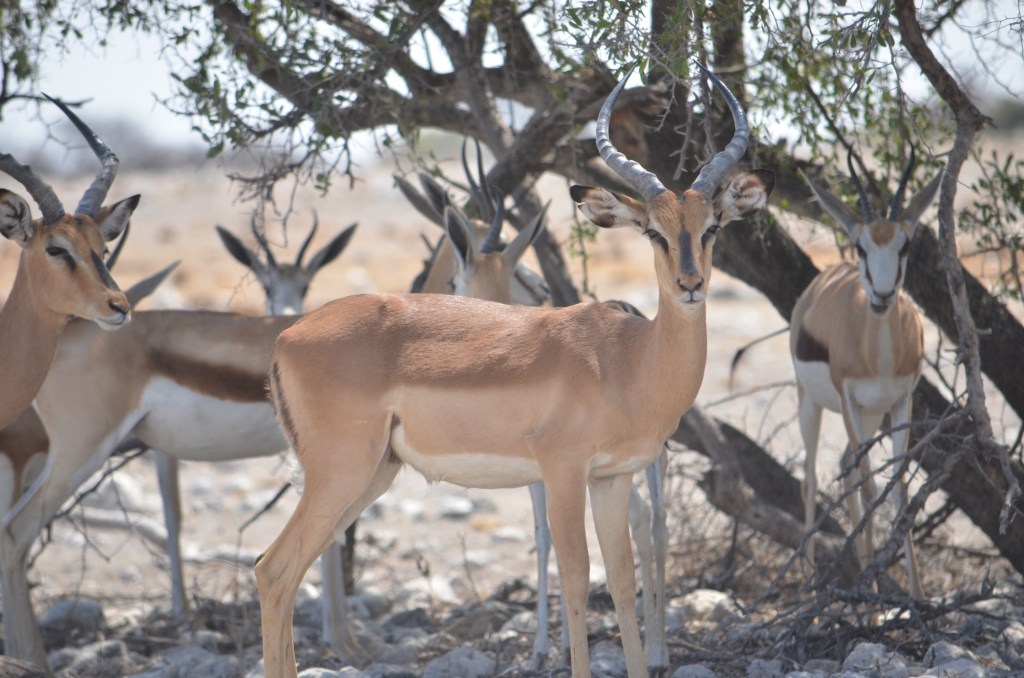
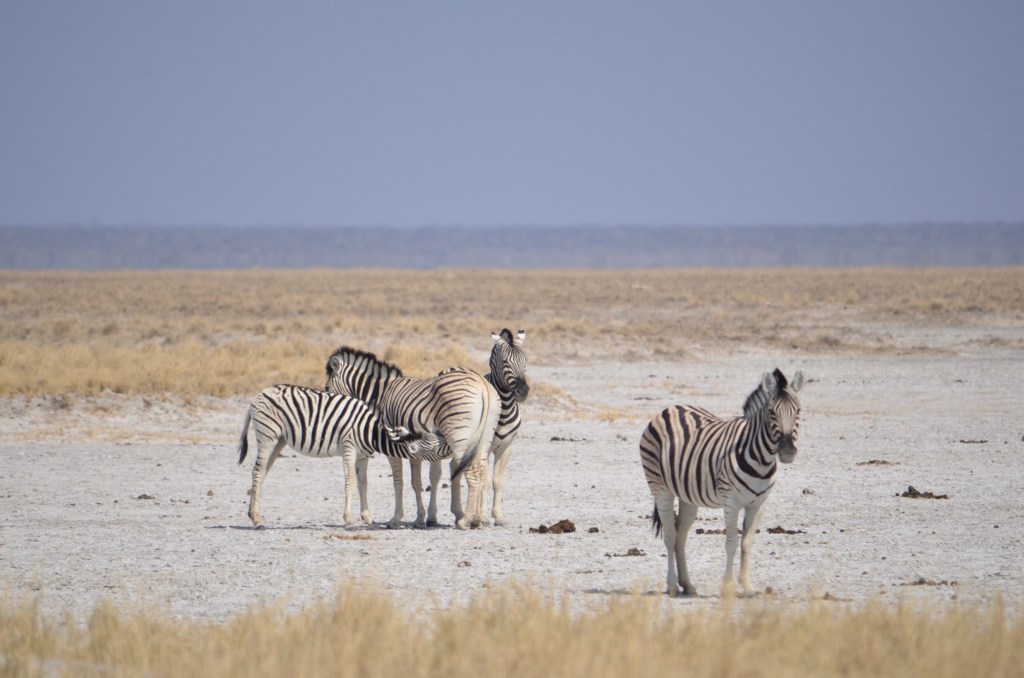
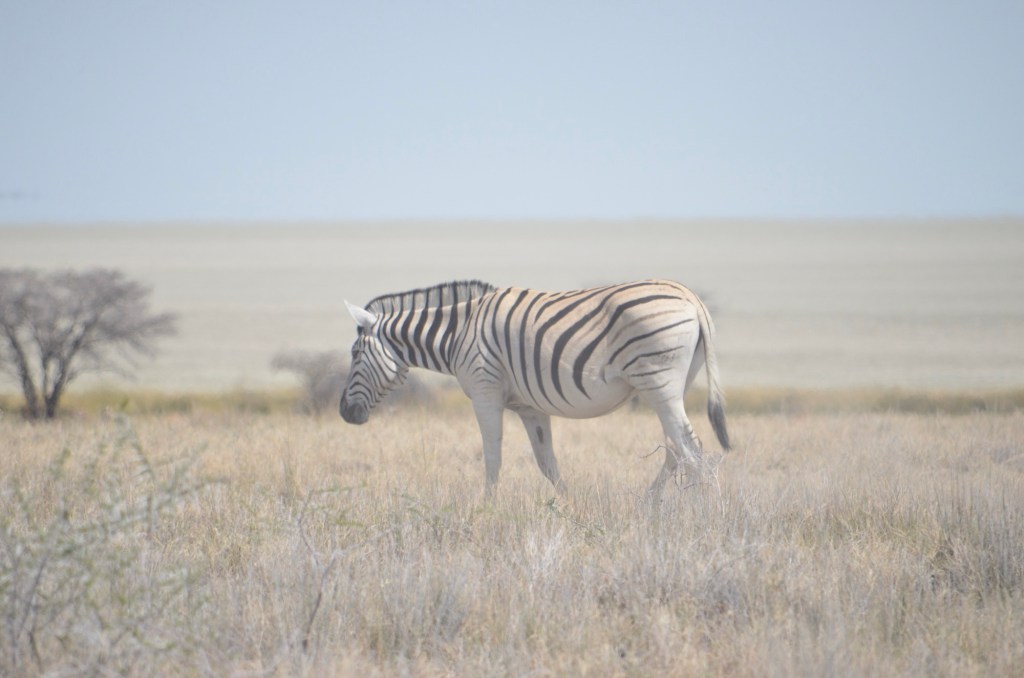
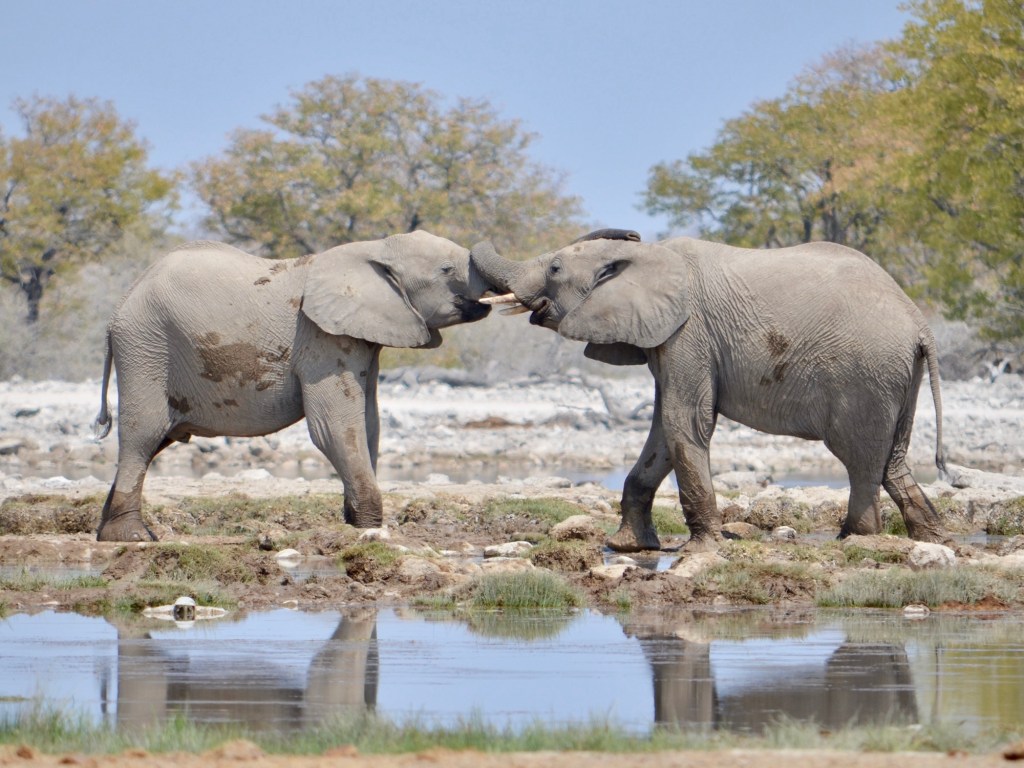
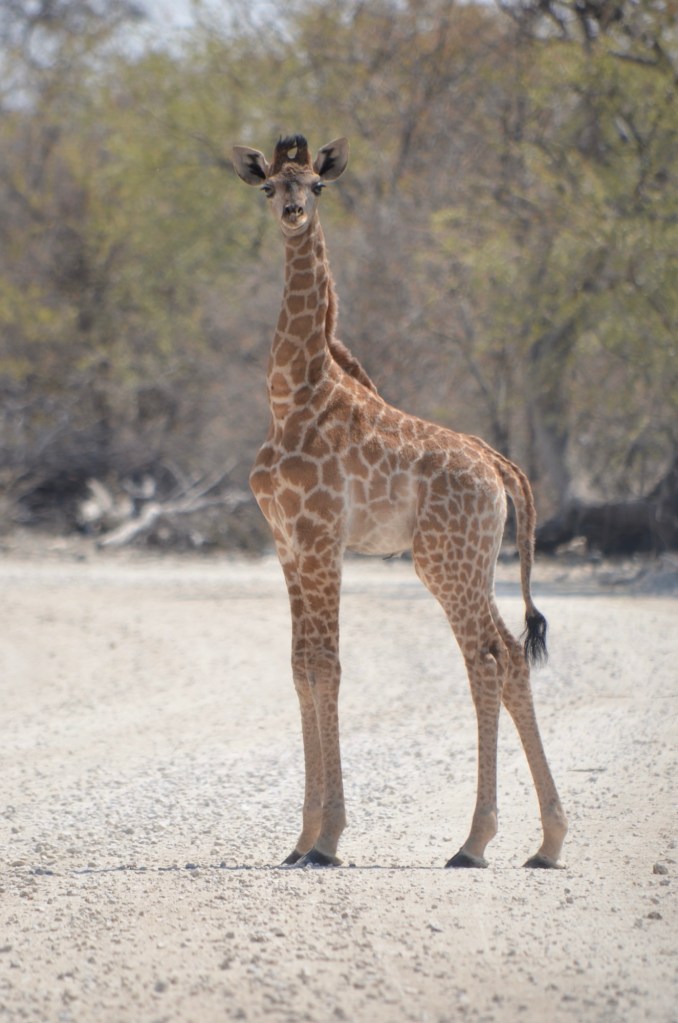
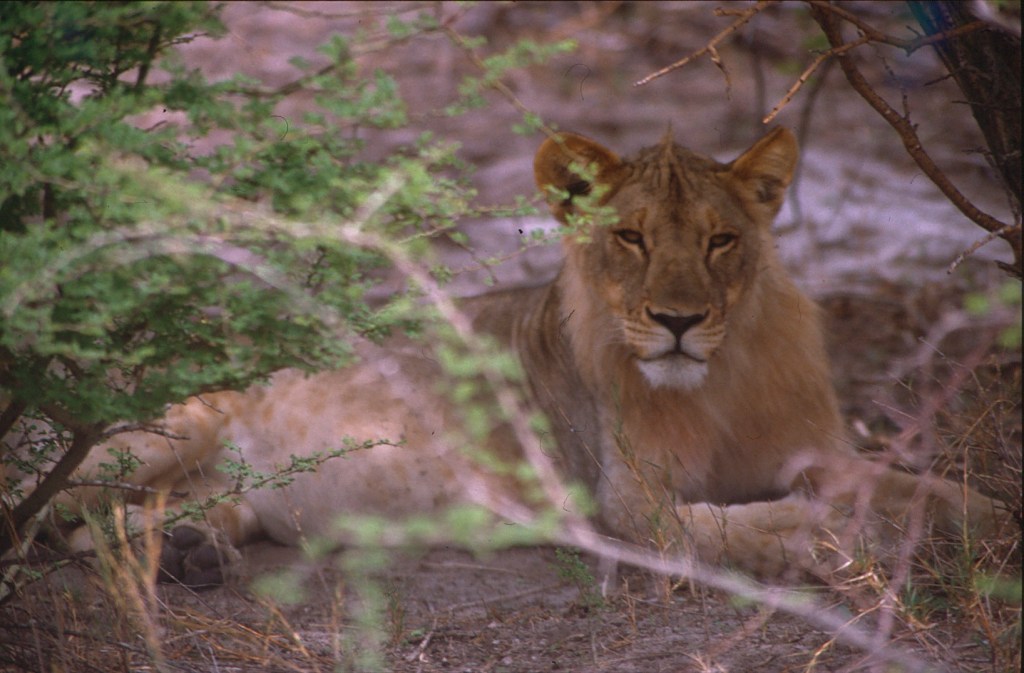
Other animals you will most likely see in Etosha is the cute springbok antilope, zebras, giraffes, elephants, implalas, bat-eared fox, gnu’s and possibly rhinos and lions, if you are lucky.
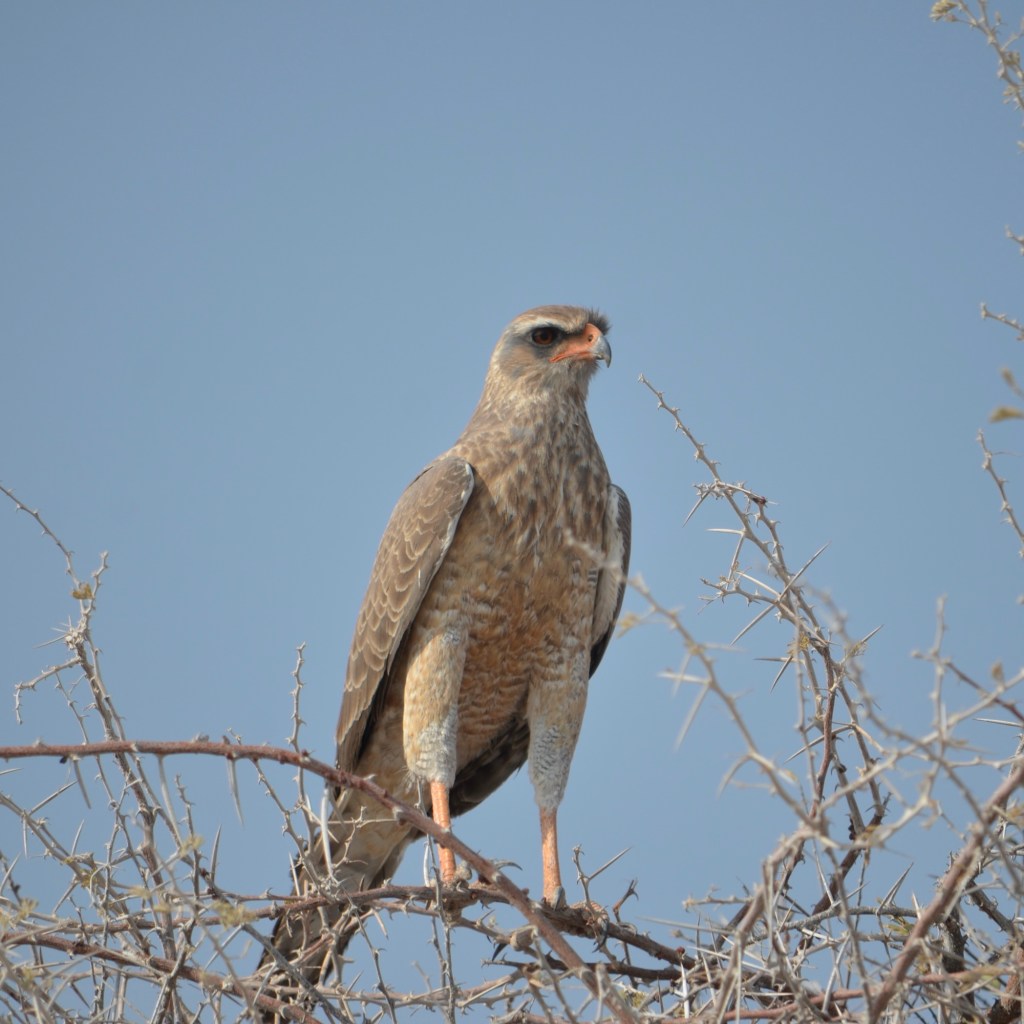
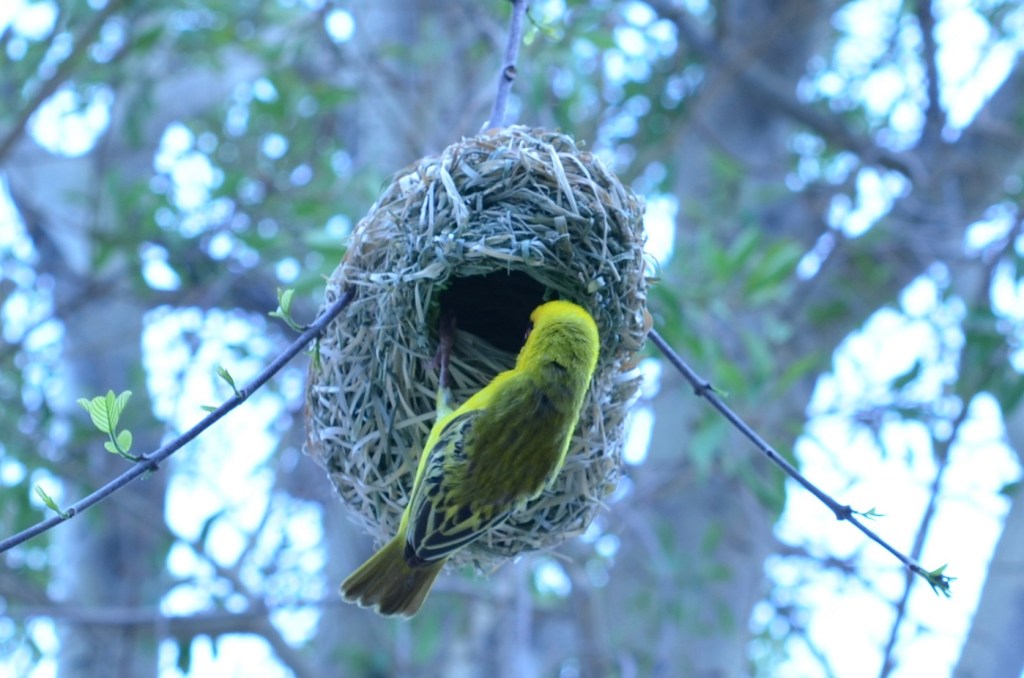
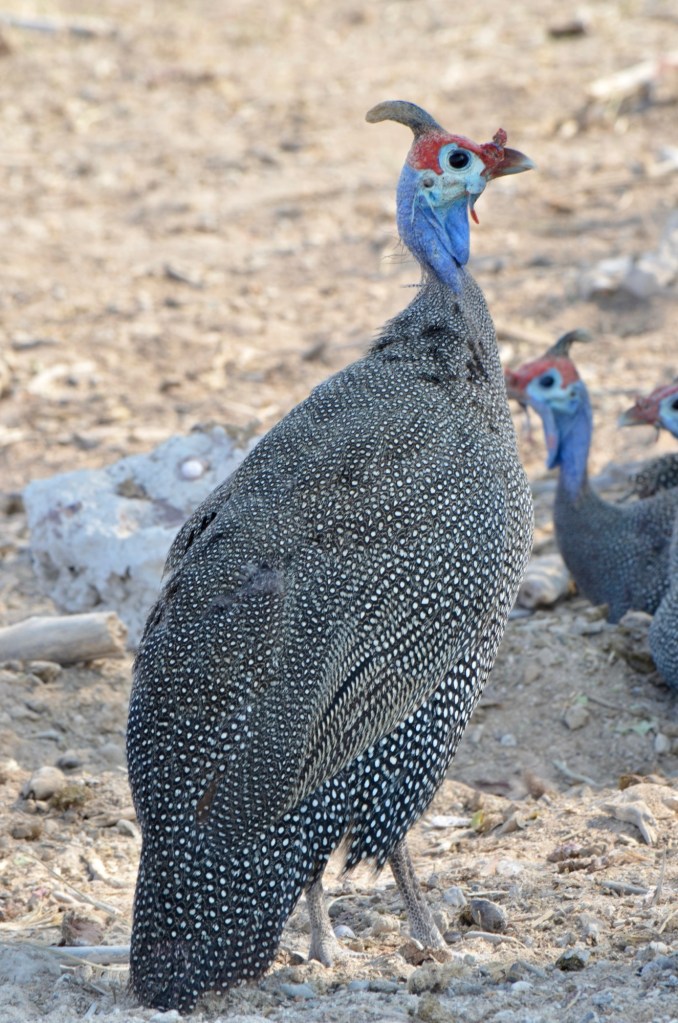
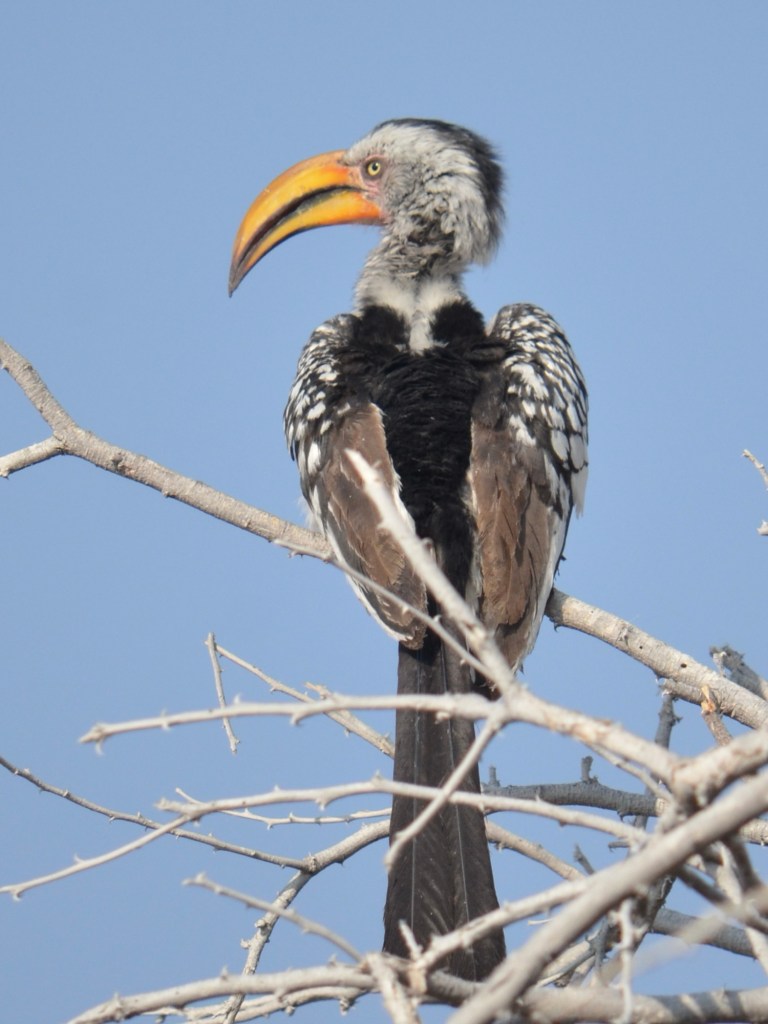
You will also see beautiful birds.
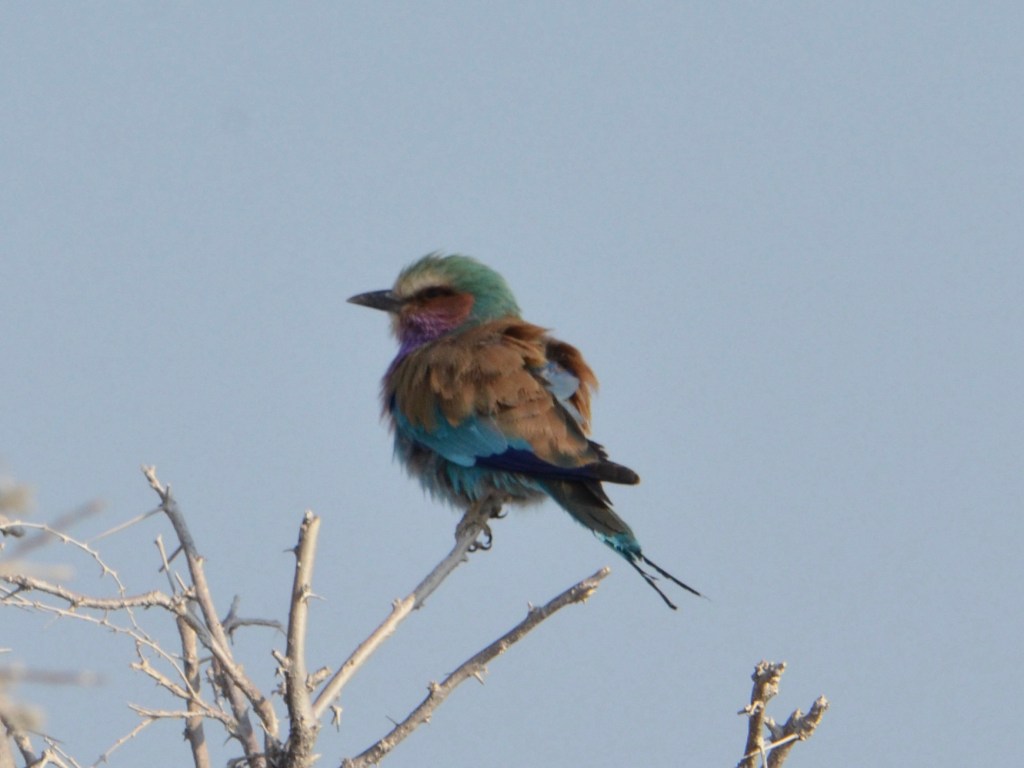
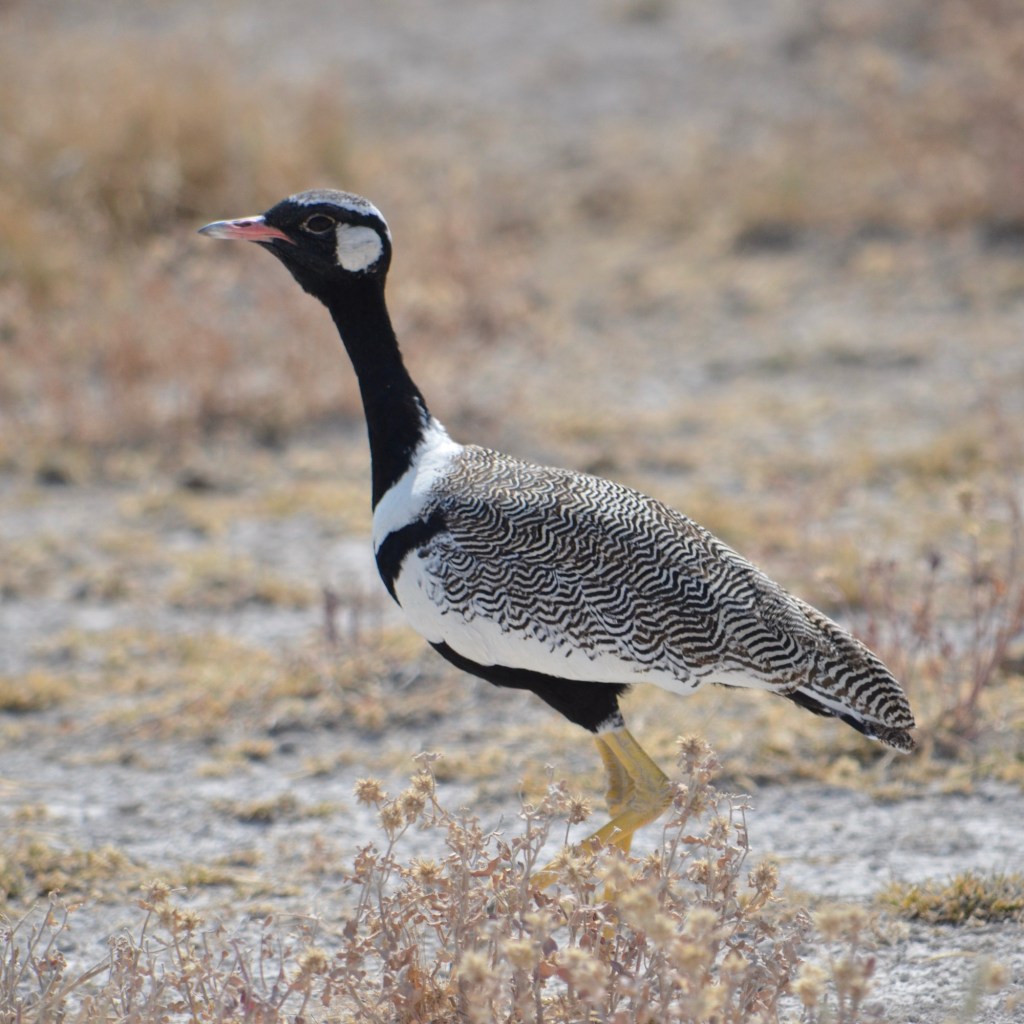
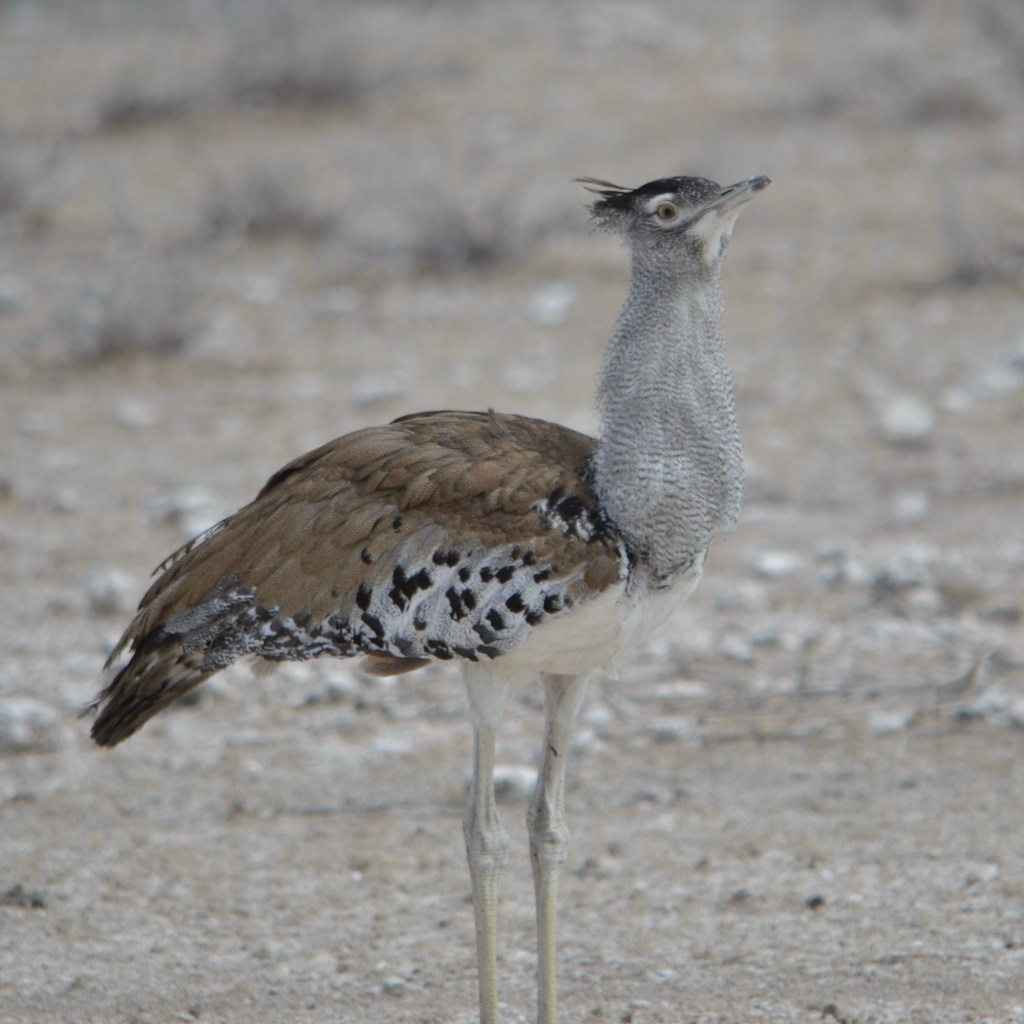
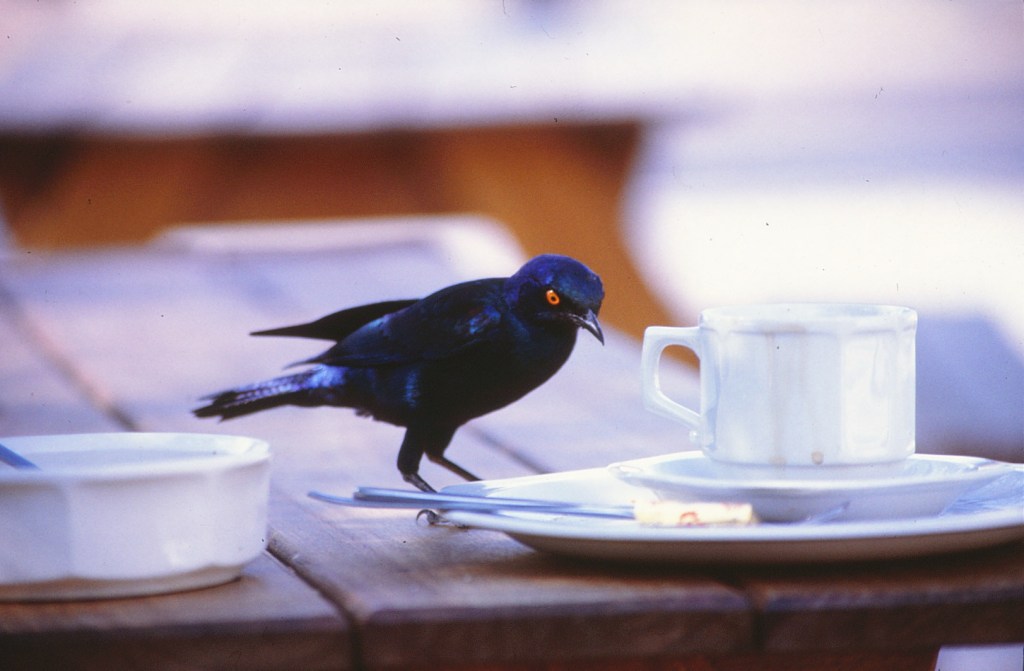
A day in the park
A day in Etosha will normally be spent driving slowly from waterhole to waterhole, or just sitting by one of them observing the shifting of animals coming and going. I find that a good camera is a “must”, but just the experience of watching the animals, is a treat. Once I woke up at 6 in the morning in the Okaukuejo camp, which has an amazing view towards a good waterhole from inside the camp. There I found my mother with a cup of coffee, watching the animals coming and going. She had been sitting there from 4 in the morning, just enjoying the amazing display as the day emerged at the waterhole, and the different animal species shifted on taking their place to drink or cooling down in the water. The waterhole in Okaukuejo is also floodlighted at night, so you can also sit there all night to watch “the show”.
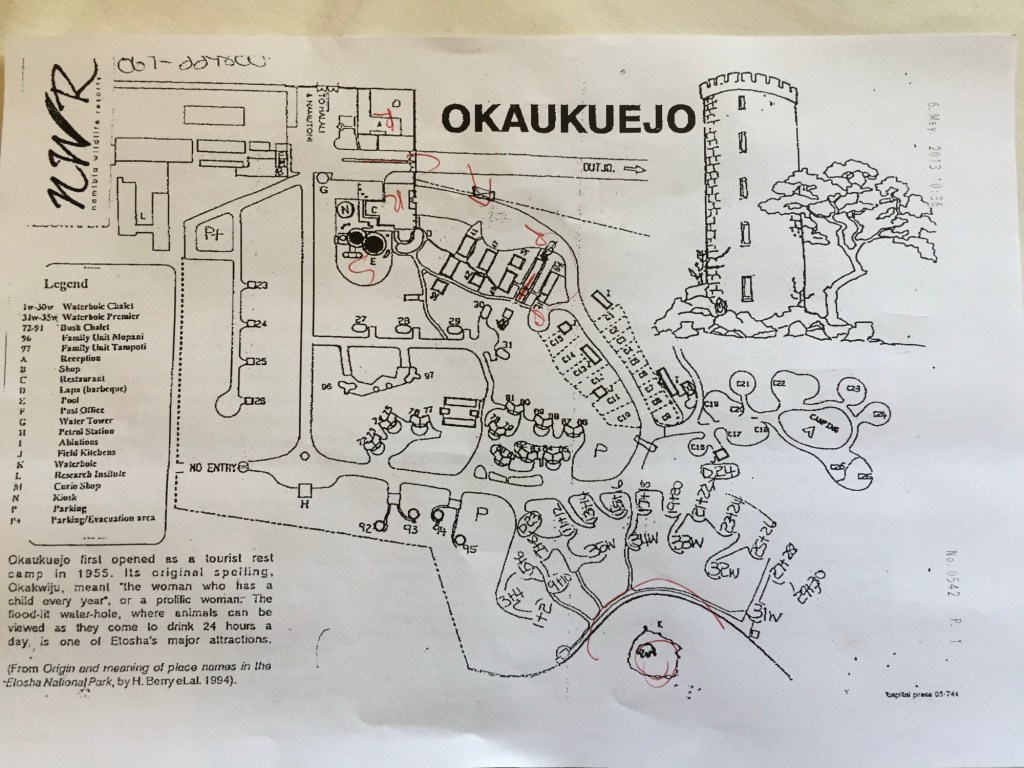
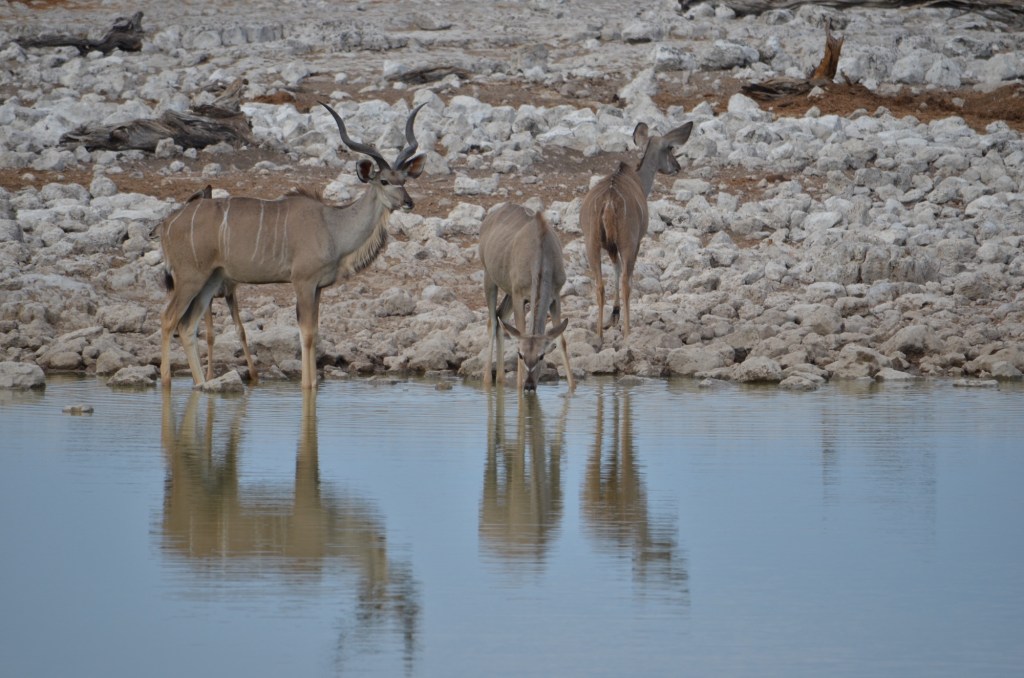

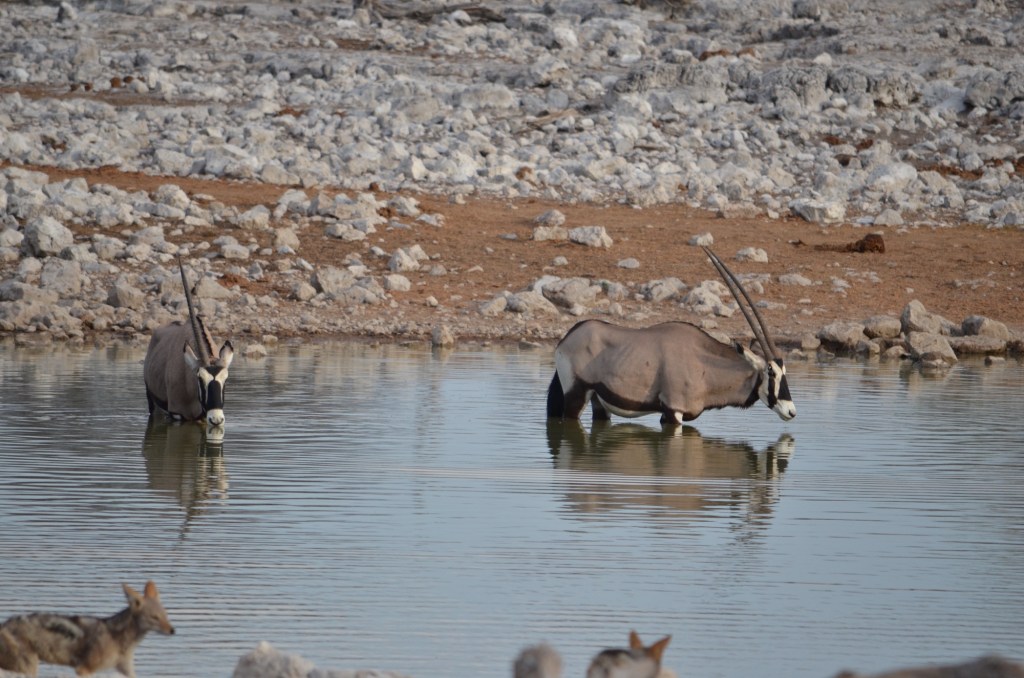
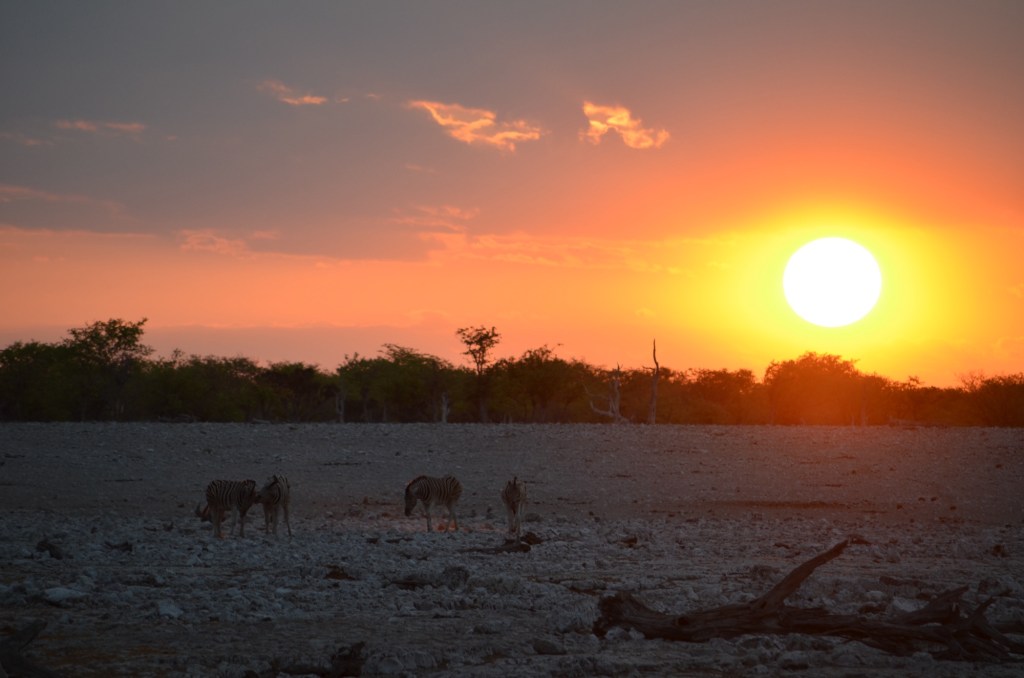
This is quite a different experience than what I experienced when visiting the Kruger National park in South Africa, where everything went completely dark at night, and is one if the things I really love with the Etosha national park. You can see night active animals, as they come close to where you live and you are not limited in animal watching to the daylight hours.
Follow the live webcam of the Okaukuejo waterhole.
Regarding daylight hours, you are only allowed driving out in the park in daylight. Between dusk and dawn the gates of your camp will be closed. You will live inside a fenced area at night and the larger animals will not be able to enter. You will thus be safe at your camp, even if I’ve hear stories about people being attacked by animals while sitting by the waterhole alone at night. I don’t know if the stories are true though, but it always feels better if there is at least one other person at the waterhole, if I sit there at nighttime.
Outside in the park, you never leave the car. All the animal-spotting is done from your car. As there are dangerous animals like lions around, it is wise to only opening windows at the side where you have your focus, as there might also be lions at the other side of the car, as well as where you are looking.
Bring enough drinks and snack in your car, so that you can stay a long time in the car, if something catches your interest. It’s sad having to leave a waterhole just when a large elephant herd arrive, just because somebody in the car needs food or a restroom. Make sure to stop when you seize an opportunity, as you cannot leave the car inside the park, except for in designated fenced areas.
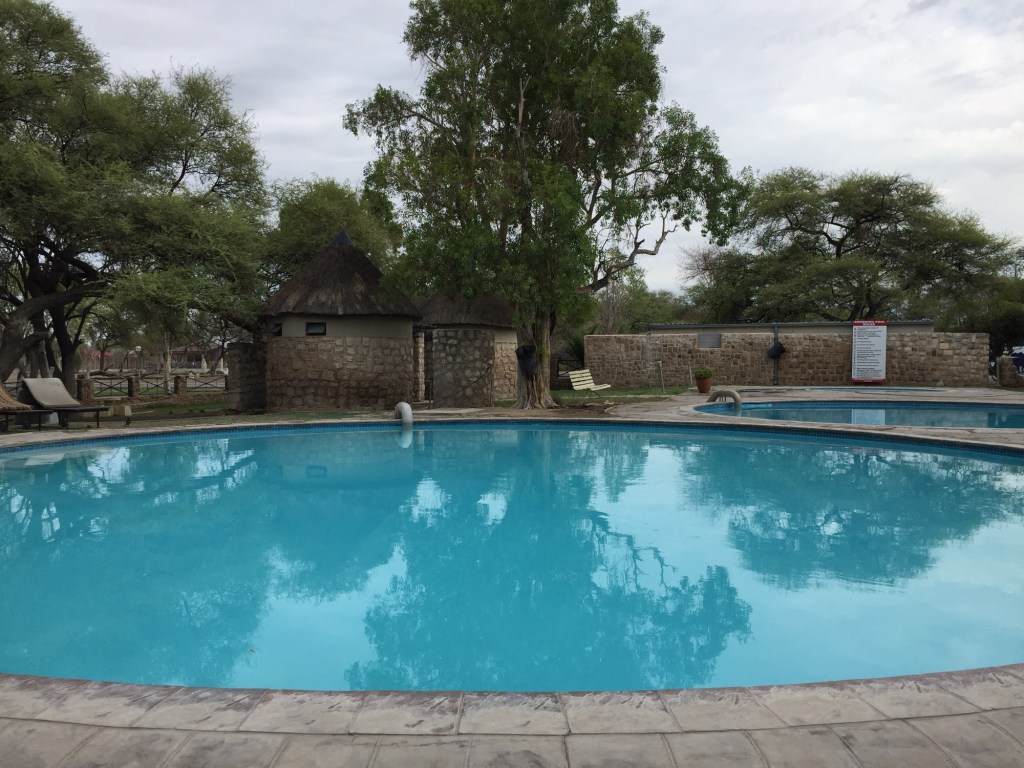
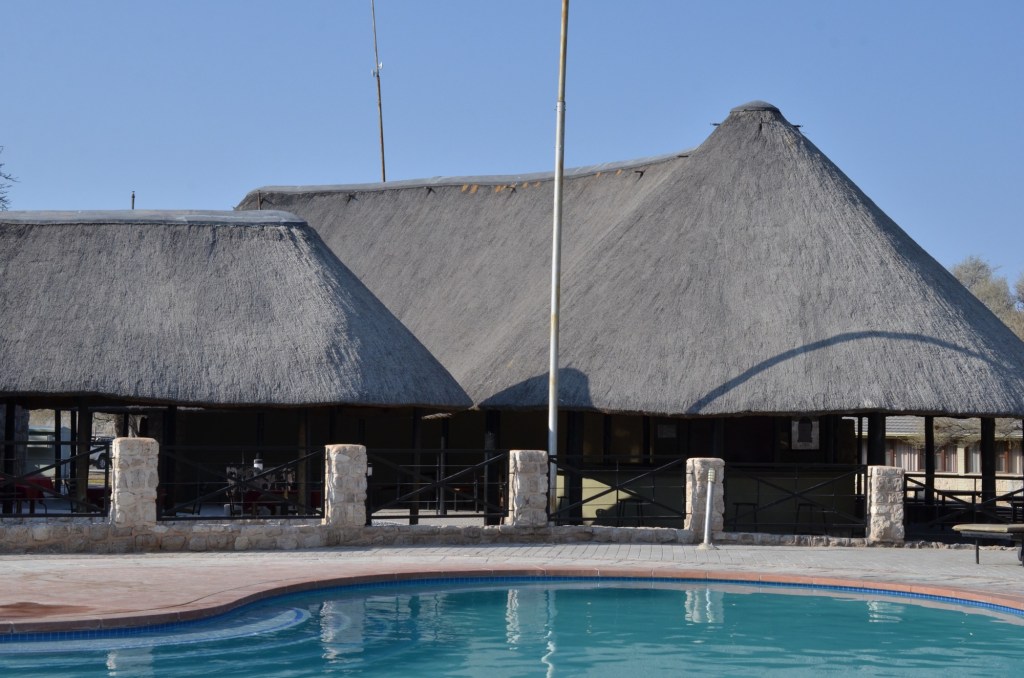
When that’s being said, it may also be wise to bring a swimsuit for a day trip in your car. The camps in the park is not too far apart, so stopping at one of the other camps for lunch and a swim in the pool, which all of the bigger camps have, may give the day some variety.
The waterholes
There are many good waterholes in Etosha and what you see at the different ones will depend on season, weather, the animals behaviour and many other factors. A few that often has given me good experiences is (going from east to west):
- Aroe, where I once met several lions
- Kalkheuwel, where I at several occasions have met herds of elephants walking towards the waterhole in the last hours before sunset. Make sure to not be in the way!
- Salvadora, which have a beautiful view of the salt pan
- Okondeka, which gives sideview over the pan and sometimes lions under the trees
- Okaukuejo, where you can bring your glass of something and sit for hours listening and viewing the animals as they come and go
A more full list of different waterholes and areas in Etosha, can be read at Clydeside images.
The rest camps
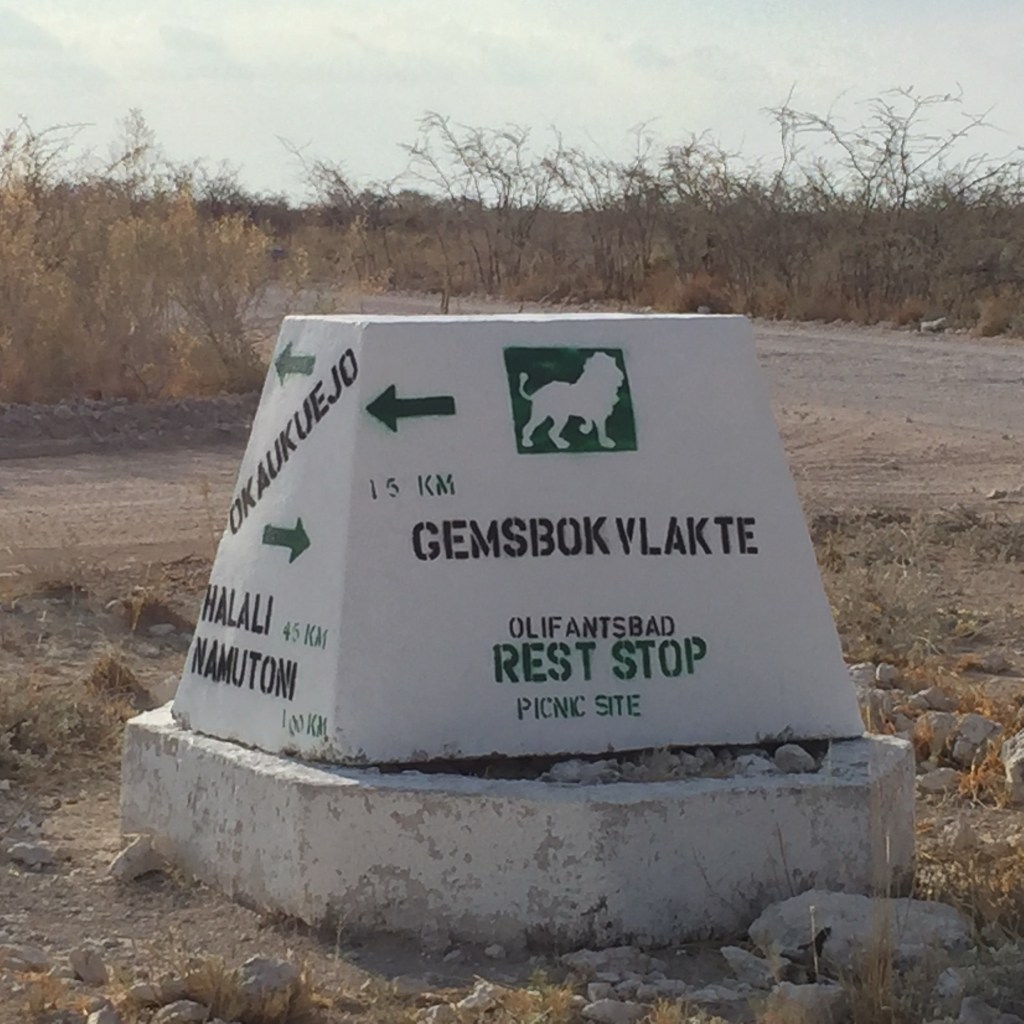
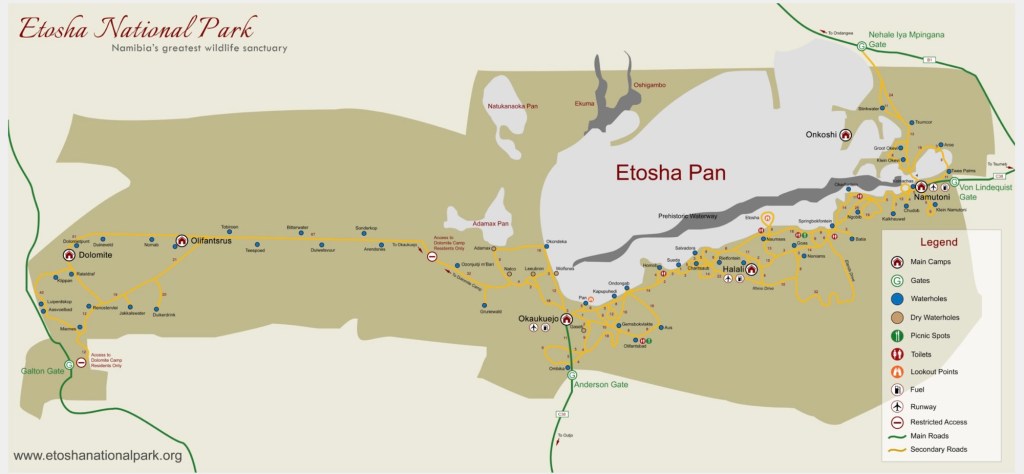
The 3 bigger camps in Etosha (going east to west, on the southern side of the pan) is Namutoni, Halali and Okaukuejo. North of Namutoni, there is a newer camp called Onkoshi and far west there is a camp called Dolomite. There is also a campground in the western part, called Olifantrus.
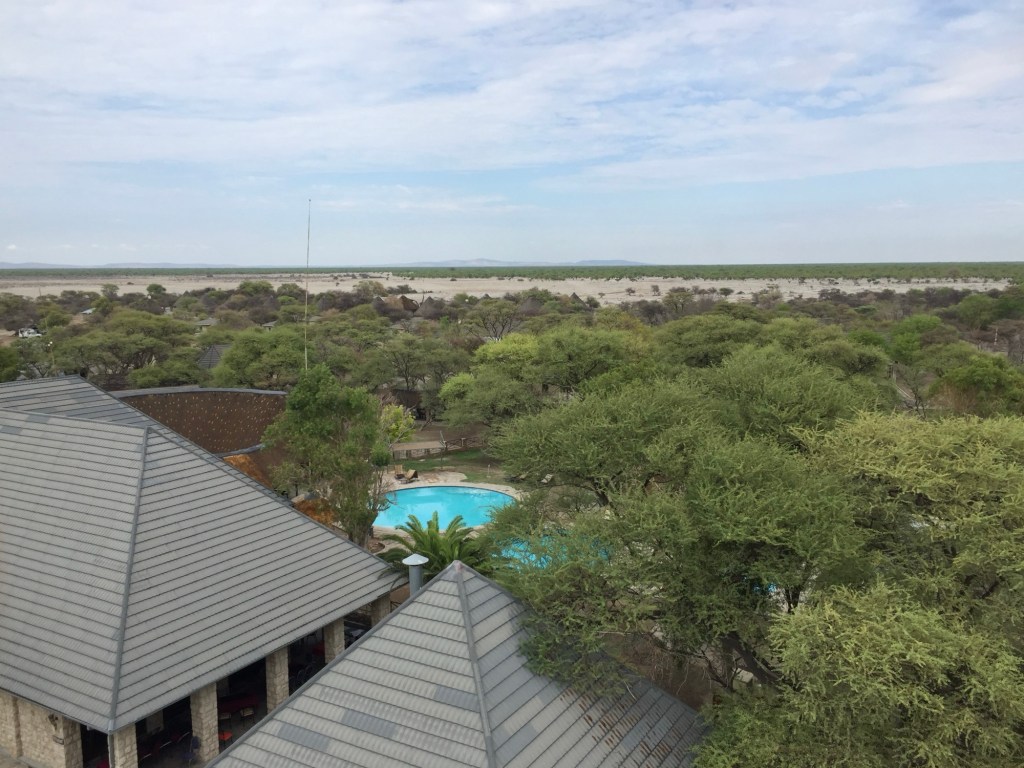
Most of the regular camps have cabins, rooms, campgrounds, swimming pool, petrol station and a restaurant, so you can have a really comfortable stay in the camps, after sunset. Some also have barbecue, or braii, areas and a shop to buy groceries.
My favourite camp is Okaukuejo, because of its amazing waterhole. It really stands out to the others. It is also the camp closest to the Anderson gate, which is the gate on the southern side, closest to Windhoek. I’ve seen pictures from other people posting photos from the waterholes in Namutoni and Halali, but I have never been able to see anything like the Okaukuejo waterhole at the other camps during my visits.
Last time we also spent one night a Namutoni and one night right outside the Lindequist gate, at the eastern side of the park, as we were afraid of not reaching the gate before closing time. I must say that staying right outside the Lindequist gate, at Mokuti lodge, was a much better option than staying in Namutoni, as the standard and what you got for the money there was so much higher. Being so close, anyway allowed us to see the eastern part of the park and since the waterhole at Namutoni is not much to boast about. You can just as well appreciate the standard of a lodge outside the eastern gate and do the eastern part of the park, like around the Fishers pan, on day-trips.
Halali is a very nice place to stop for lunch, as you will be able to swim in a large pool there. It is also less expensive than the other camps, but for game viewing in the night. Okaukuejo is much better.
So far, I’ve only stayed at the 3 bigger camps in Etosha, but in a few months I will go west, to Dolomite, something I really look forwards to. The western part used to be closed for tourist when I lived in Namibia, but now it is open and I really look forward to seing what it looks like!
I will write more about Etoshas western part, when I go there in February.
Practicalities
You can read more about the park and animals within at: https://www.etoshanationalpark.org/wildlife
There you will also be able to find maps and other useful info.
For booking of accommodation, however, you need to go to NWR.
You’ll find a link to their booking system in my blog about lodging.
 Laila’s travel blog
Leave a comment