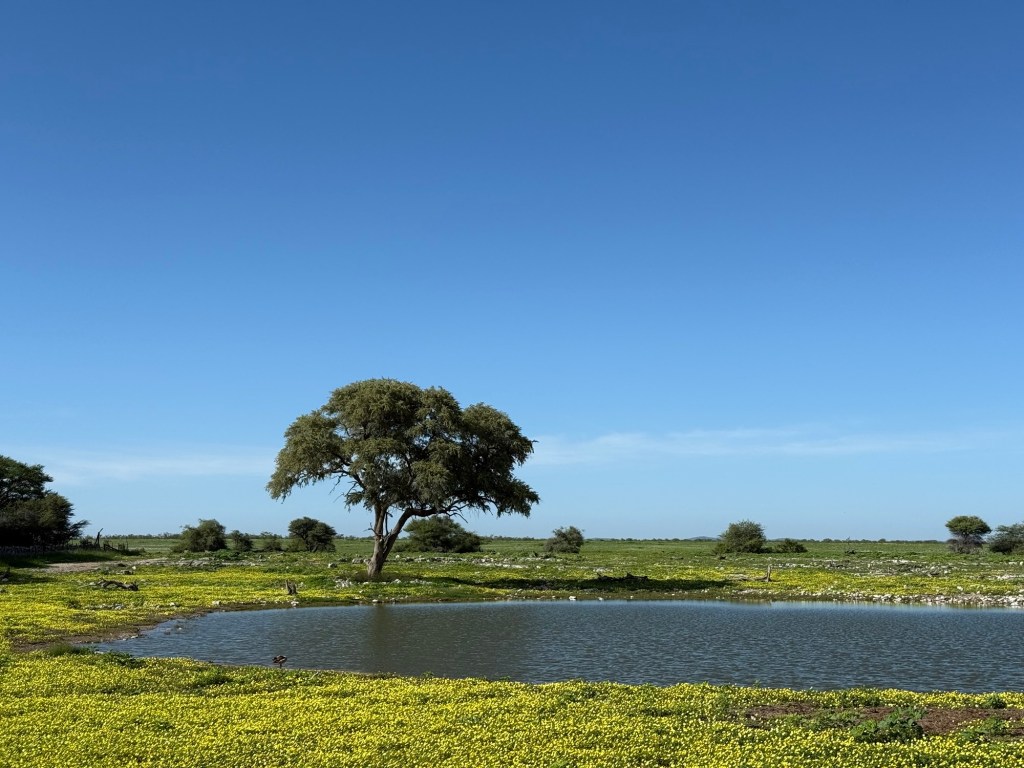
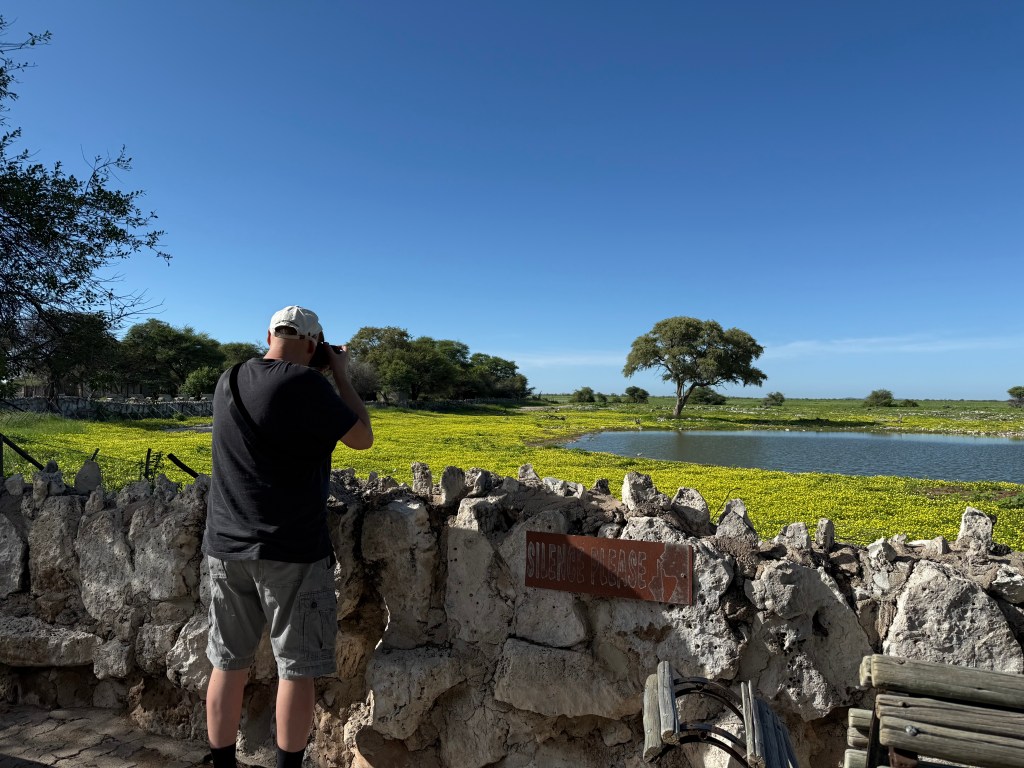
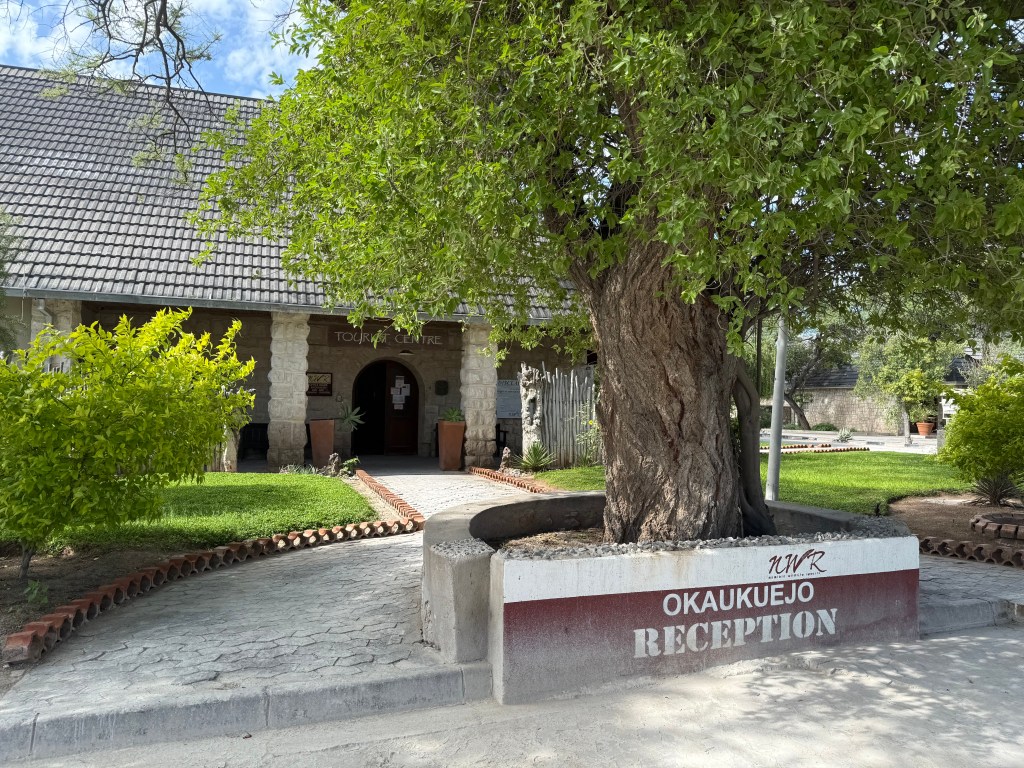
Okaukuejo is my favourite camp in Etosha National park. Its large waterhole is floodlighted at night and it is usually full of different animals coming in turns to drink. You can follow the Okaukuejo live-view webcam to see what is going on there throughout day and night.
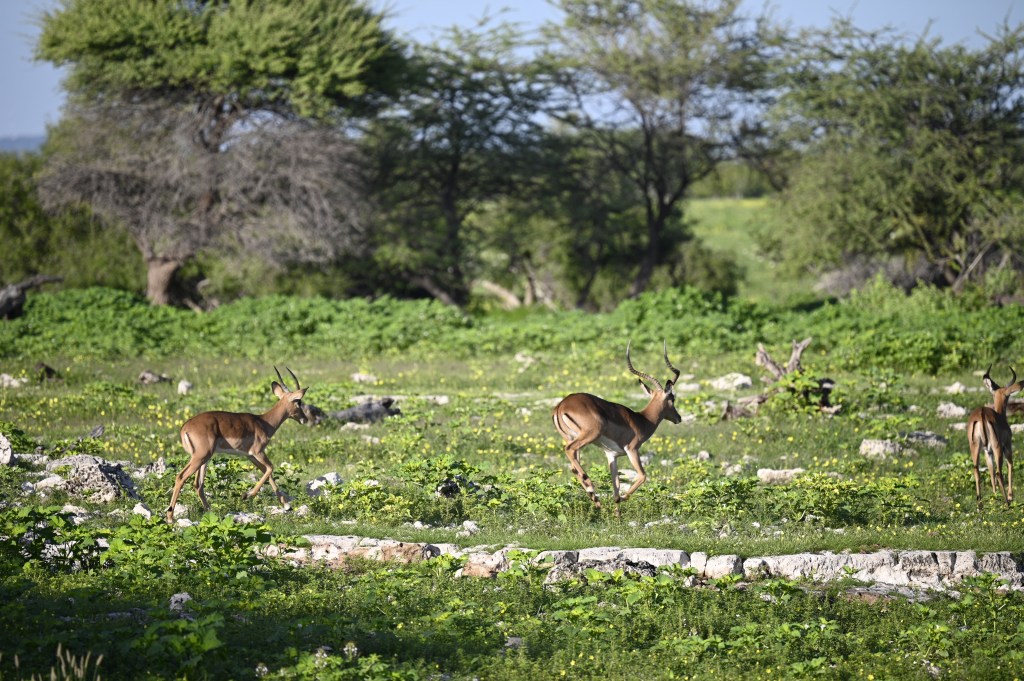
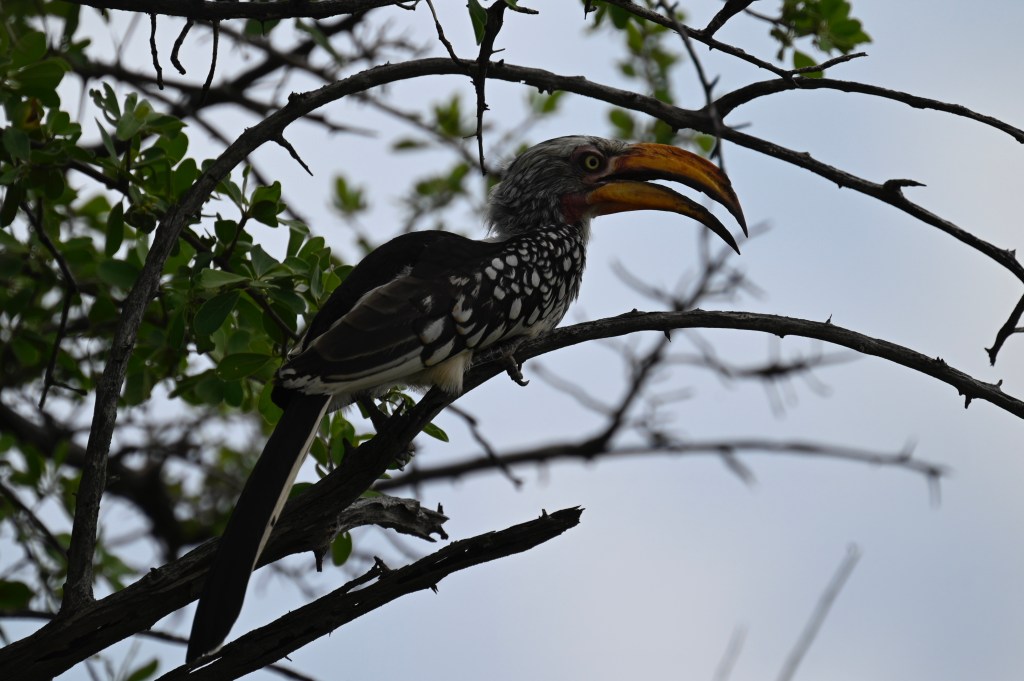
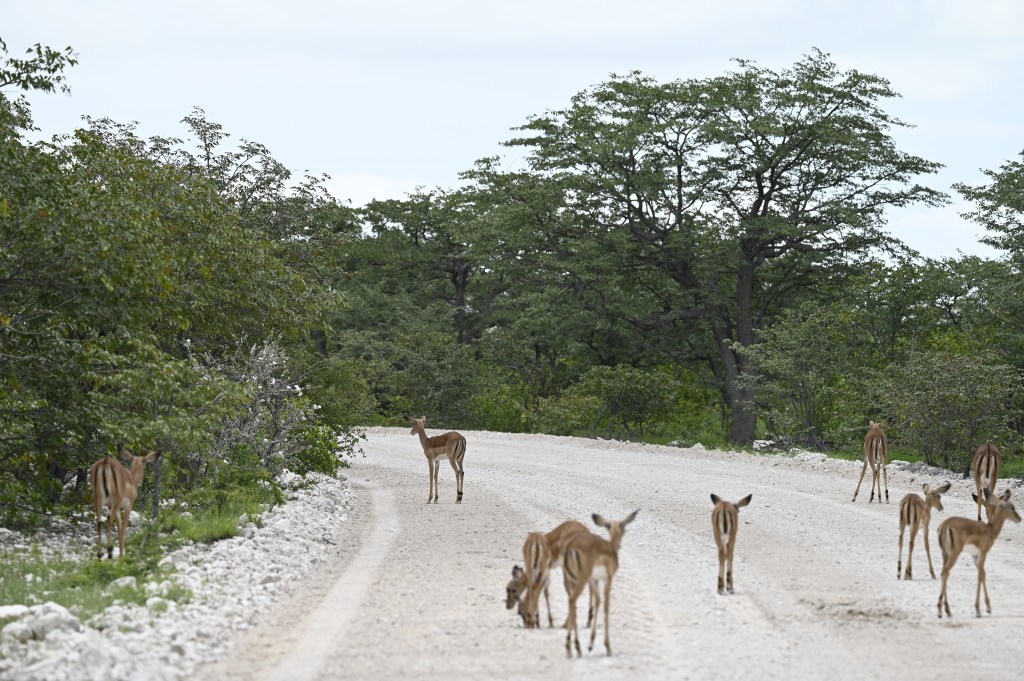
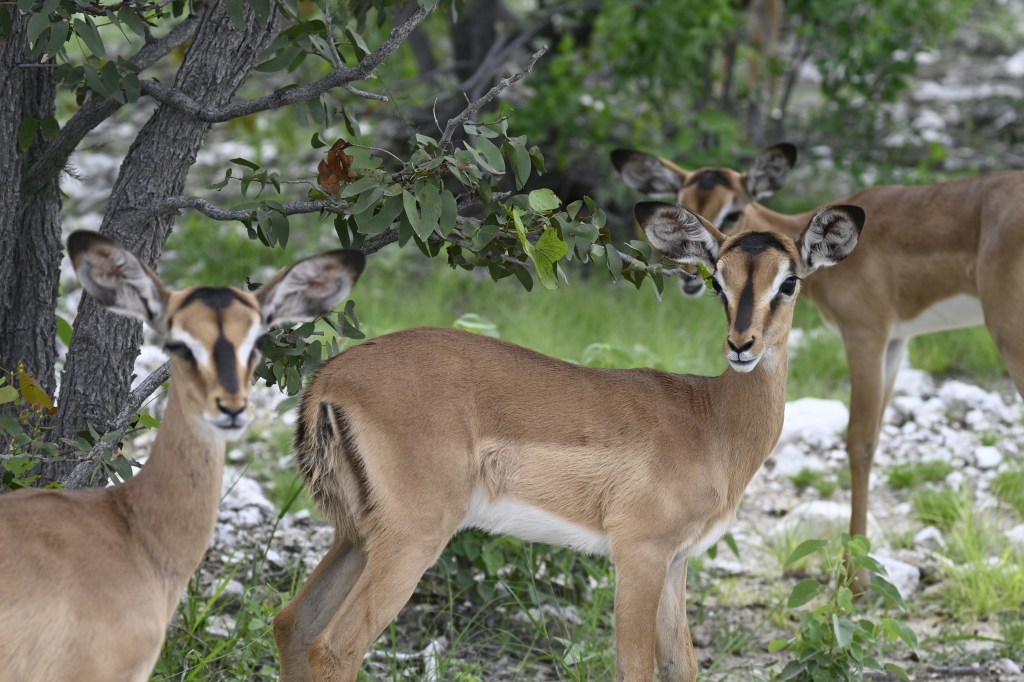
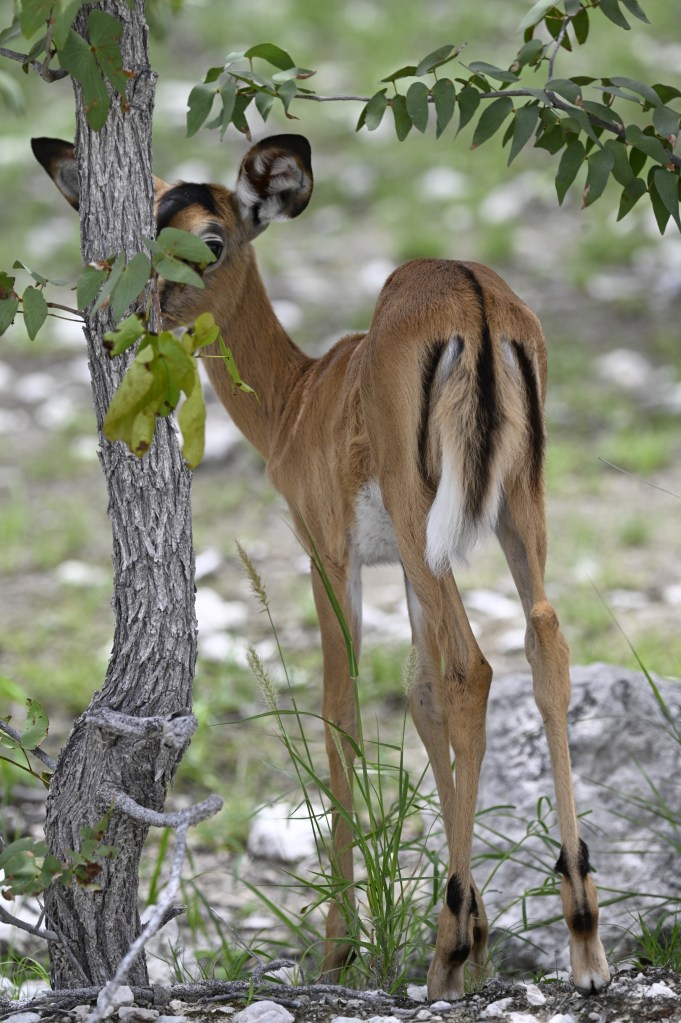
This time in Okaukuejo was quite a different experience from the other eight times I have been there. Due to the rain that had been going on for weeks, the animals had no need for going to waterholes to drink, but was spread all around the park, often in places where we could not see them. We did, however, see some impala antelopes and birds.
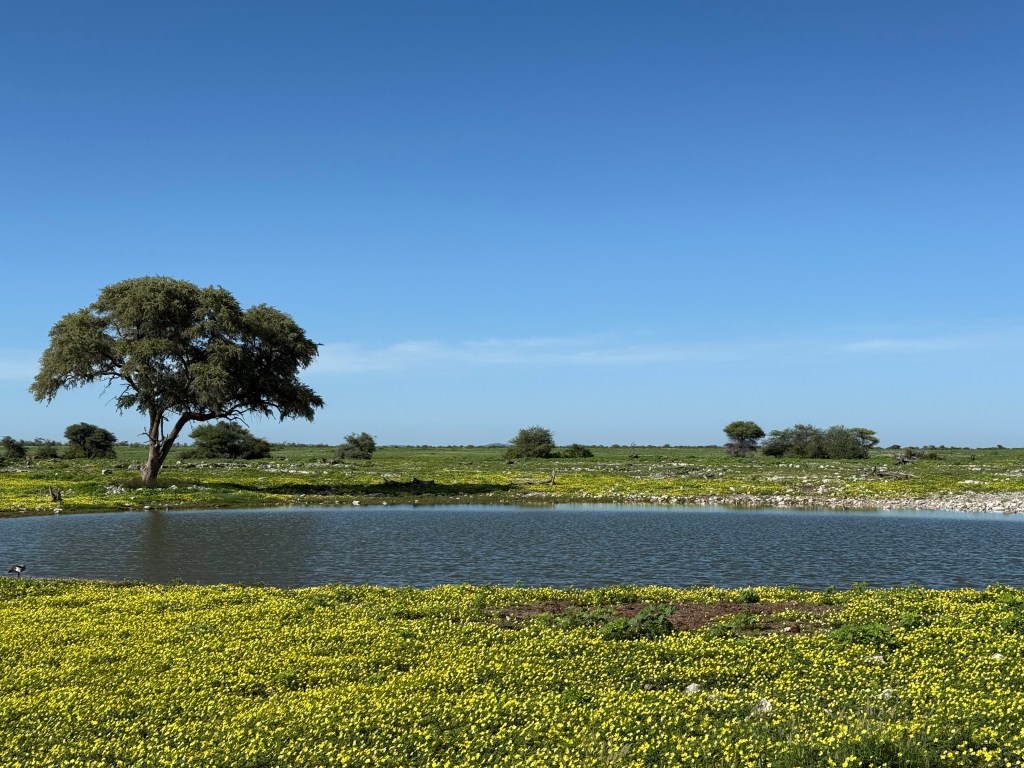
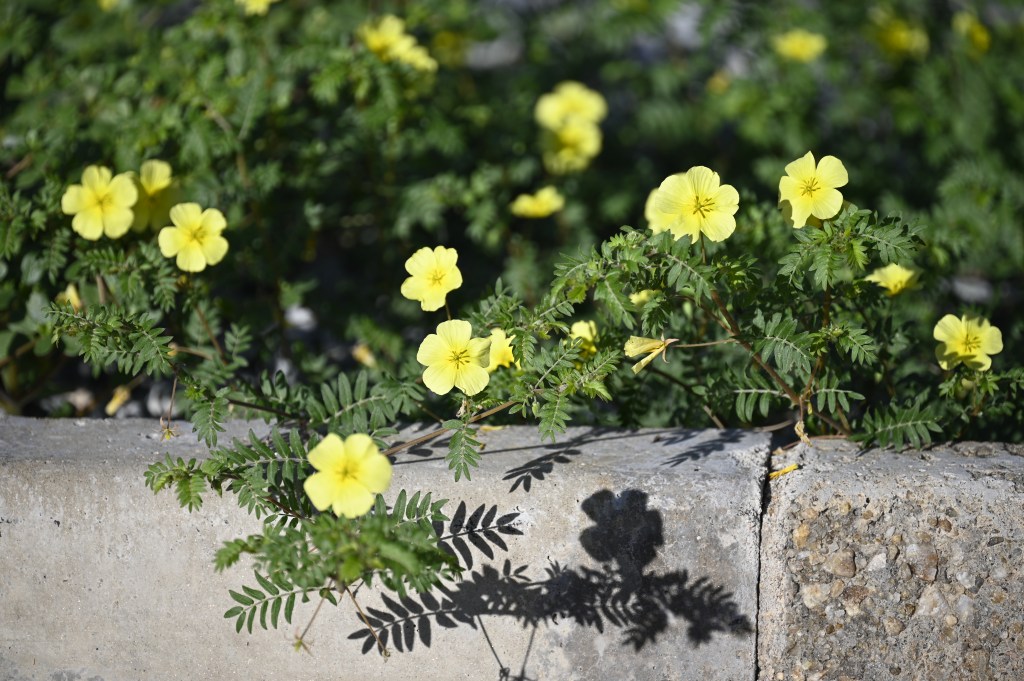
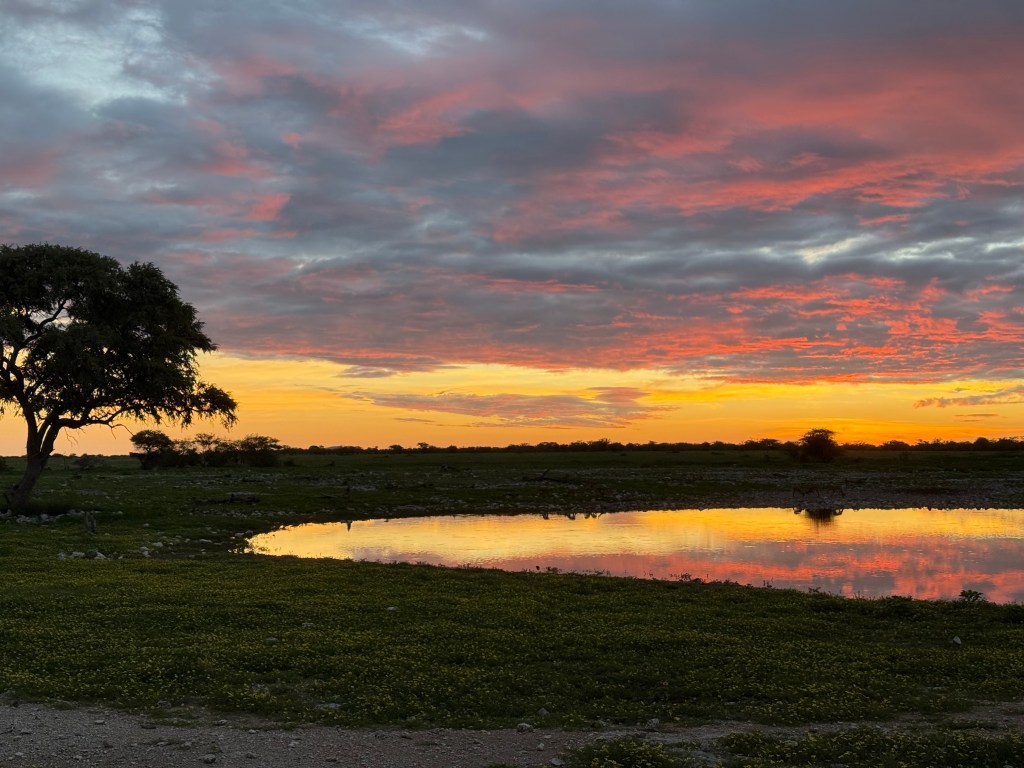
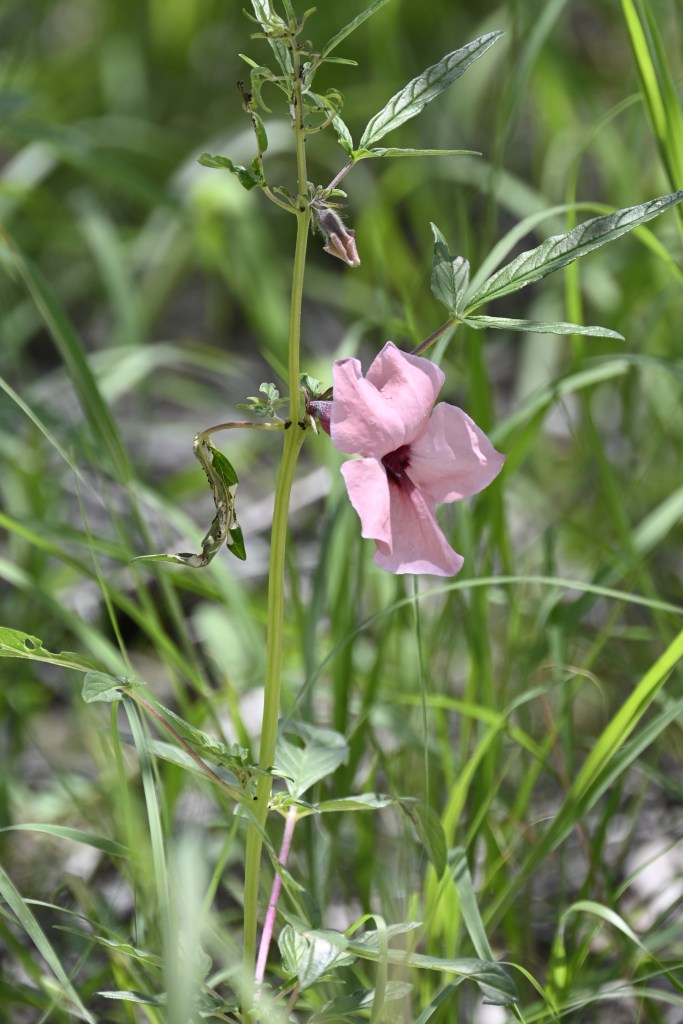
Okaukuejo was covered with grass and yellow flowers, quite unlike the white rocky terrain I knew from before. One of the park guards was so proud of how beautiful it all looked and told me to take photos so that I could tell the world how beautiful it now had become.
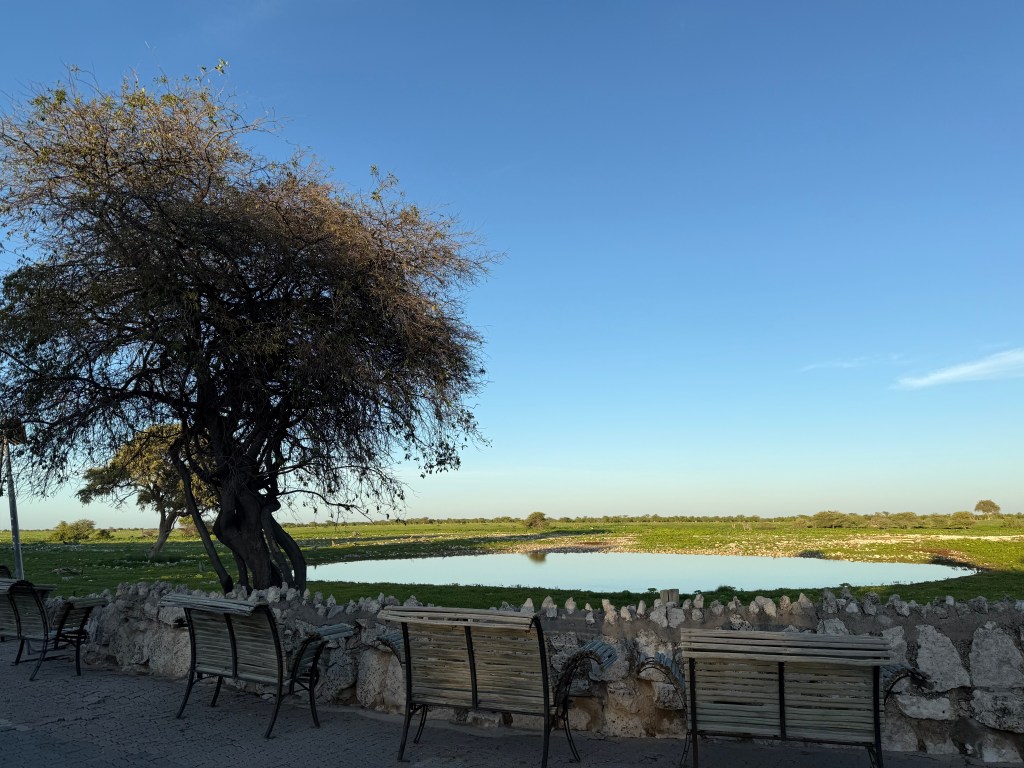
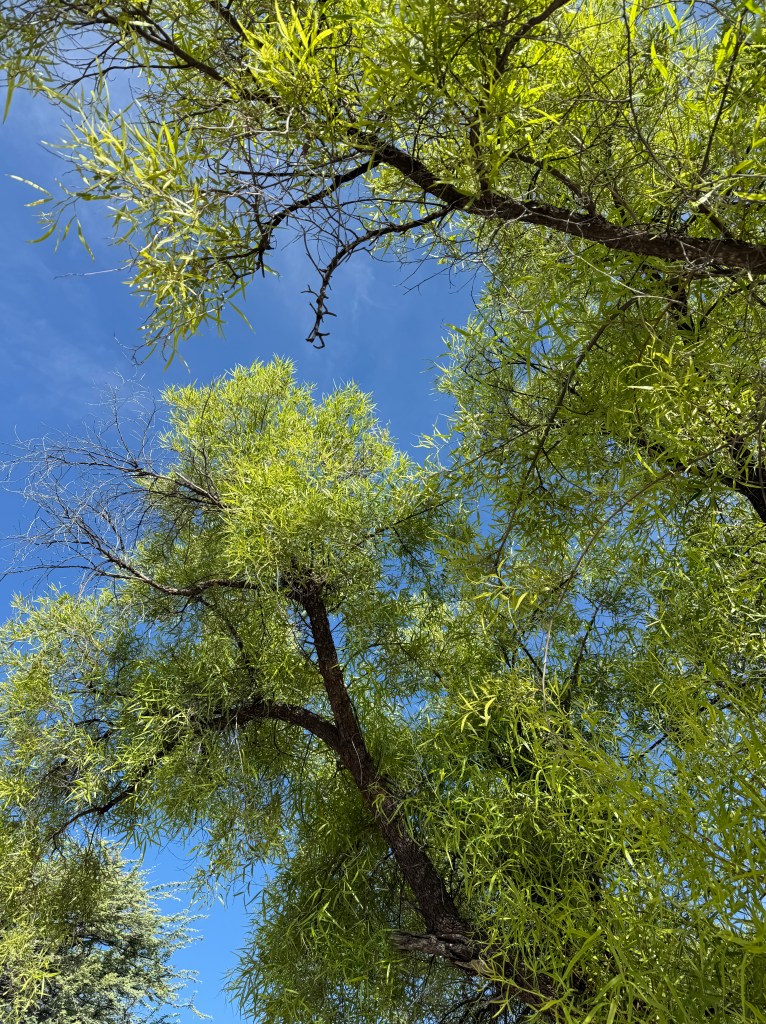
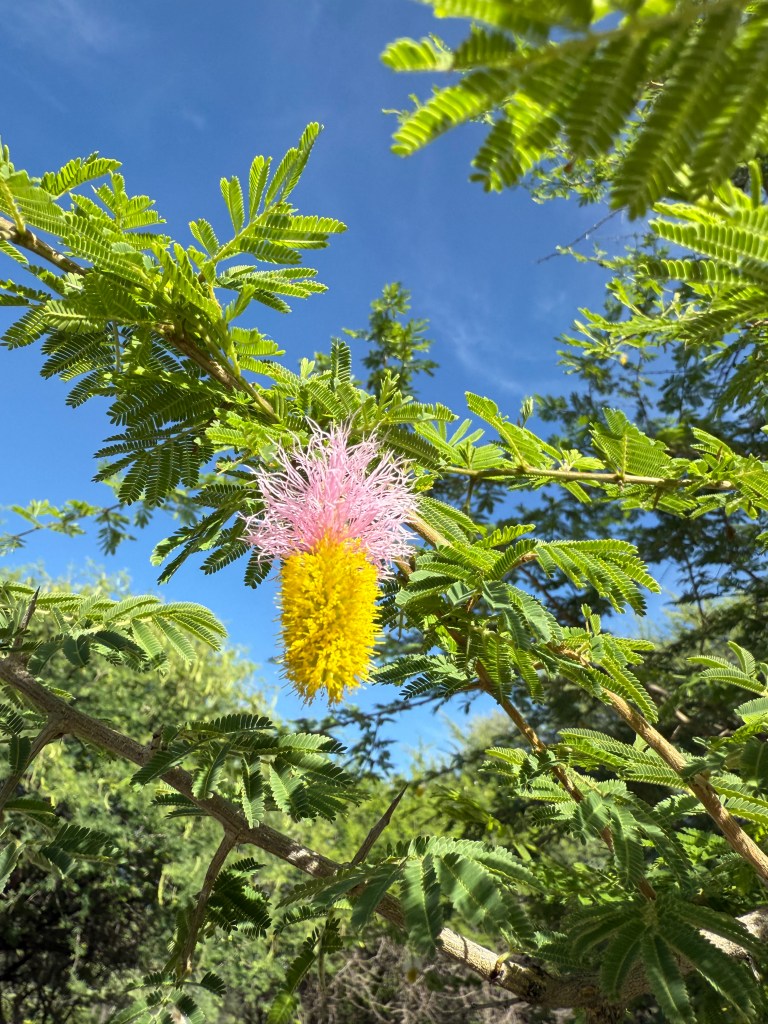
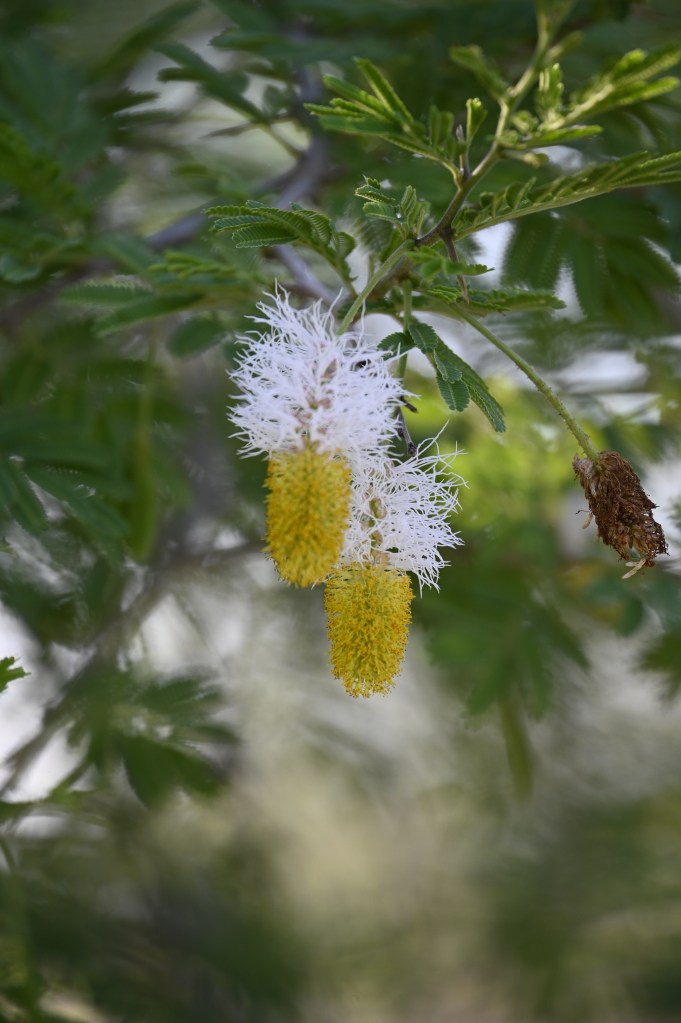
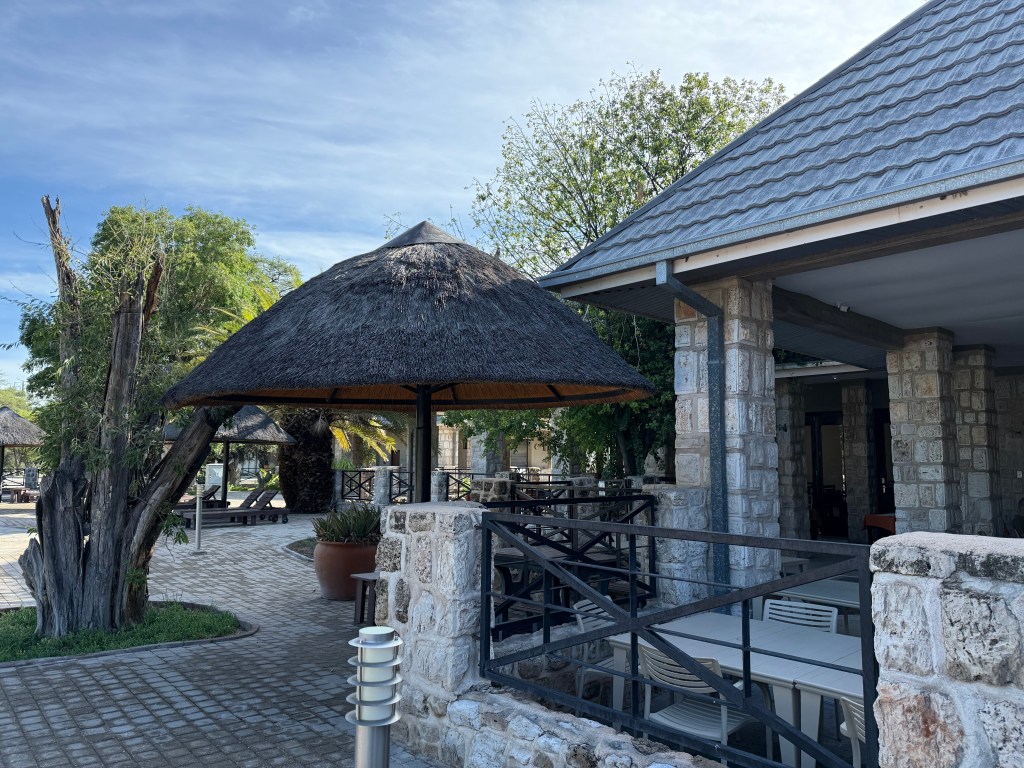
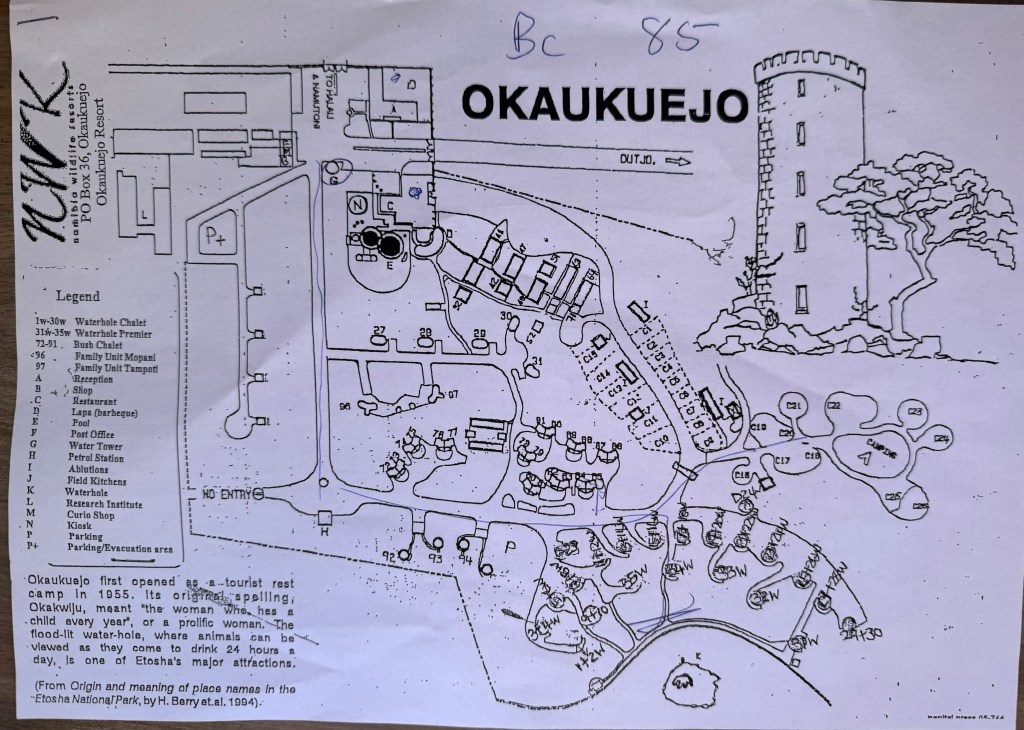
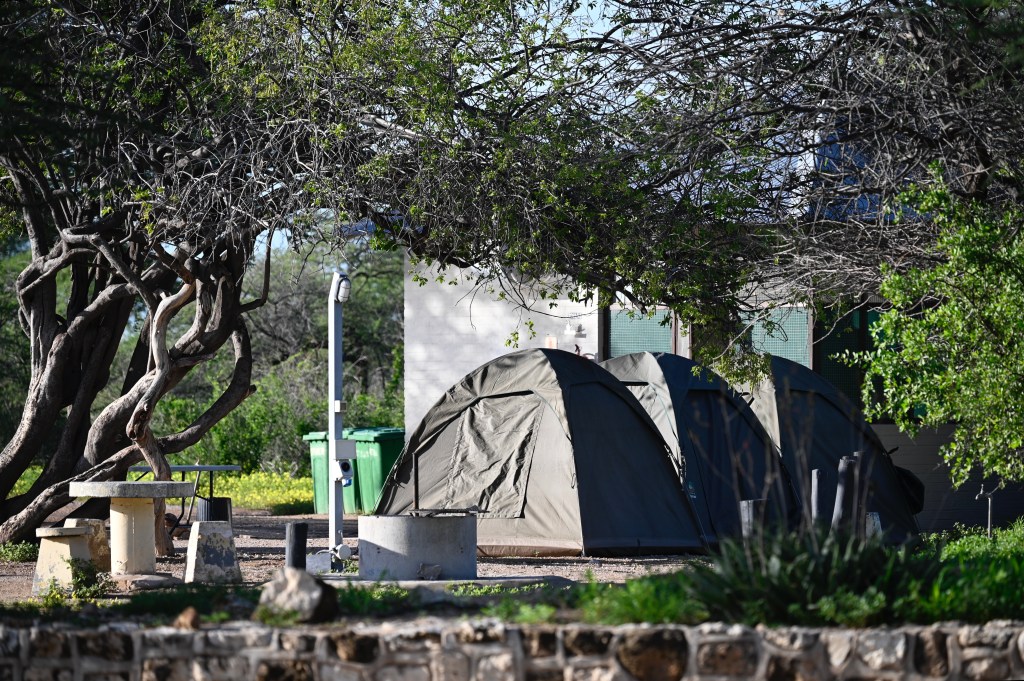
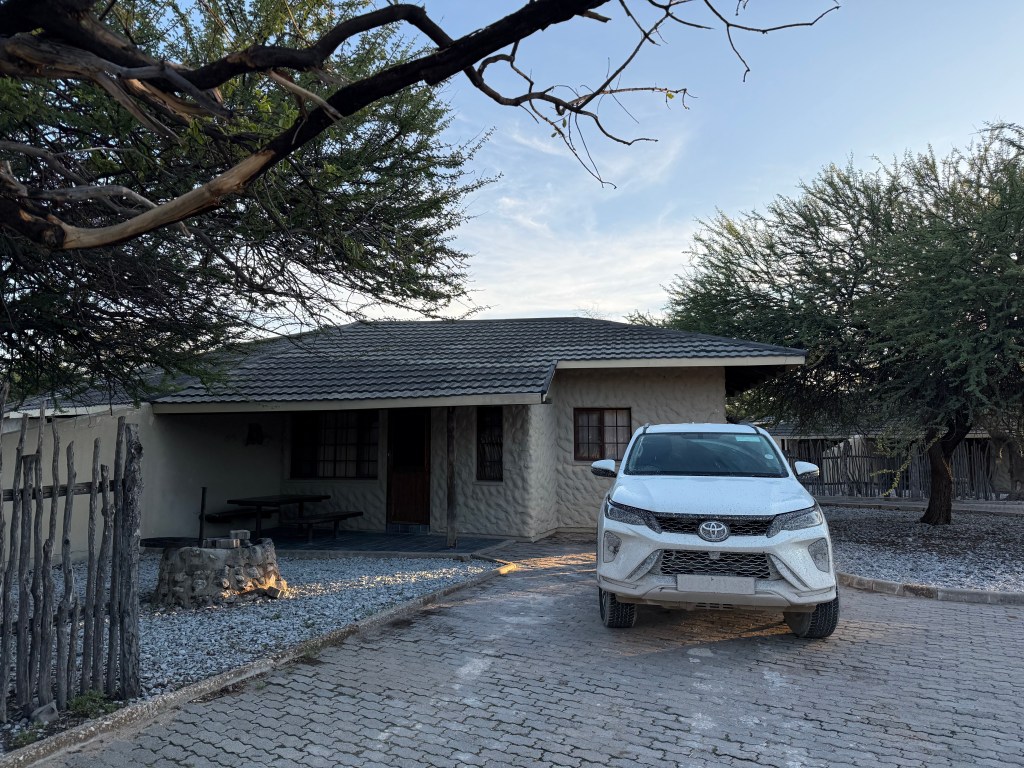
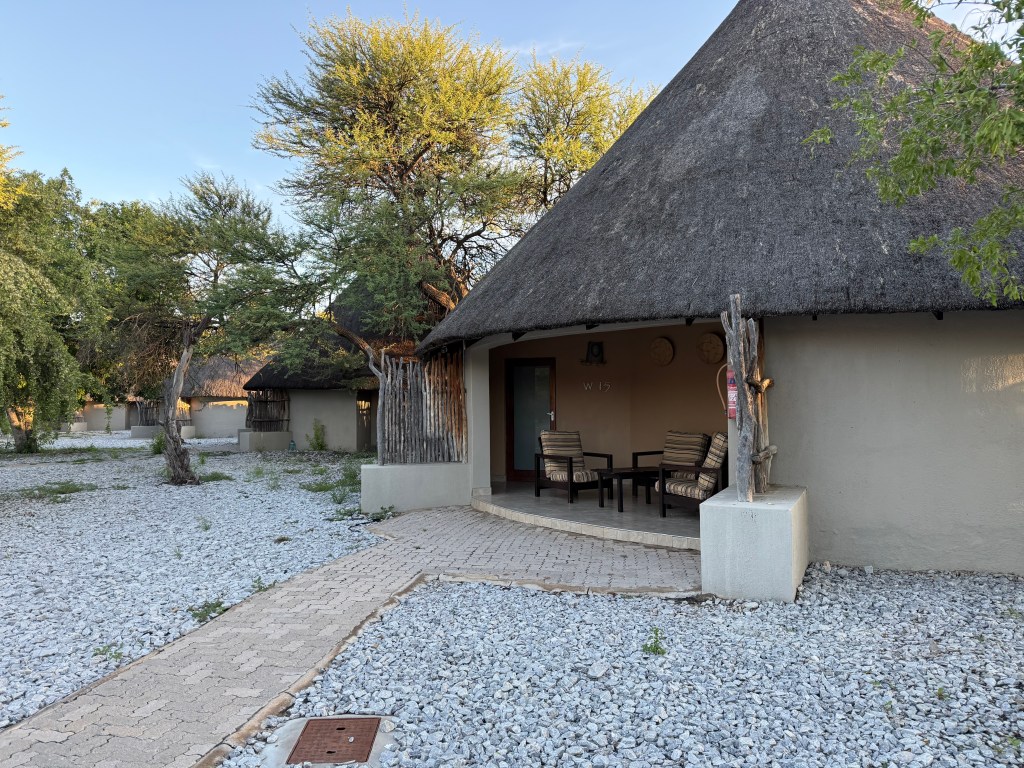
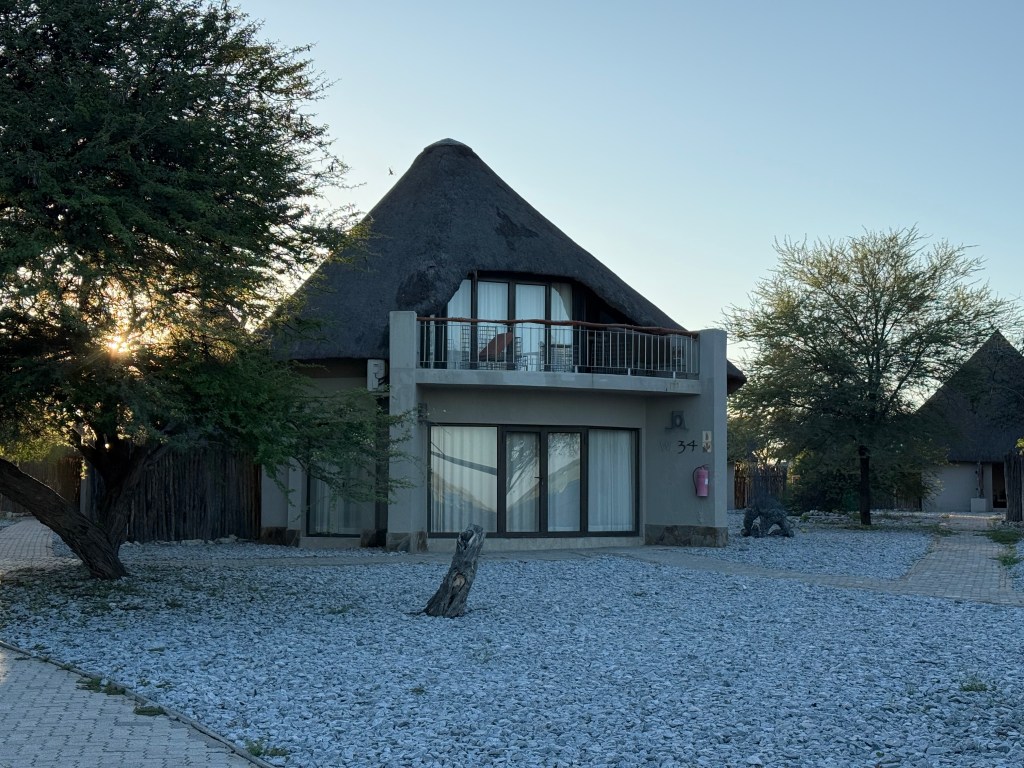
Inside Okaukuejo, you have several accommodation options, you can camp, live in double rooms, bush chalets, waterhole chalets or premium waterhole chalets, with two floors and which gives you a very good view of the waterholes. The premium is much more expensive, especially if you are not from Namibia or one of the SADC countries, so this time we went with a bush chalet, which was totally fine. In the bush chalet we had a small barbecue, which we used once, and that gave us a nice options to study the night stars.
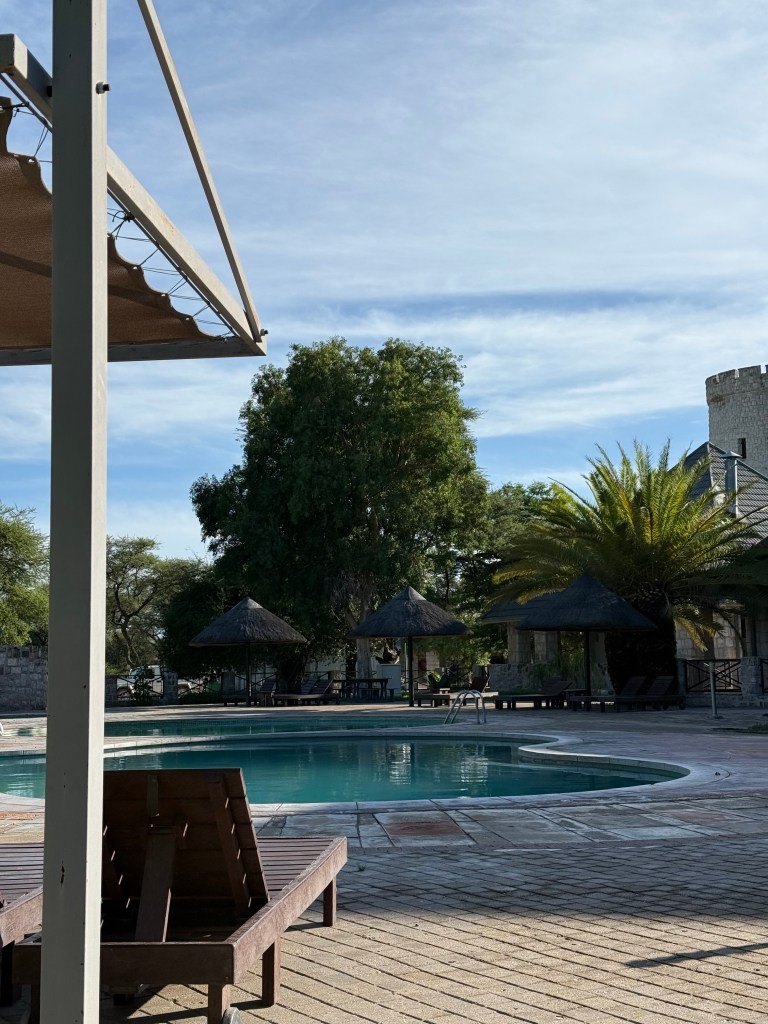
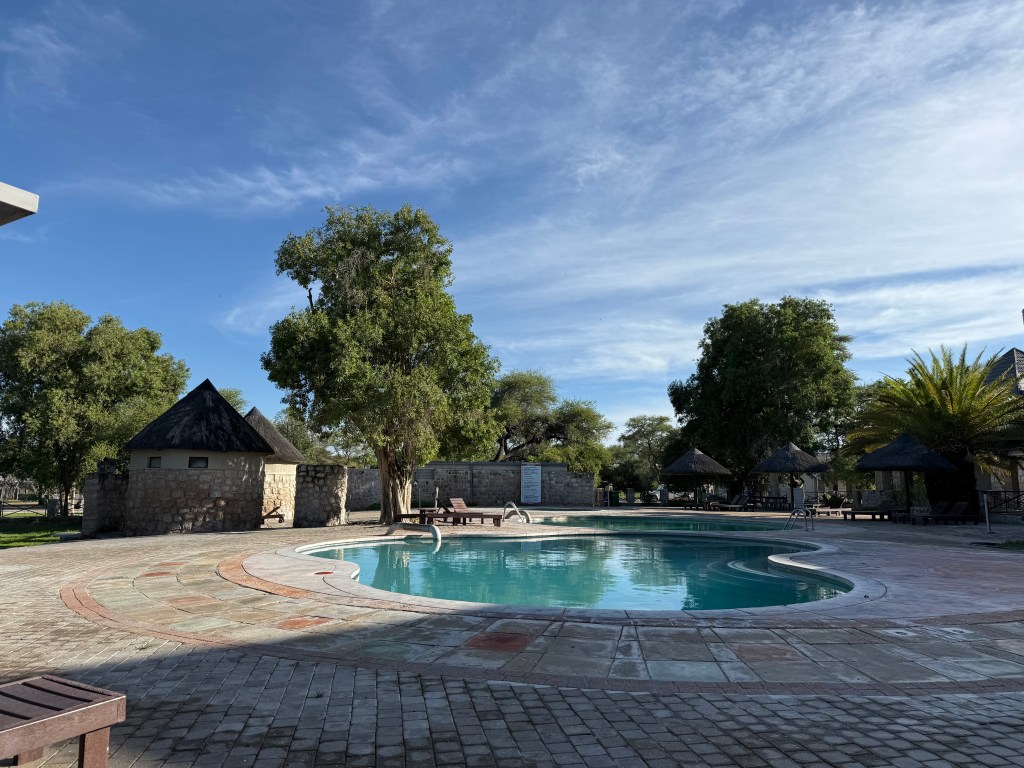
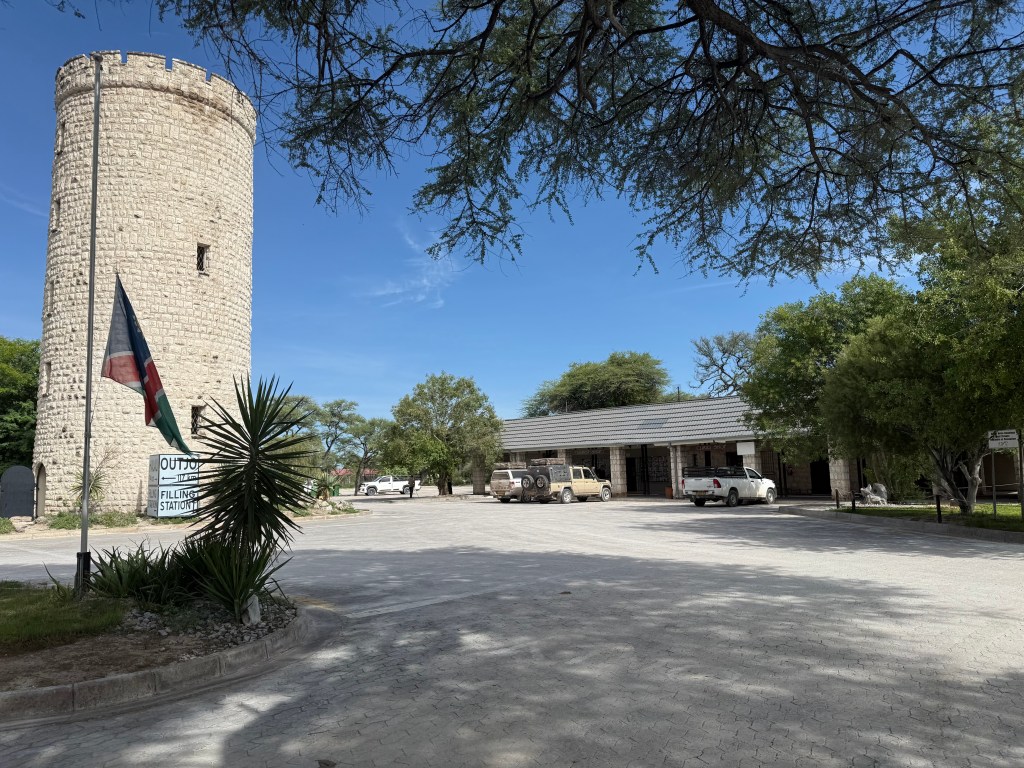
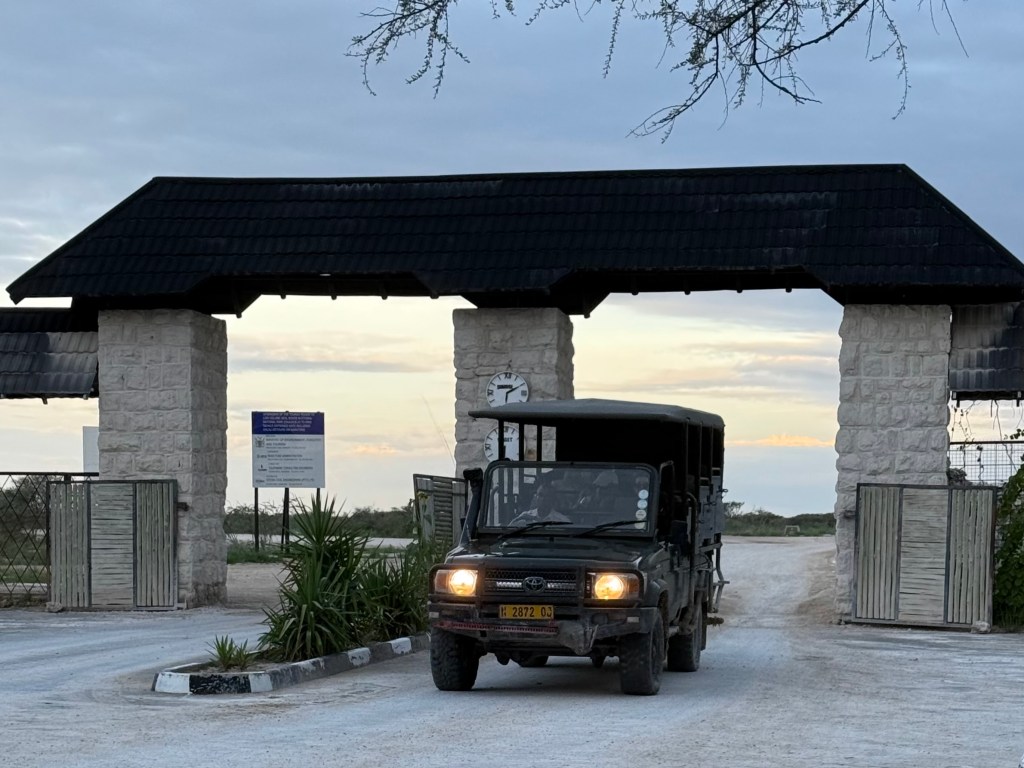
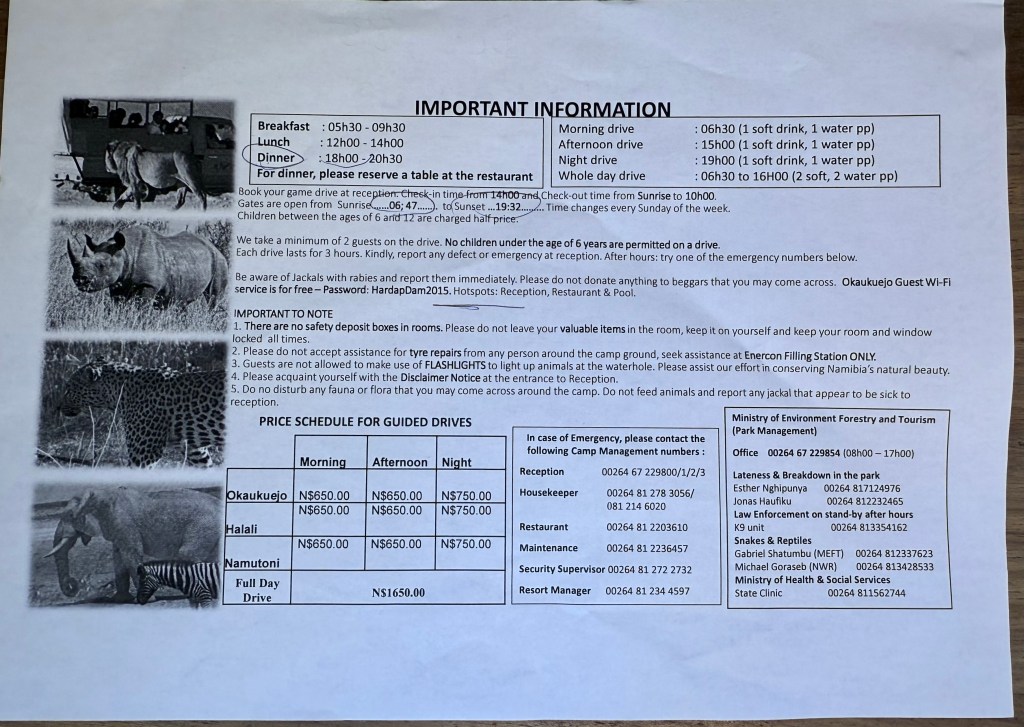
The camp has a beautiful swimming pool, a small grocery shop, a petrol station and a tower that you can climb to get a view of the area. At sunset each night, they close the gate, so no wild animals can enter where you stay. All the camps inside the park is run by Namibian Wildlife Resorts (NWR) and you can book accommodation through the NWR website.
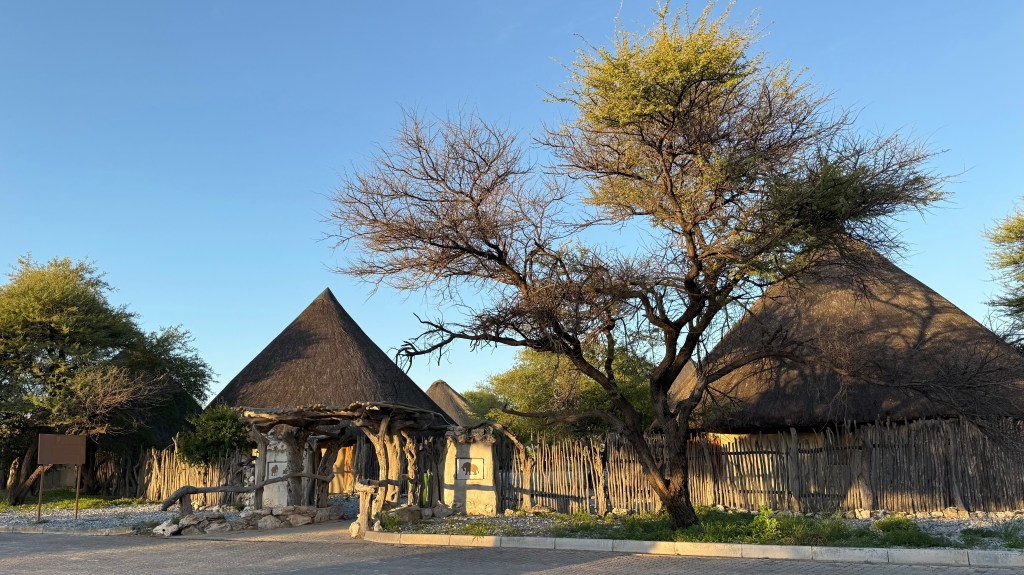
Halali
Halalai is a great place to have lunch and a swim, as we did this time. Their pool is large and good for swimming and they have changing rooms. They also have a small grocery/curio shop and a restaurant, where we got some lunch.
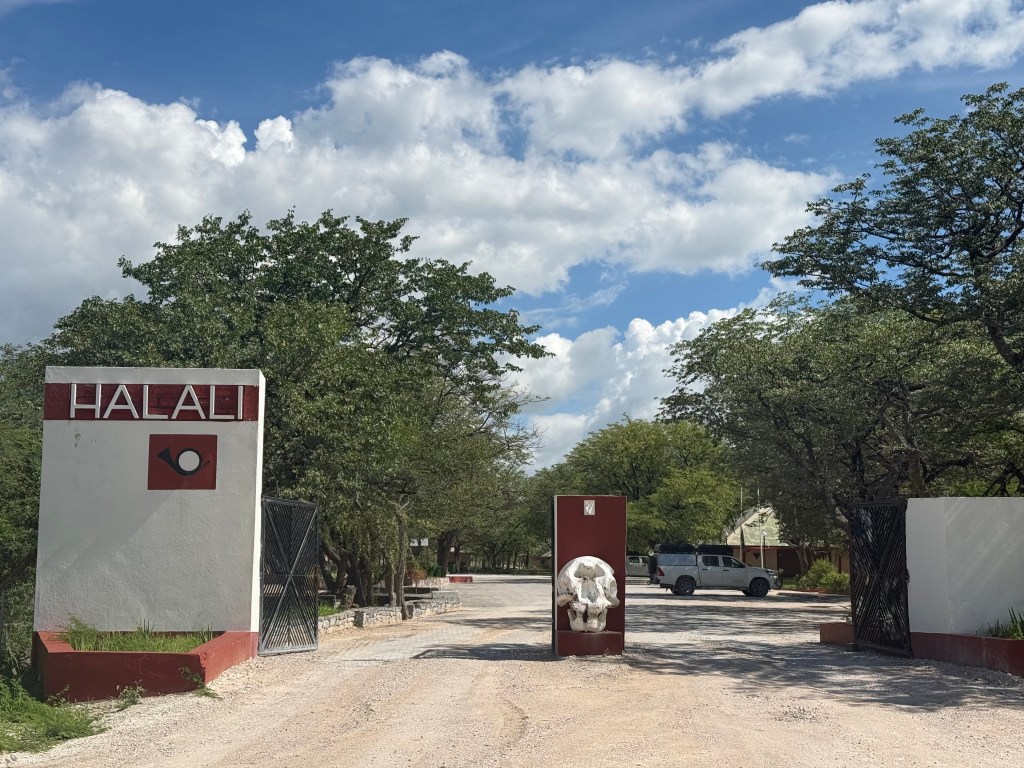
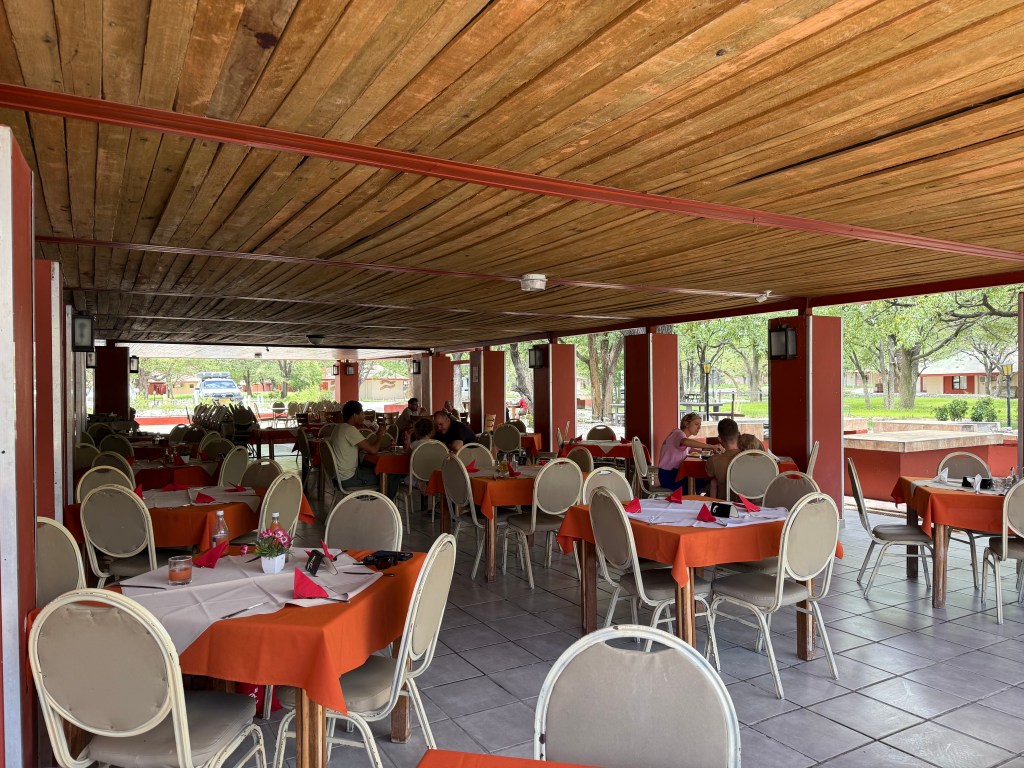

We have never seen much wildlife at the Halali waterhole, but the surrounding area is covered with more trees than in Okaukuejo, so lots of animals can usually be seen. Halali lay east of Okaukuejo and we took quite some time to drive there, due to rocky roads, with water on, and stopping several places to look if we could see any animals.
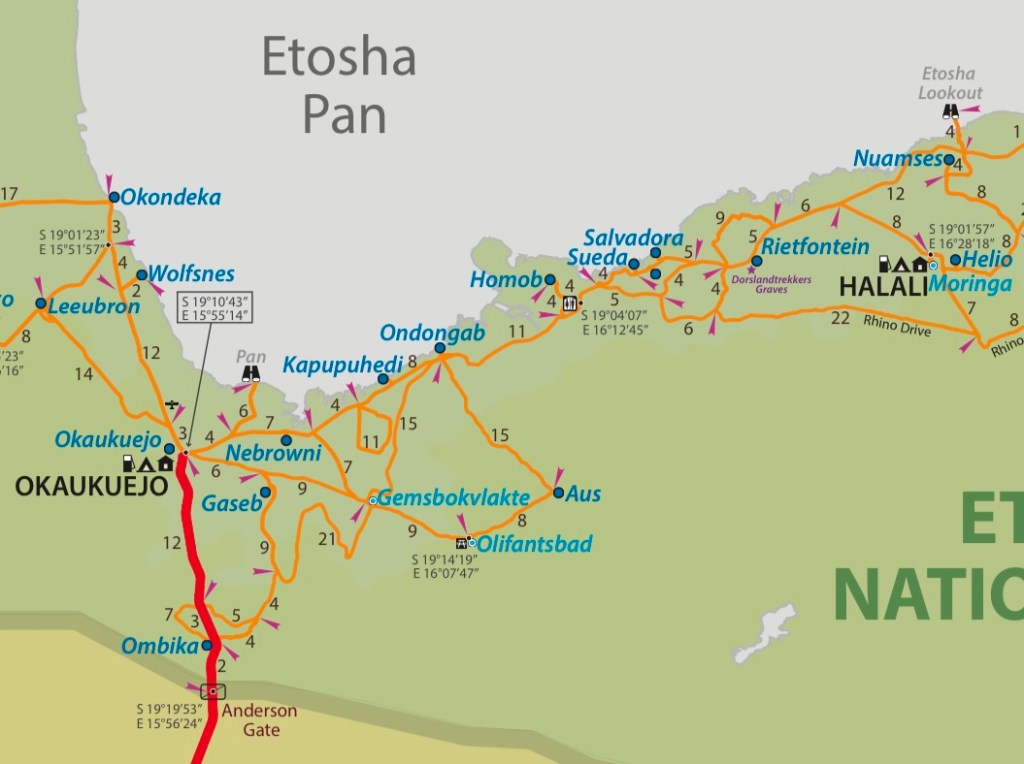
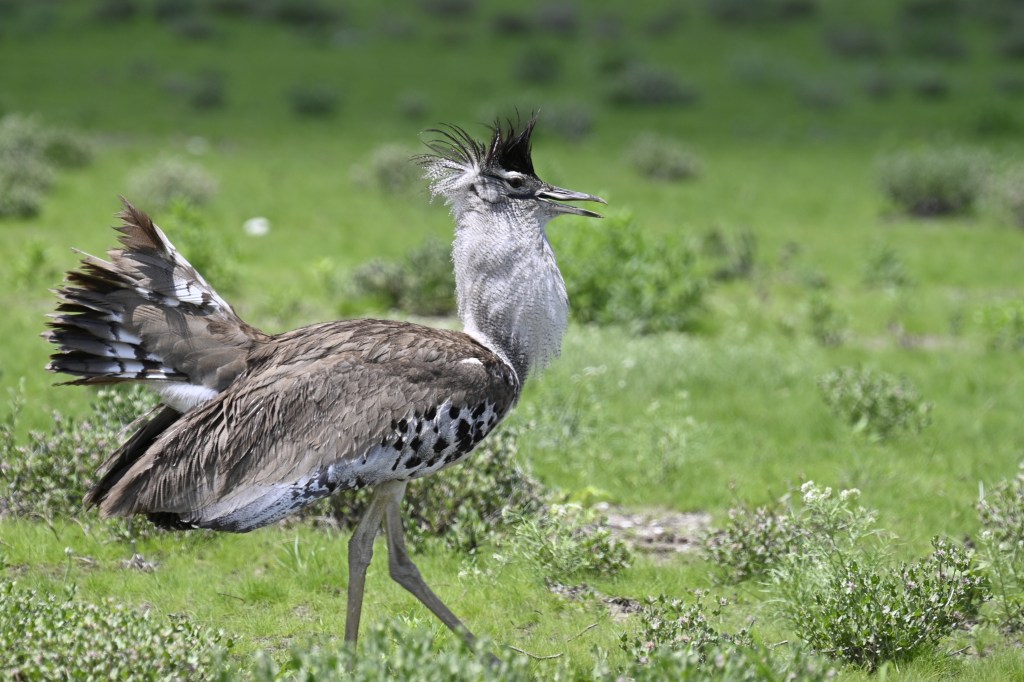
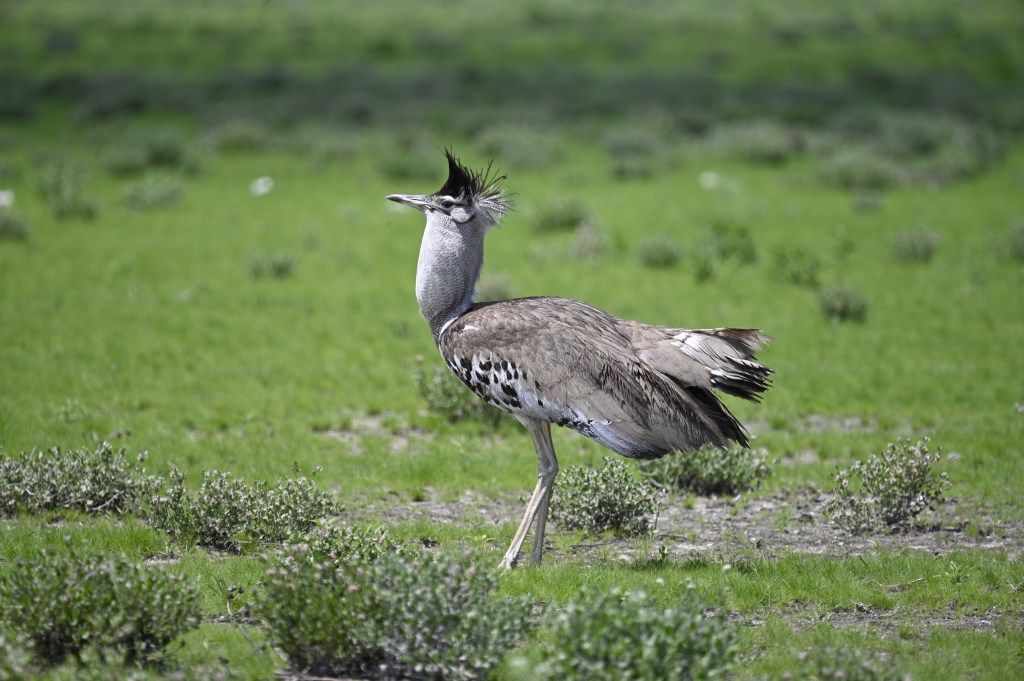
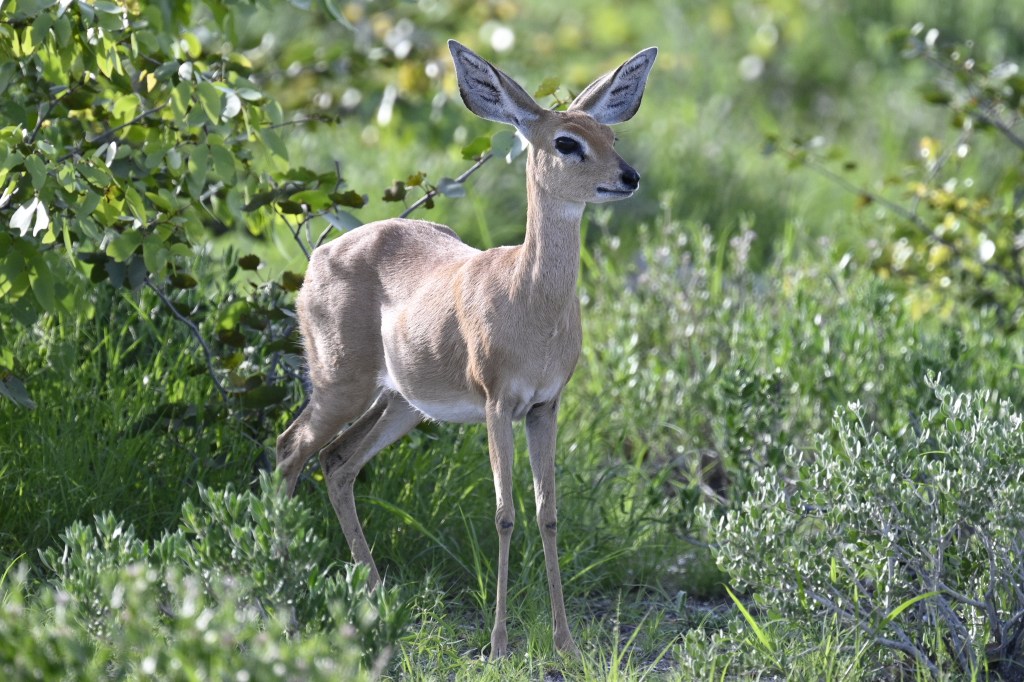
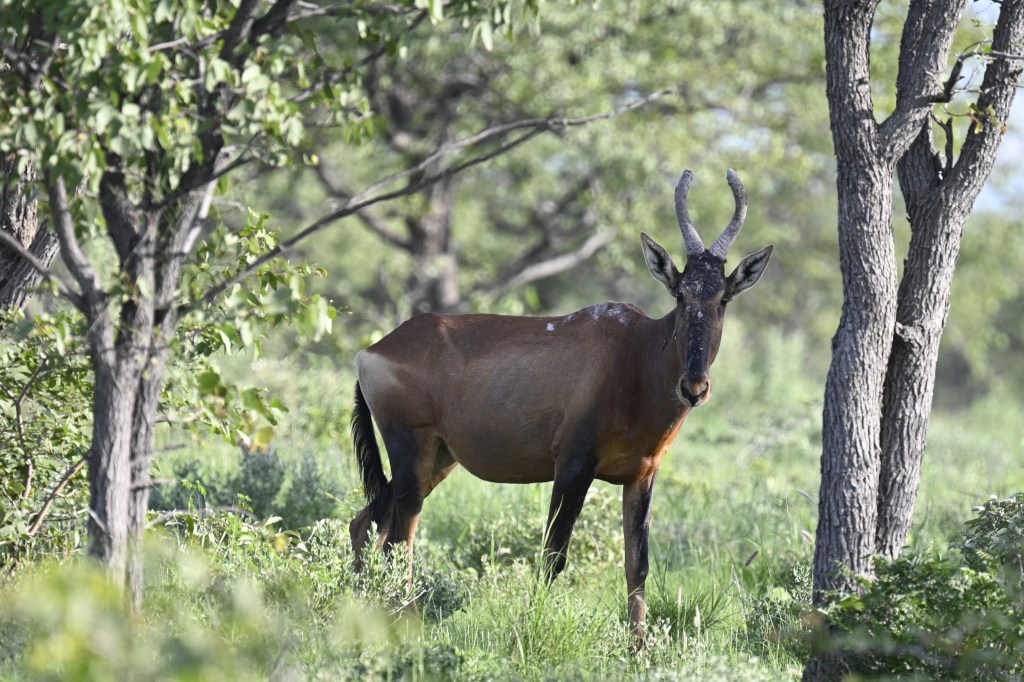
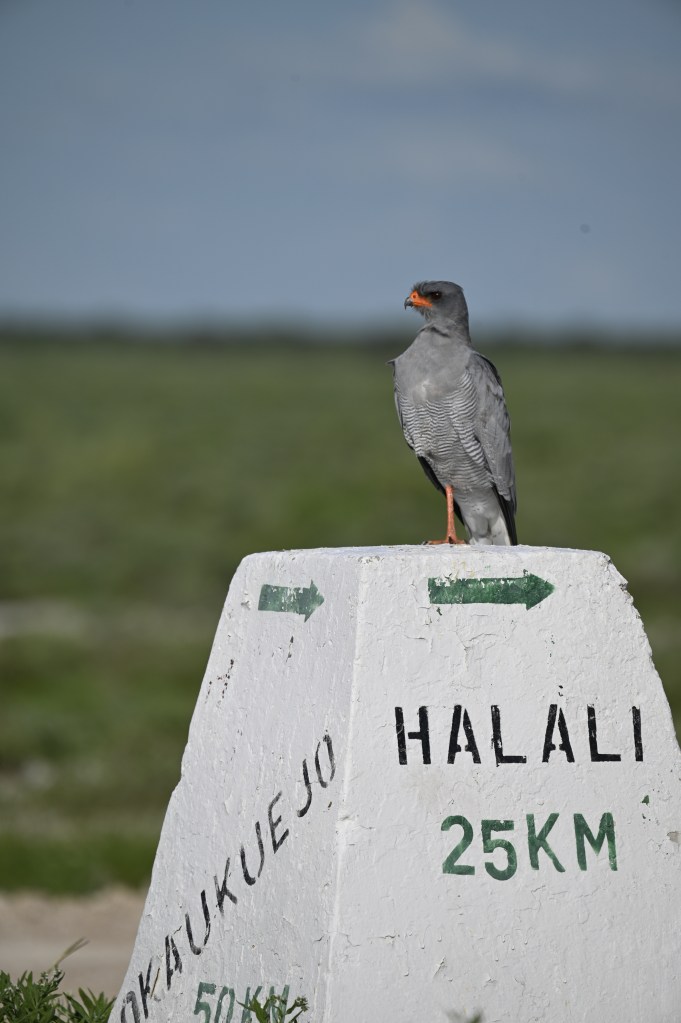
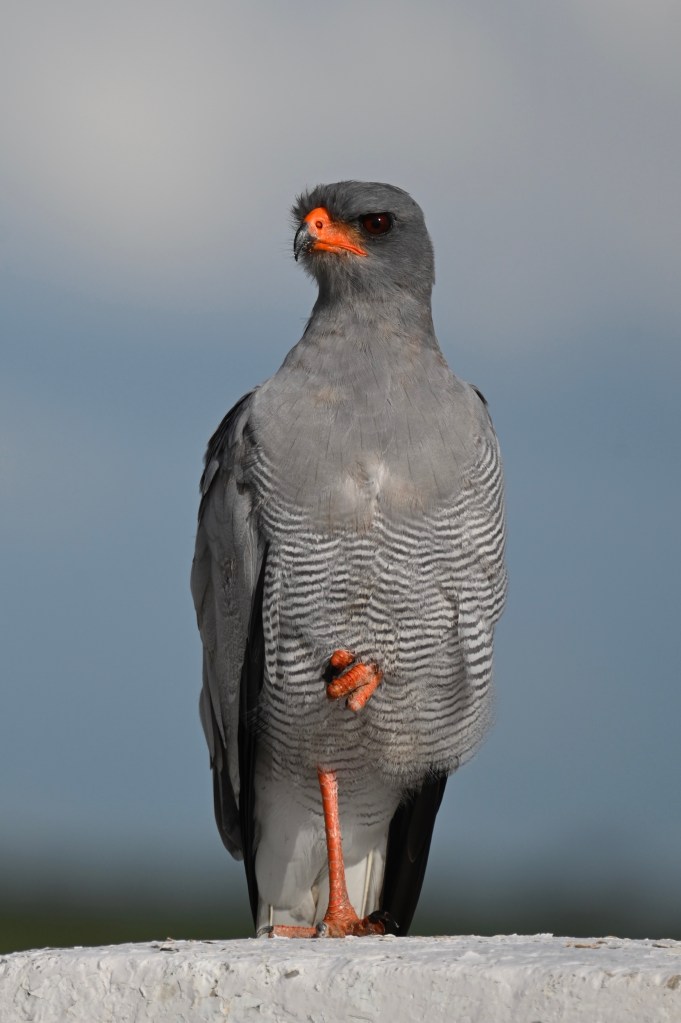
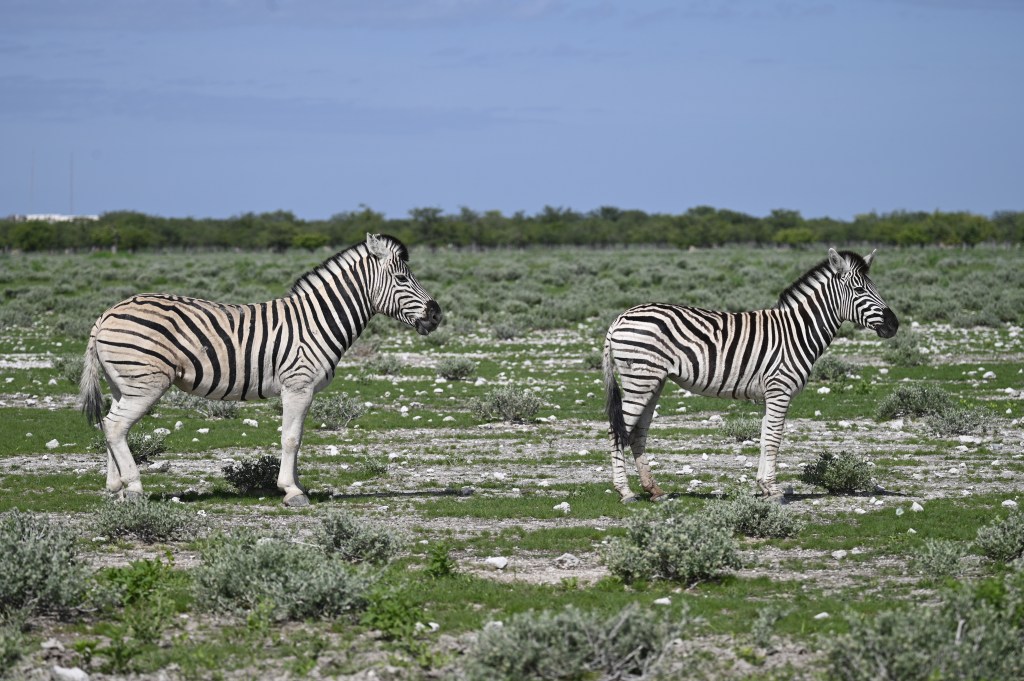
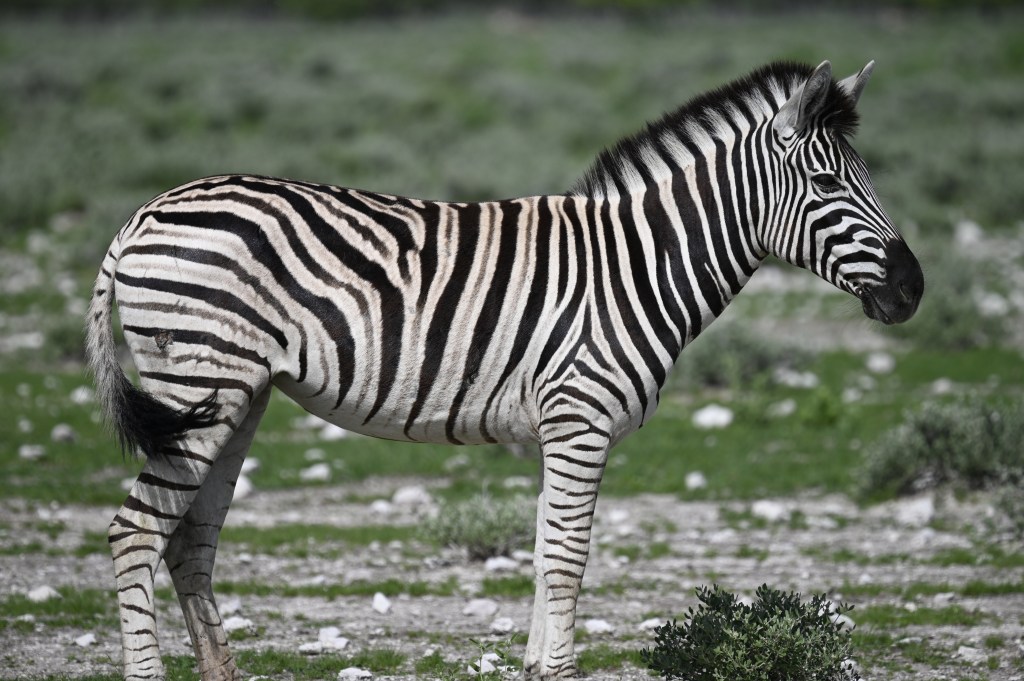
We saw some animals, but not the large herds as we used to do. We saw impalas and a giraffe and lots of butterflies and flowers. We also met a large bird, a Kori bustard, which seemed to be looking for ladies as he had fluffed up his feathers more than we have seen before. On the way back we saw some springbucks, a stenbuck, red heartbeast, blue wildebeast, zebras and a hawk. The view of the white Etosha pan, which at parts was covered with water was also spectacular.
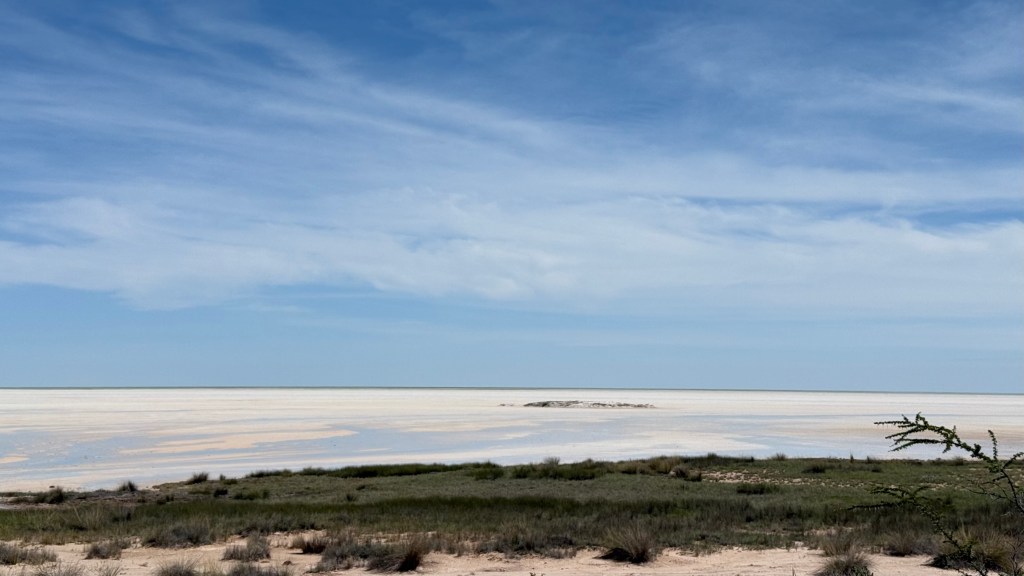
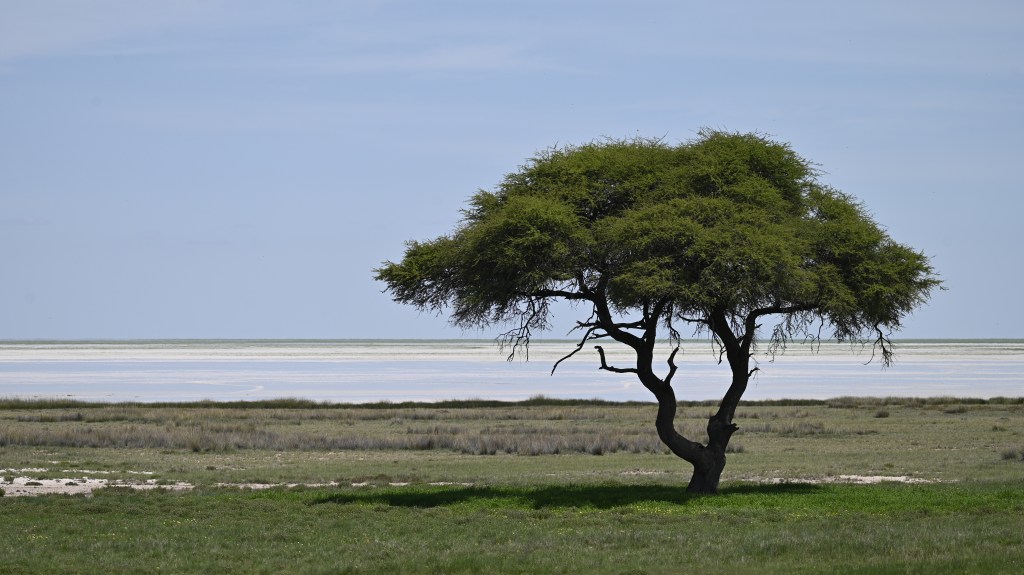
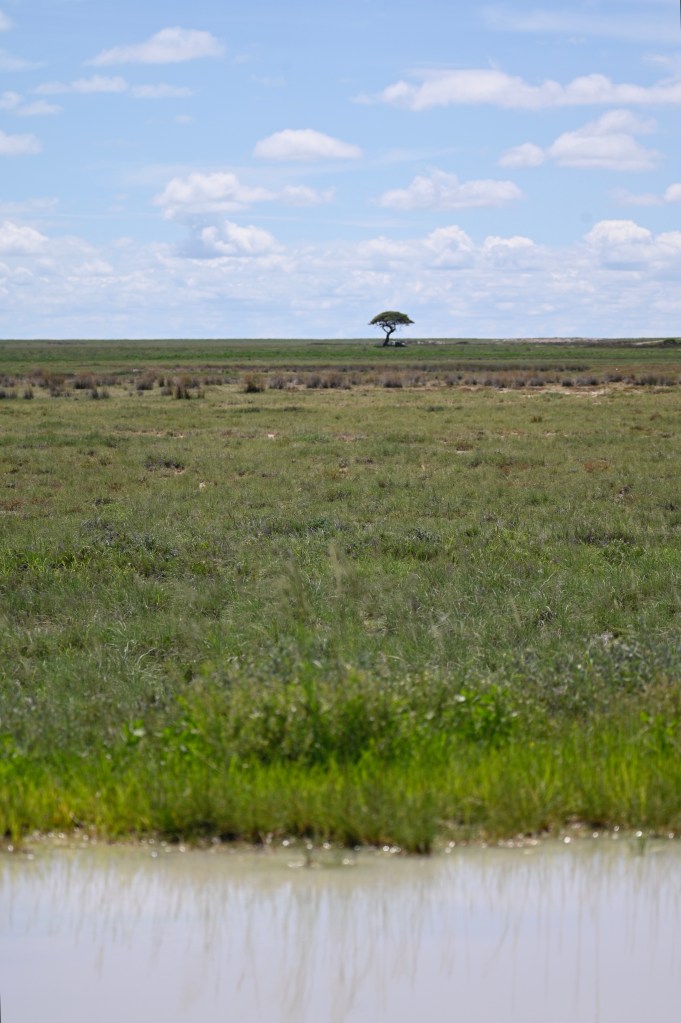
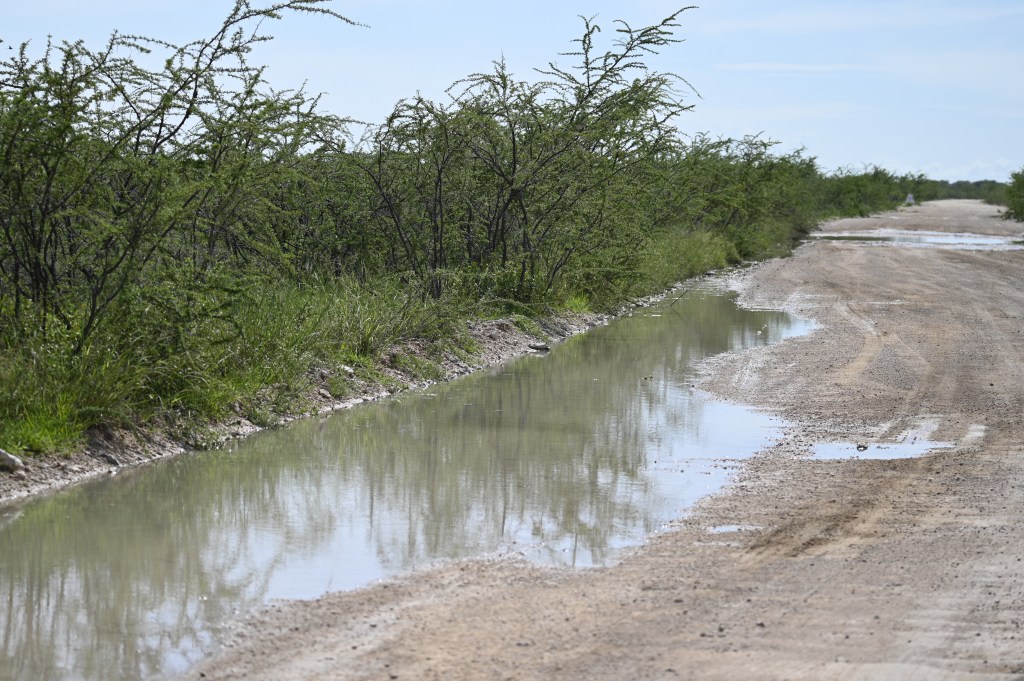
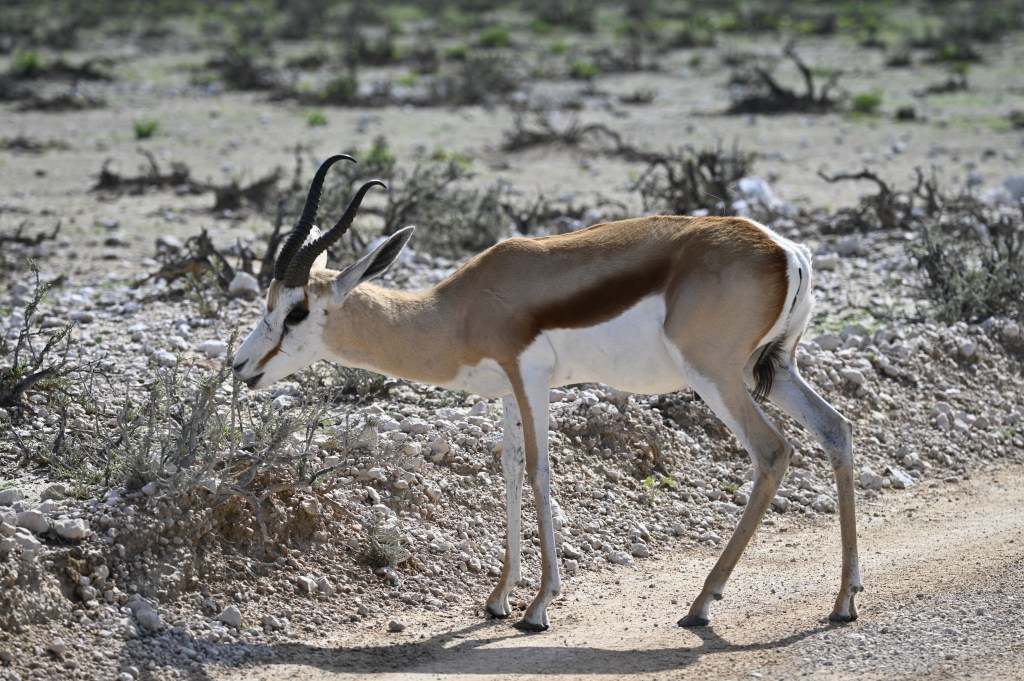
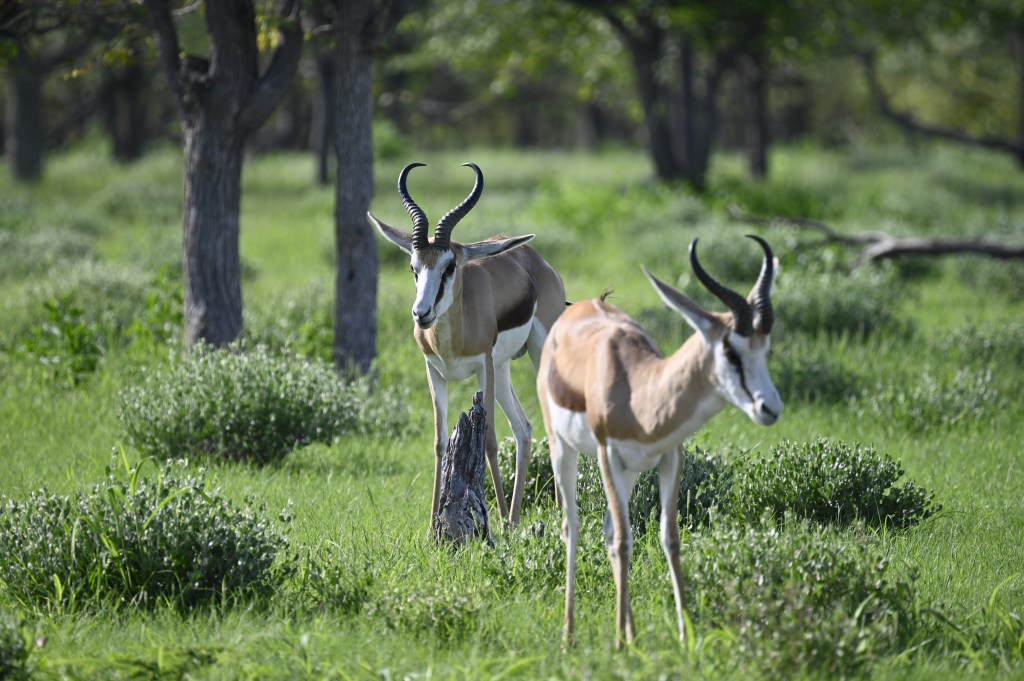
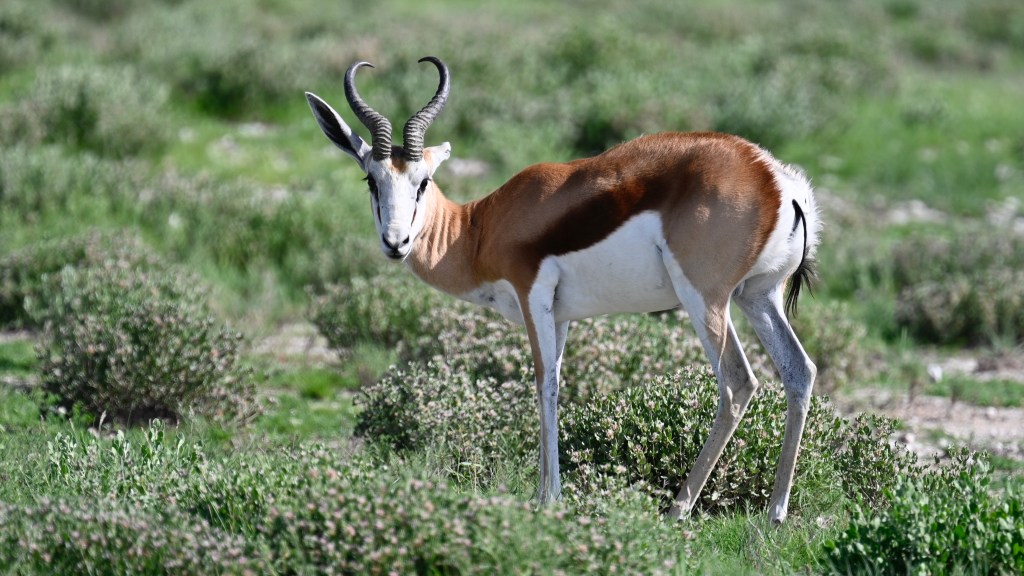
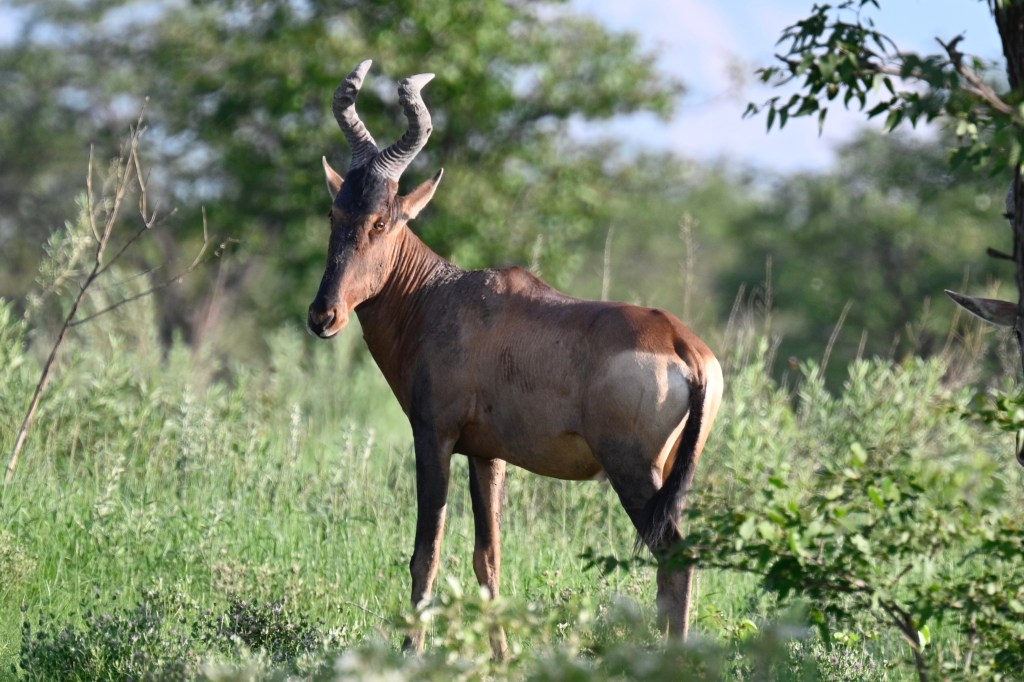
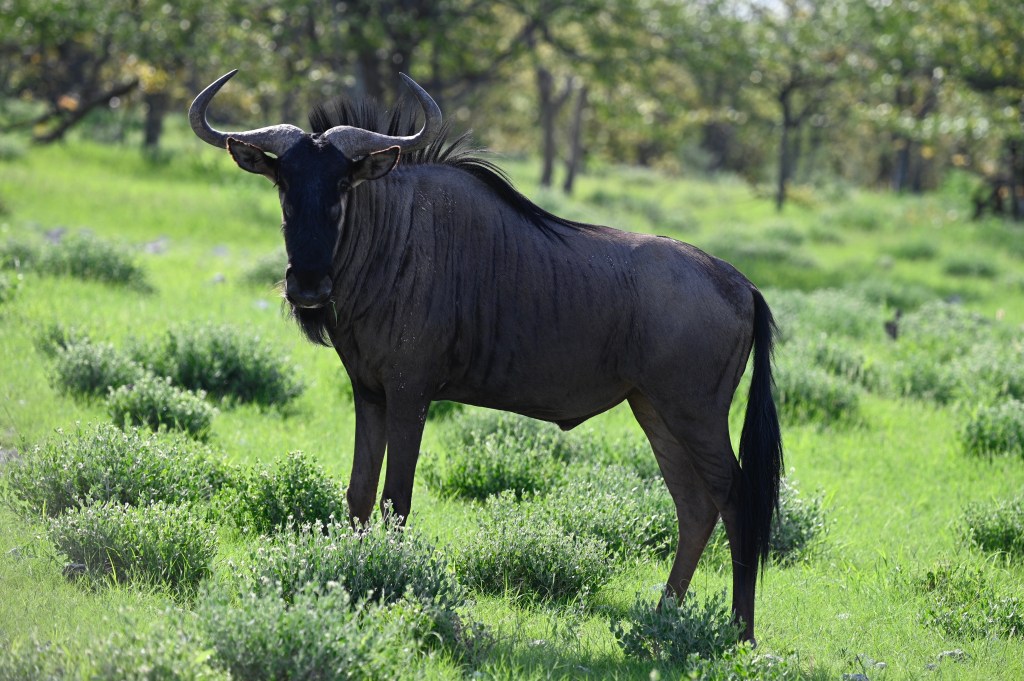
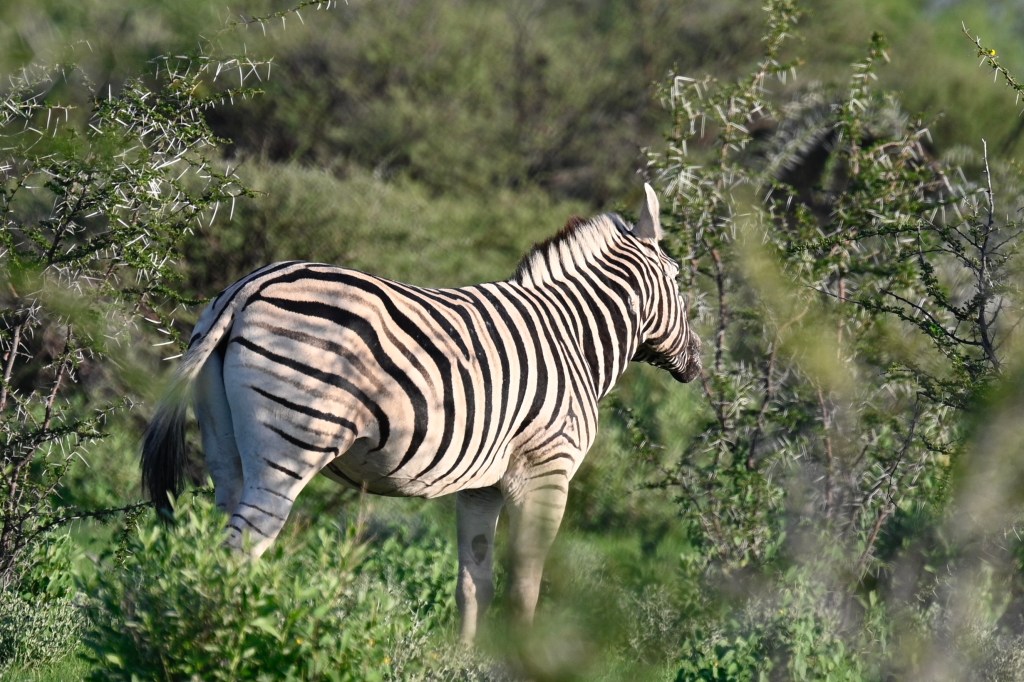
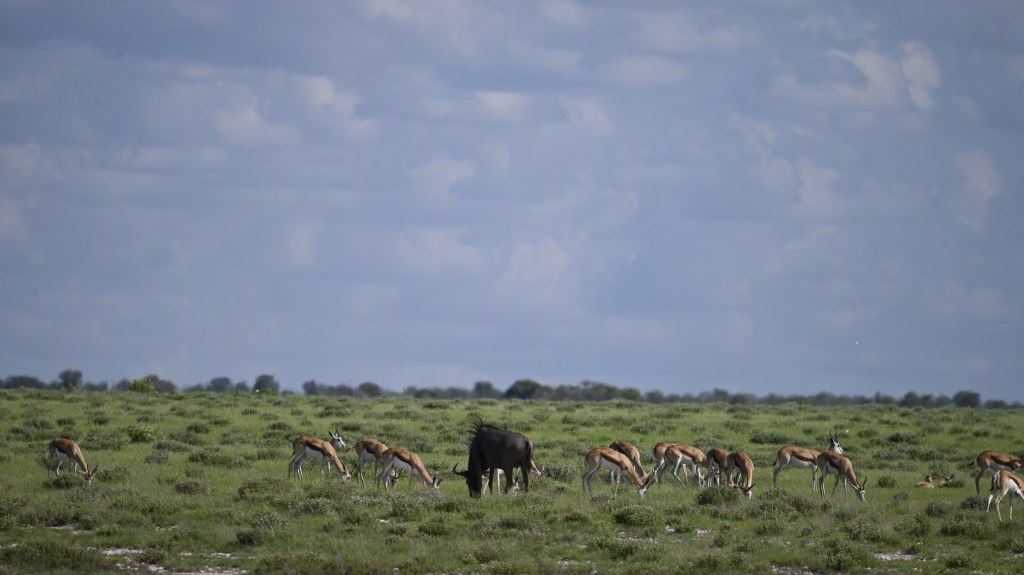

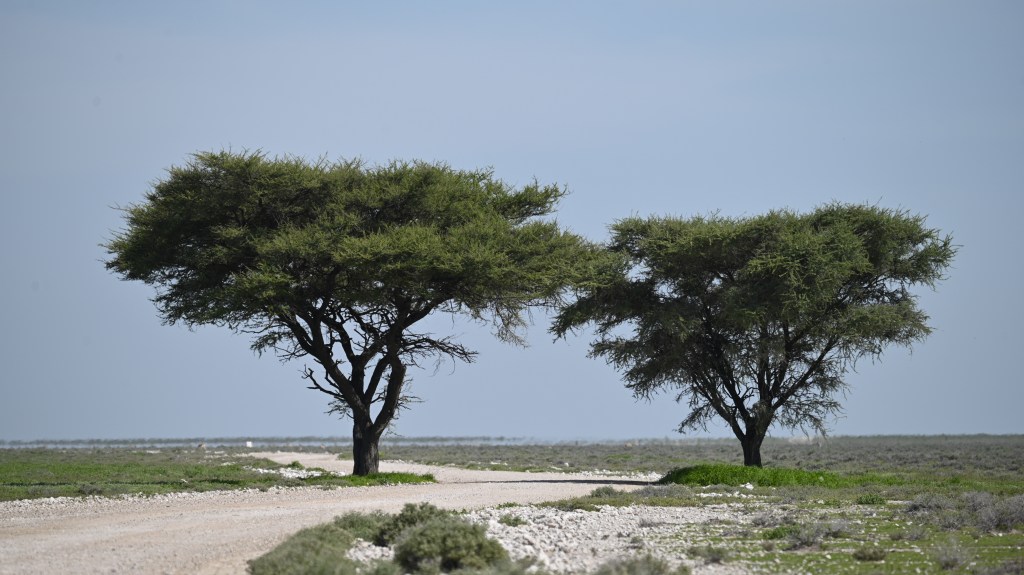
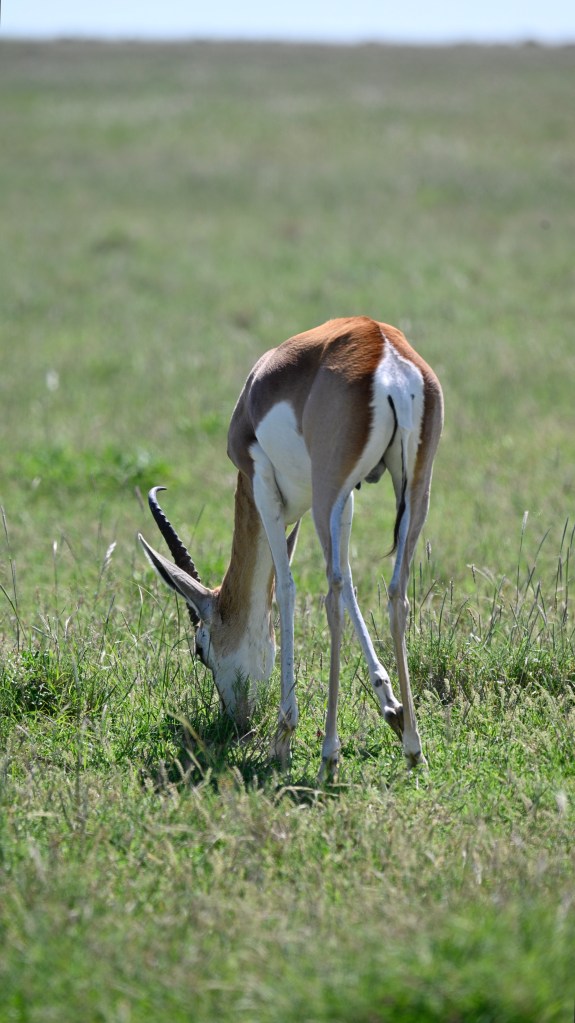
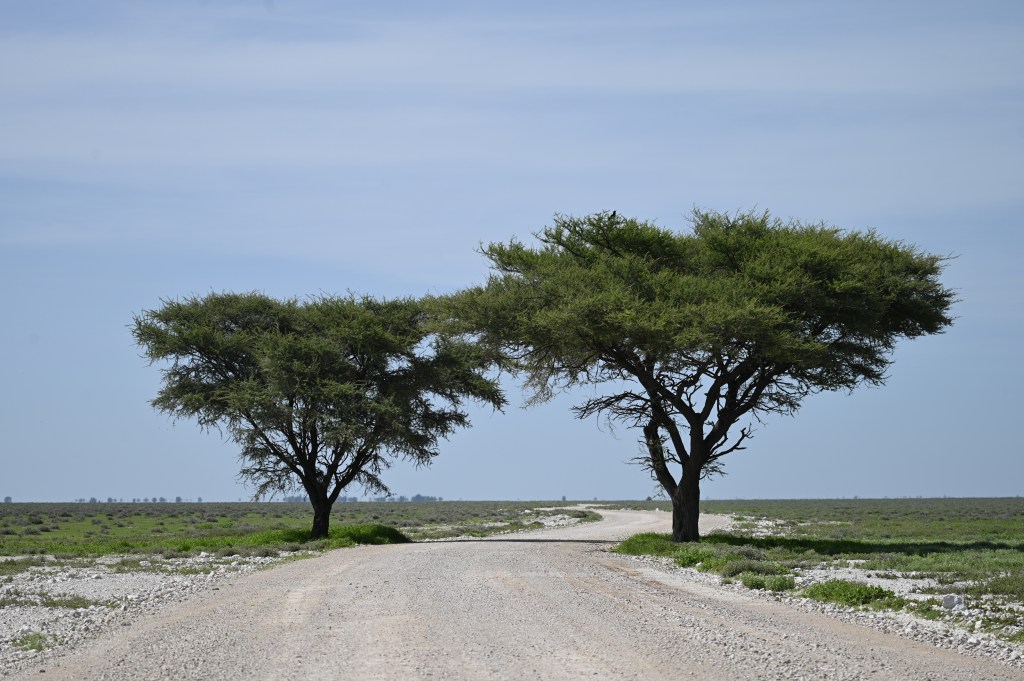
North of Okaukuejo is the waterhole Okandeka, which we normally visit, as we often have seen lions there in the afternoon. This time we did not get the time to look, but drove a little north on the western side of the pan to visit the two trees standing on the side of the road in an otherwise flat and empty area, which often give shelter to herds of springbuck. As it were not too warm and had been raining the animals was more spread, but we saw some springbuck and zebras in the area. The plains was covered with grass and flowers and very beautiful.
 Laila’s travel blog
Leave a comment