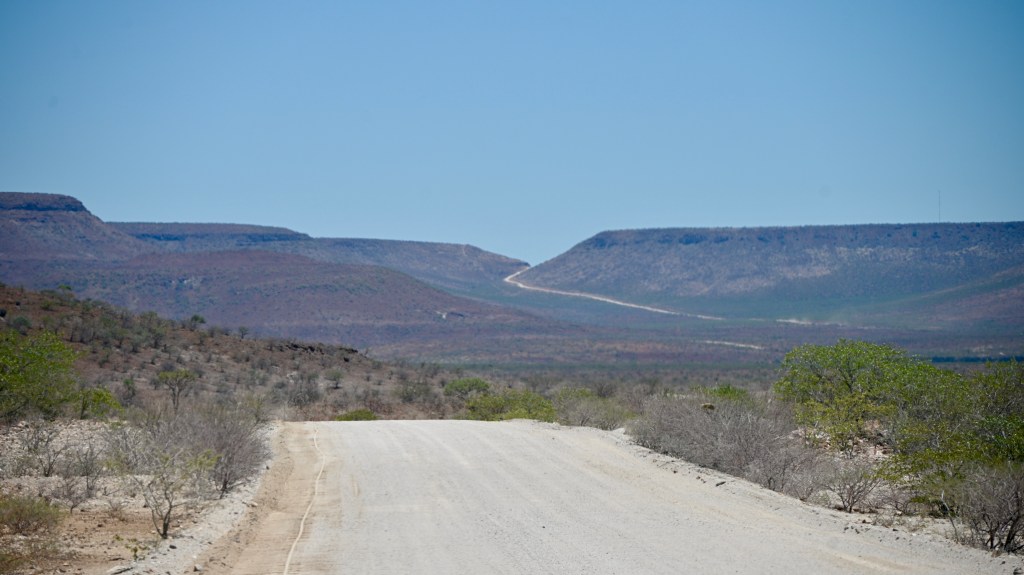
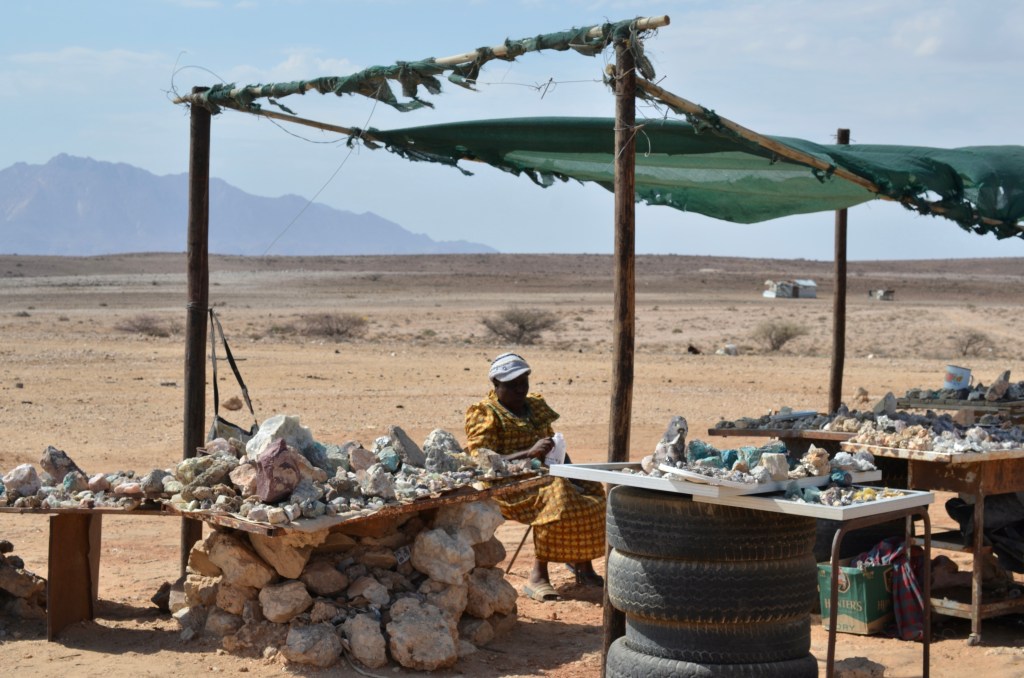
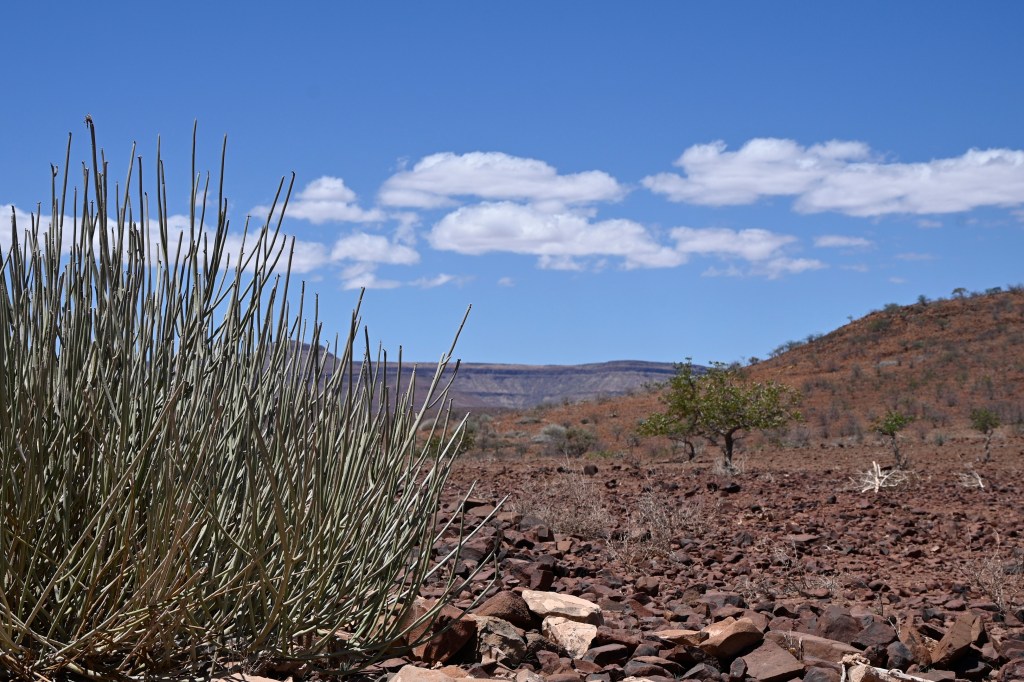
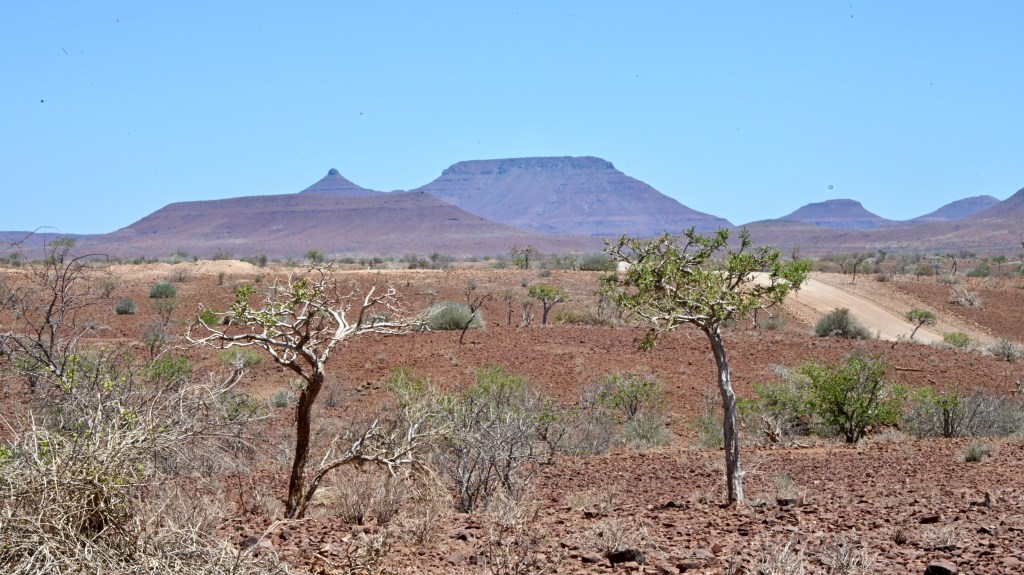
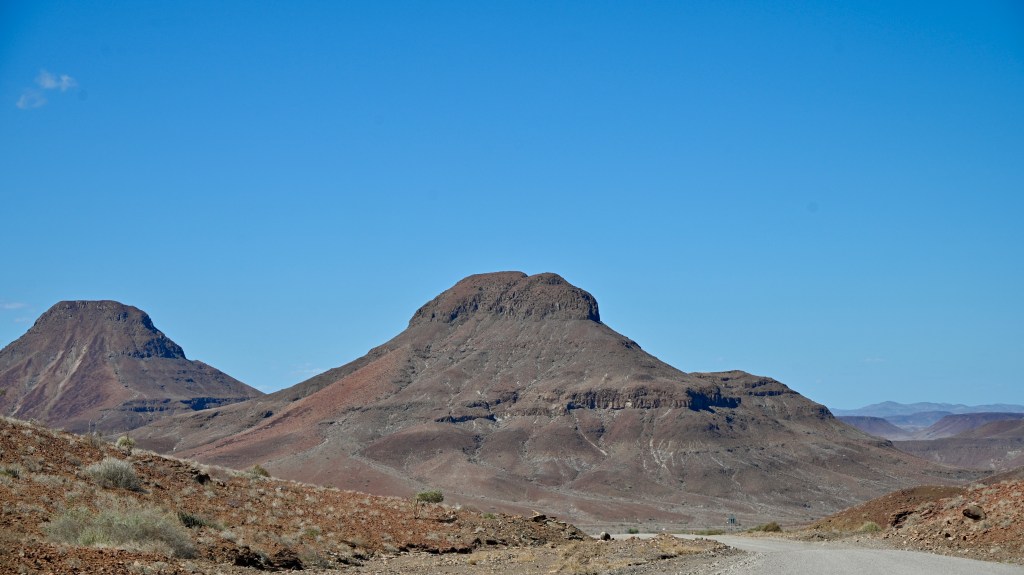
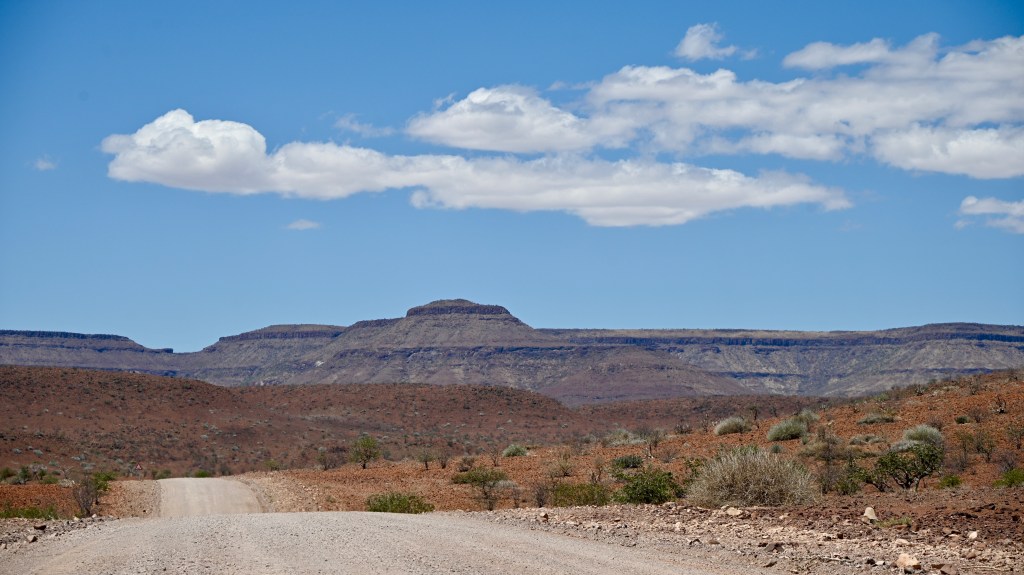
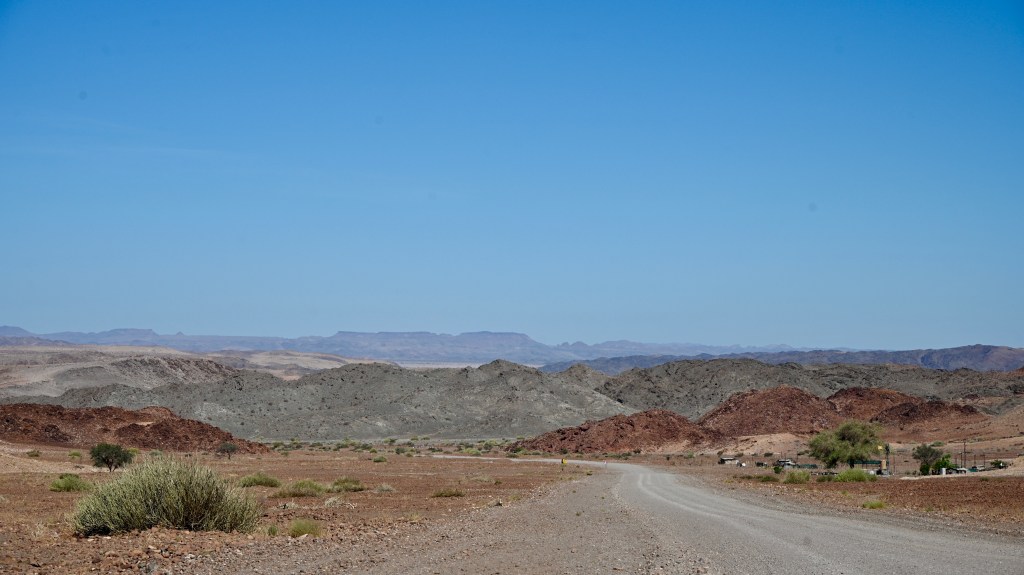
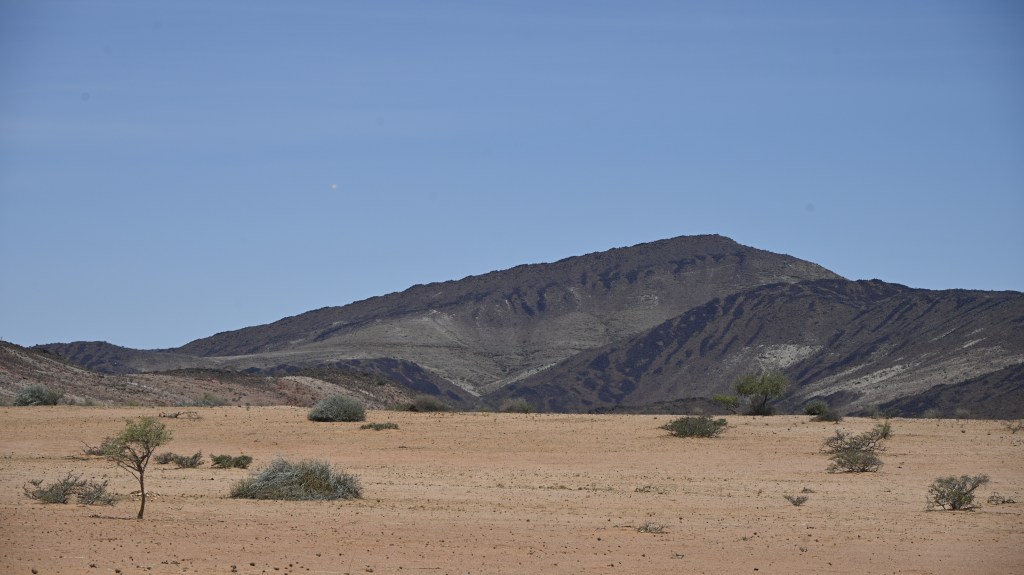
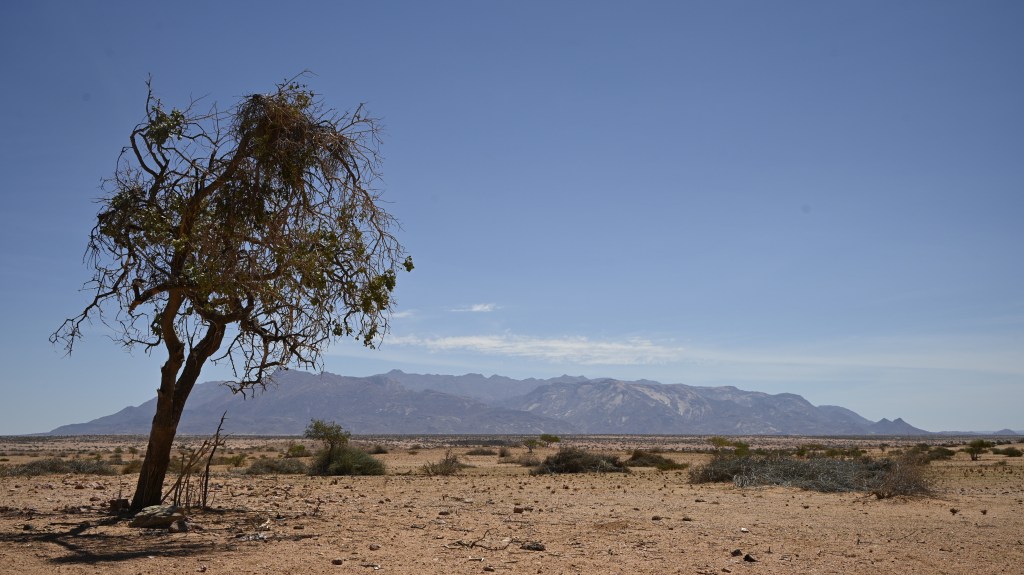
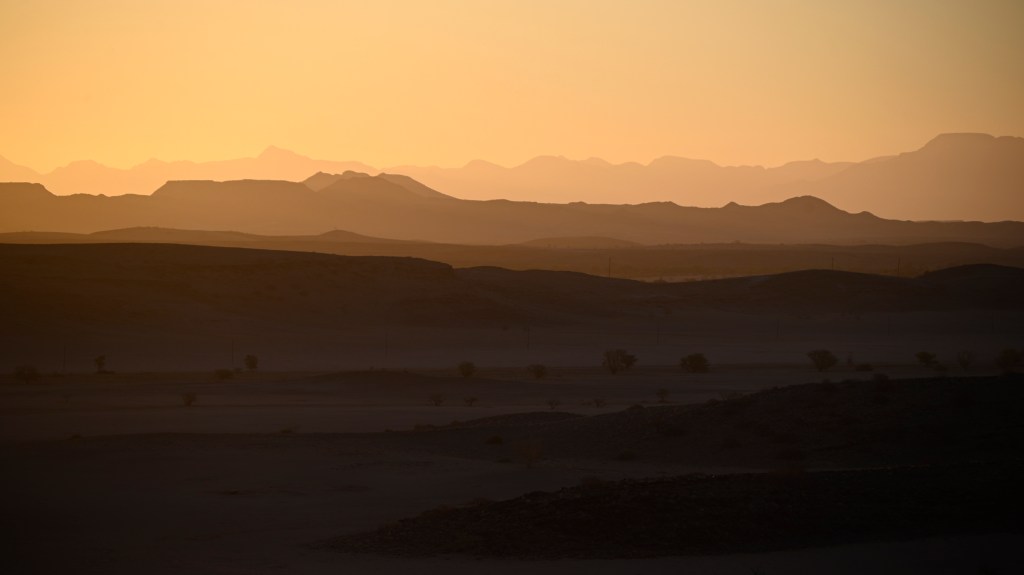
The road between Etosha and Swakopmund had an amazing beauty. The colours of the landscape shifted between yellow, red, pink, green and brown and black. Namibia is very rich in minerals and mining is one of the main sources of income for the country.
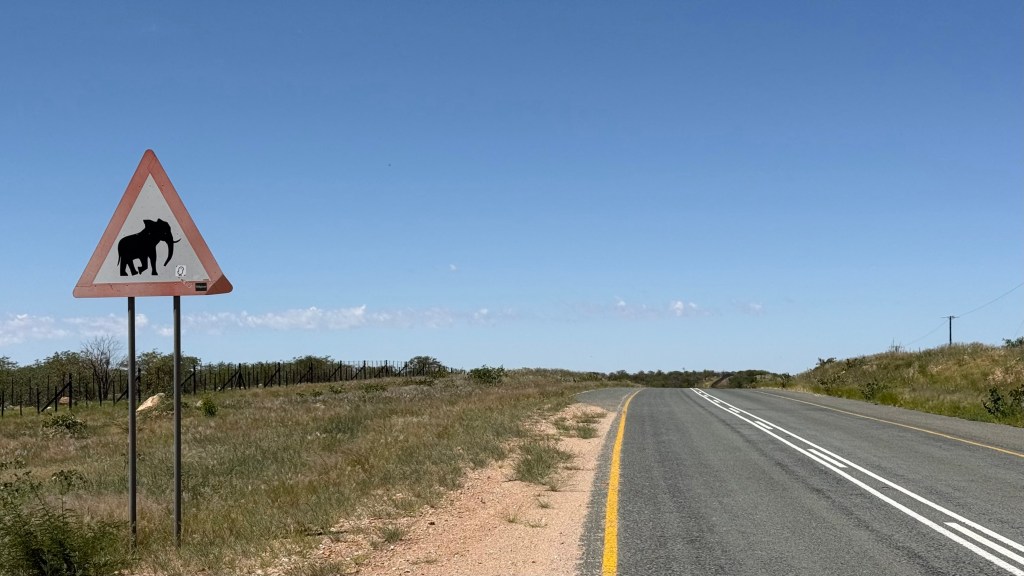
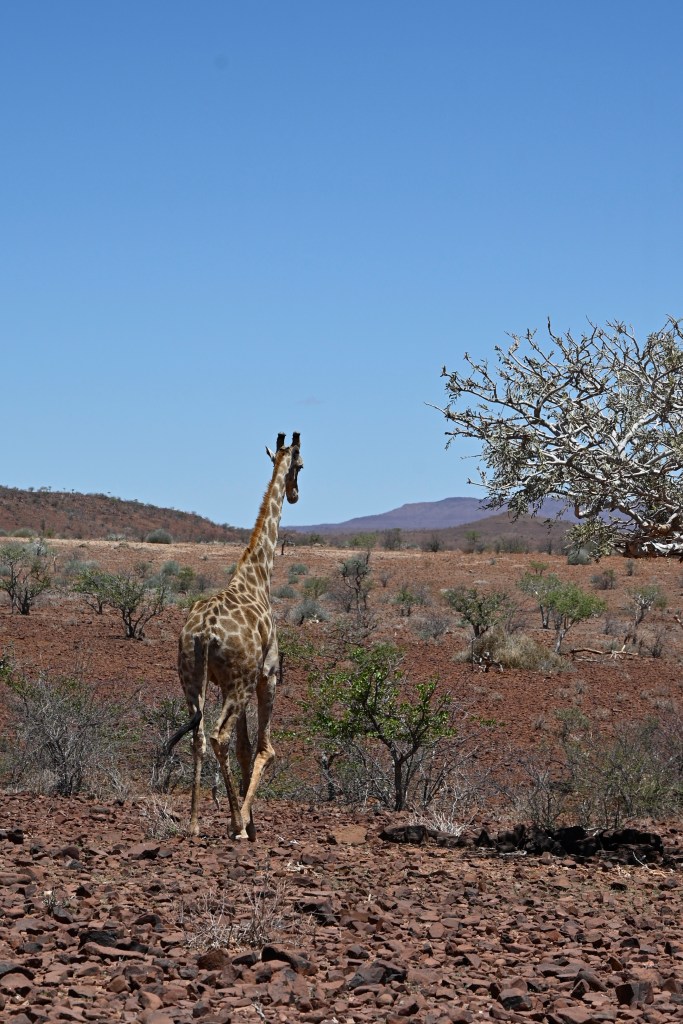
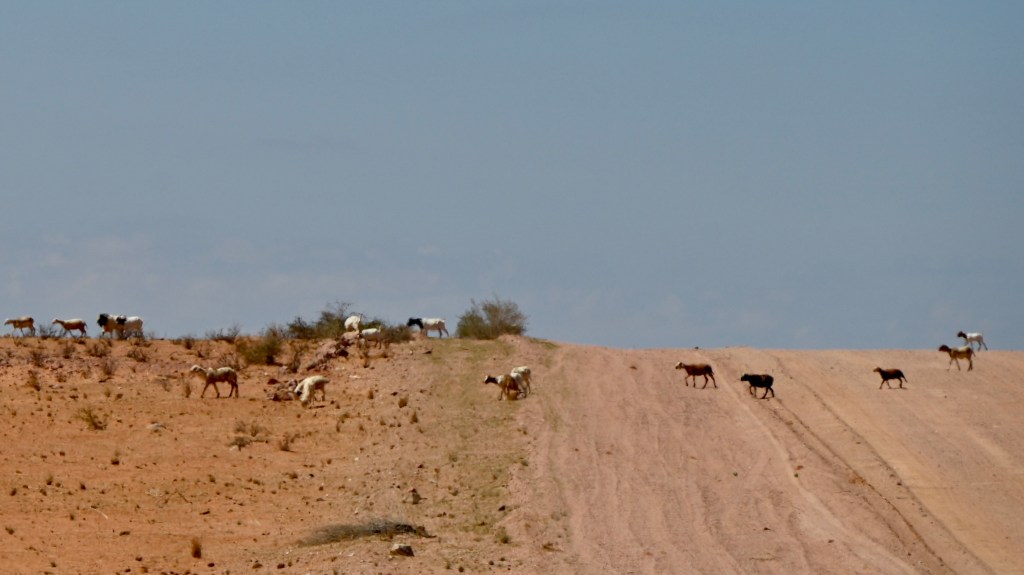
Along the road, we saw people selling precious stones and handcrafted goods. We also saw road warning signs that elephants, kudus and oryx could be passing the street, but we only saw one giraffe on the side and later some goats crossing the road behind us.
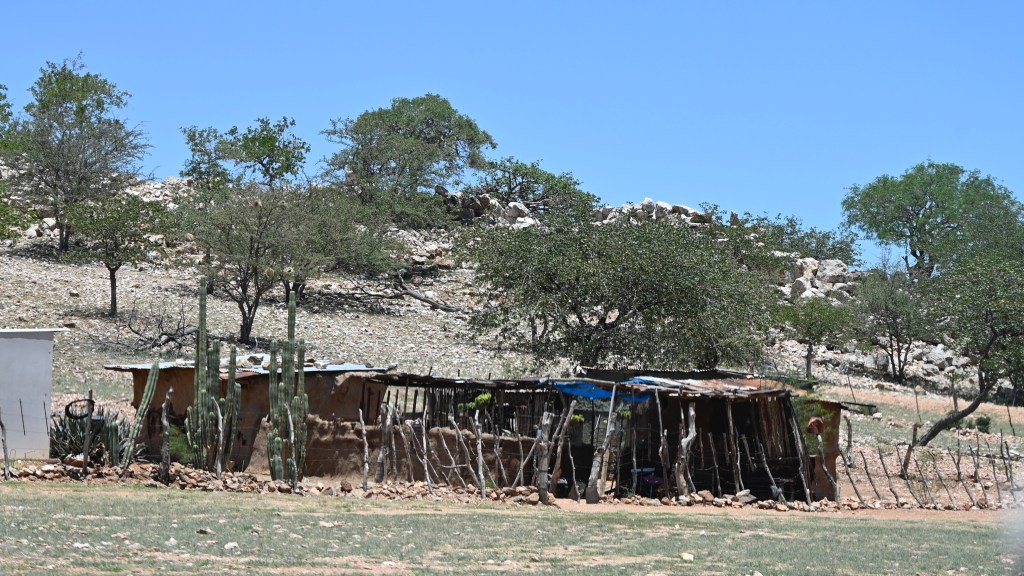
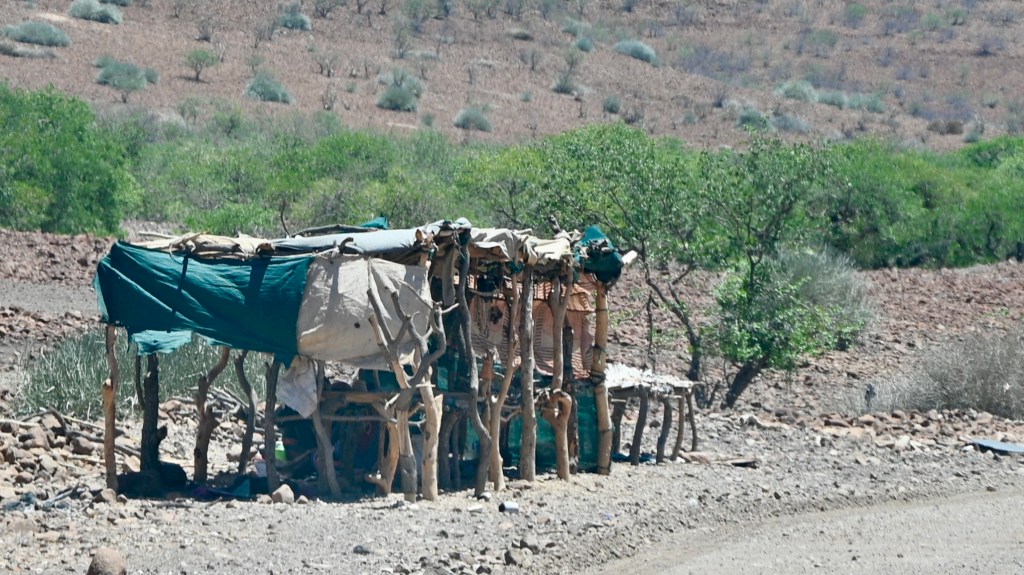
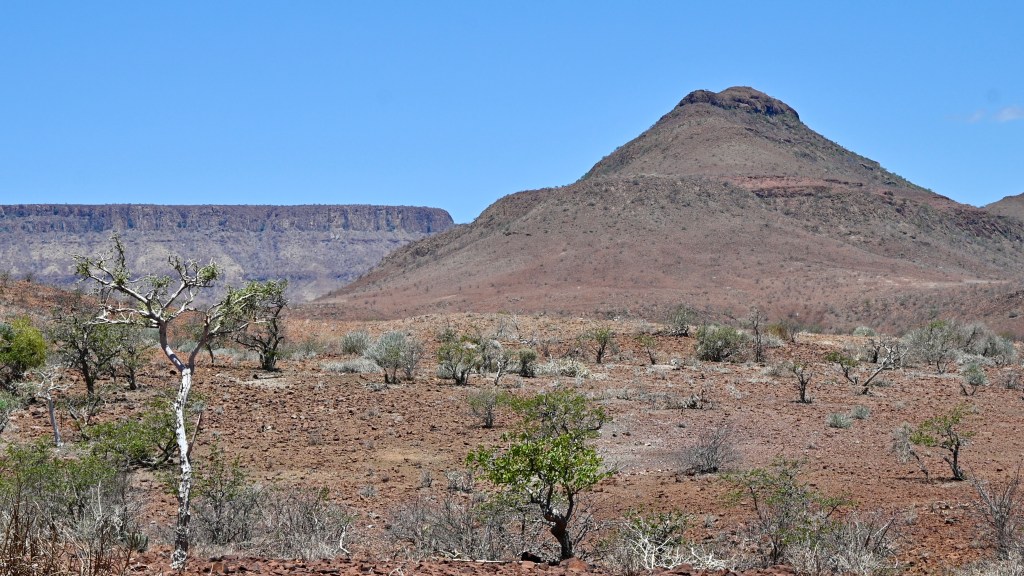
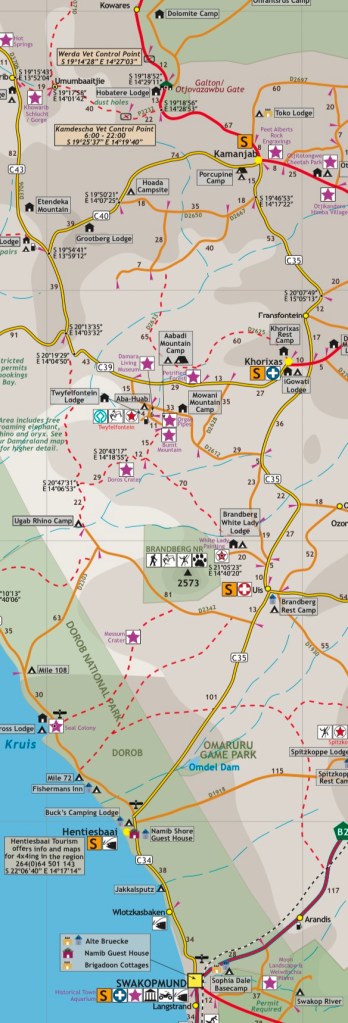
The route
From Galton Gate we drove towards Kamanjab (C35) to fill diesel, which was the first petrol station since Okaukuejo. Then we continued westwards on C40, through the Grootberg pass until we reached the cross to Palwag, where we turned south on C43 and C39 towards Twyfelfontein. The first part towards Kamanjab was tarred road and easy to drive. Thereafter it was gravel and in parts quite rugged, but manageable, thanks to my husbands excellent driving skills (as he asked me to state, but which also is true, as I would have used twice the time on some of the stretches). From Twyfelfontein we followed D2612 which mostly was gravel, until we met C35 towards Henties bay. The last part of C35 towards Henties bay and Swakopmund was tarred and we noticed a lot of ongoing tarring on the way from Uis towards Henties bay.
The region and it’s history
We drove through the Kunene and Erongo regions, previously known as Damaraland. The term “Damaraland” is no longer polite to use, due to its historical connotations. It was used during the colonial era to refer to a homeland for the Damara people.
The concept of “homelands” in Namibia has its roots in the apartheid era when the South African government implemented policies to segregate different ethnic groups. These homelands, also known as Bantustans, were created to confine specific ethnic groups to designated areas, ostensibly to allow them self-governance but in reality to maintain control over the majority of the land and resources. In Namibia, several homelands were established, including Damaraland for the Damara people, Ovamboland for the Ovambo people, and Hereroland for the Herero people, among others. These homelands were often located in less fertile and economically disadvantaged areas, leading to significant disparities in living conditions and opportunities. The homeland system in Namibia began in 1968 and continued until the country gained independence in 1990. During this period, the homelands were administered by local leaders under the supervision of the South African government. The system was abolished in 1989 as part of the transition to independence. The legacy of the homeland system still affects Namibia today, with ongoing efforts to address the inequalities and divisions created by this policy. Read more about Namibian history on Wikipedia.
Twyfelfontein
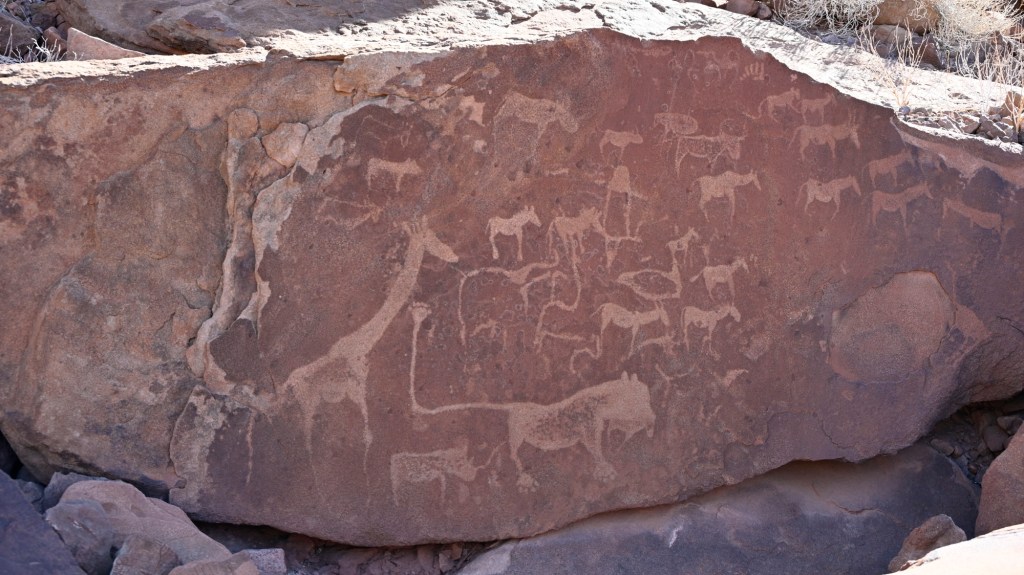
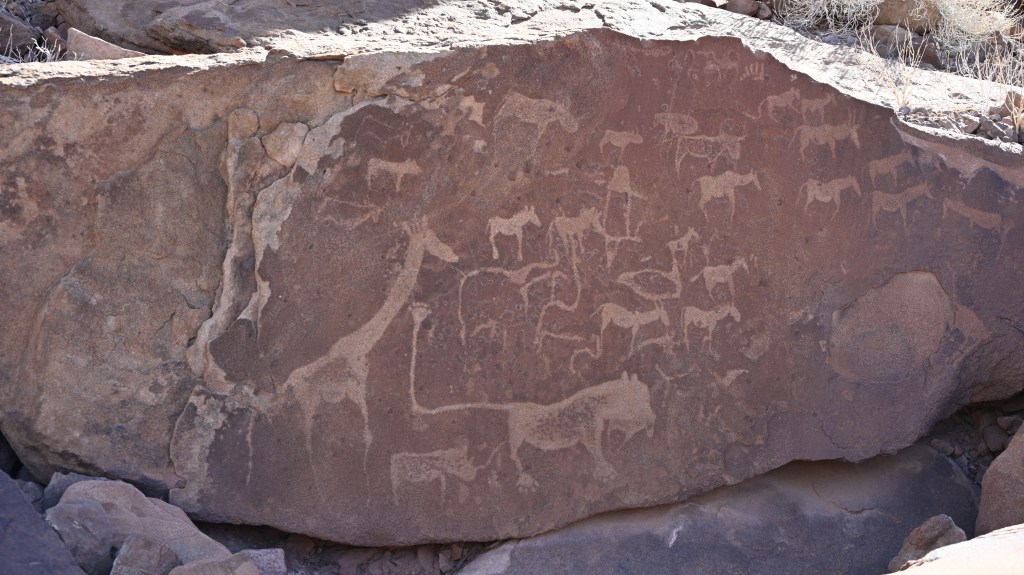
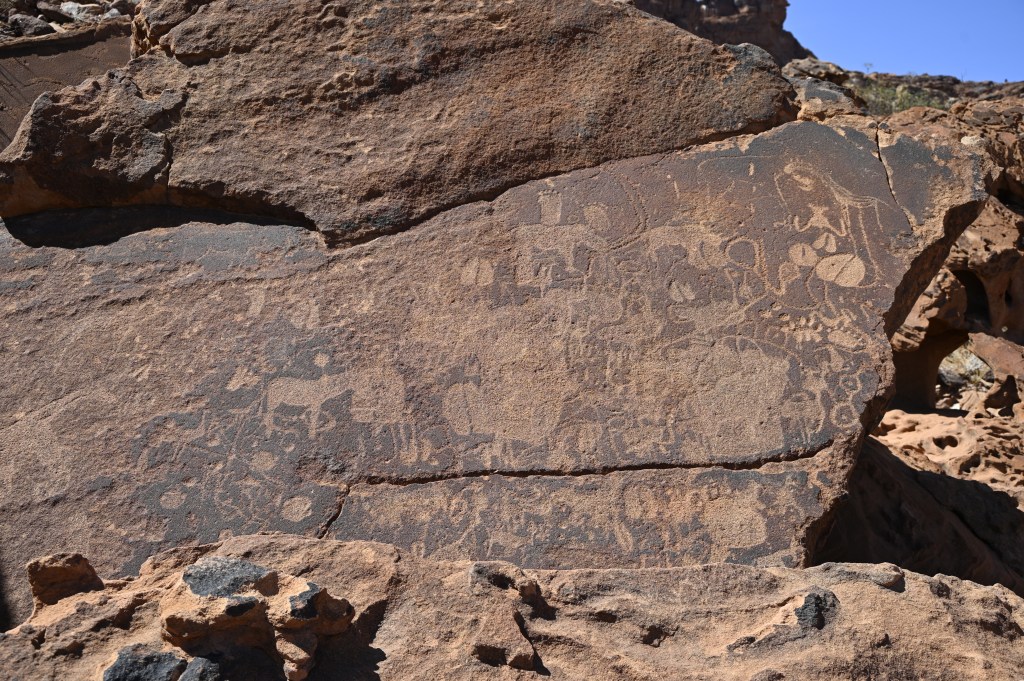
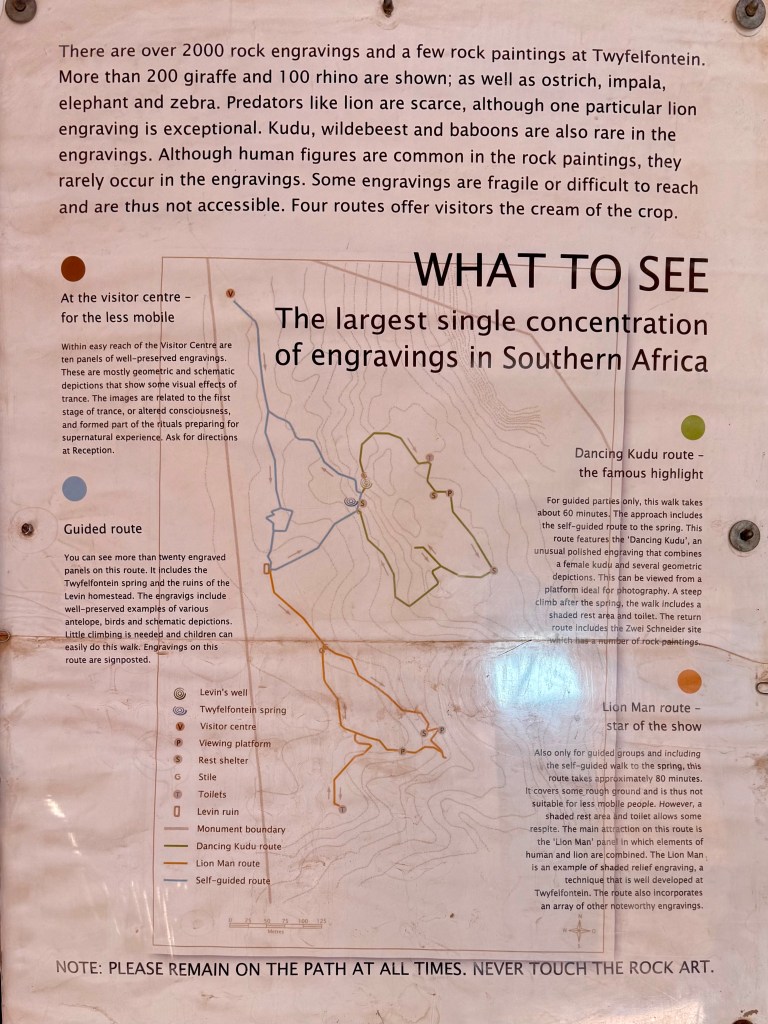
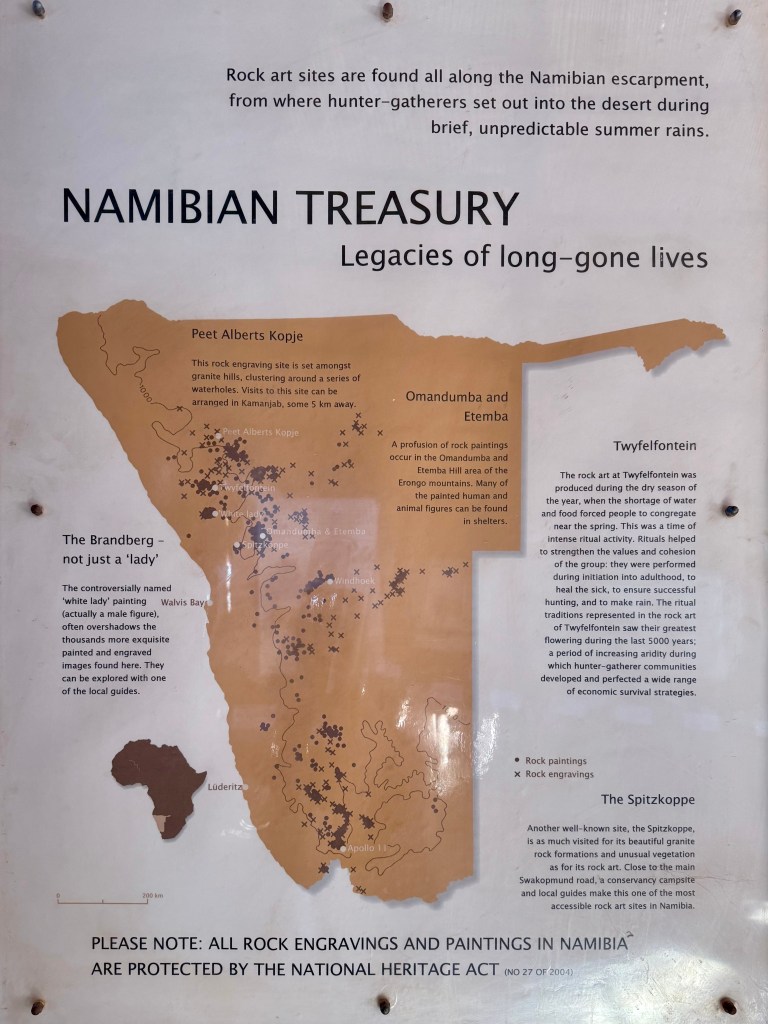
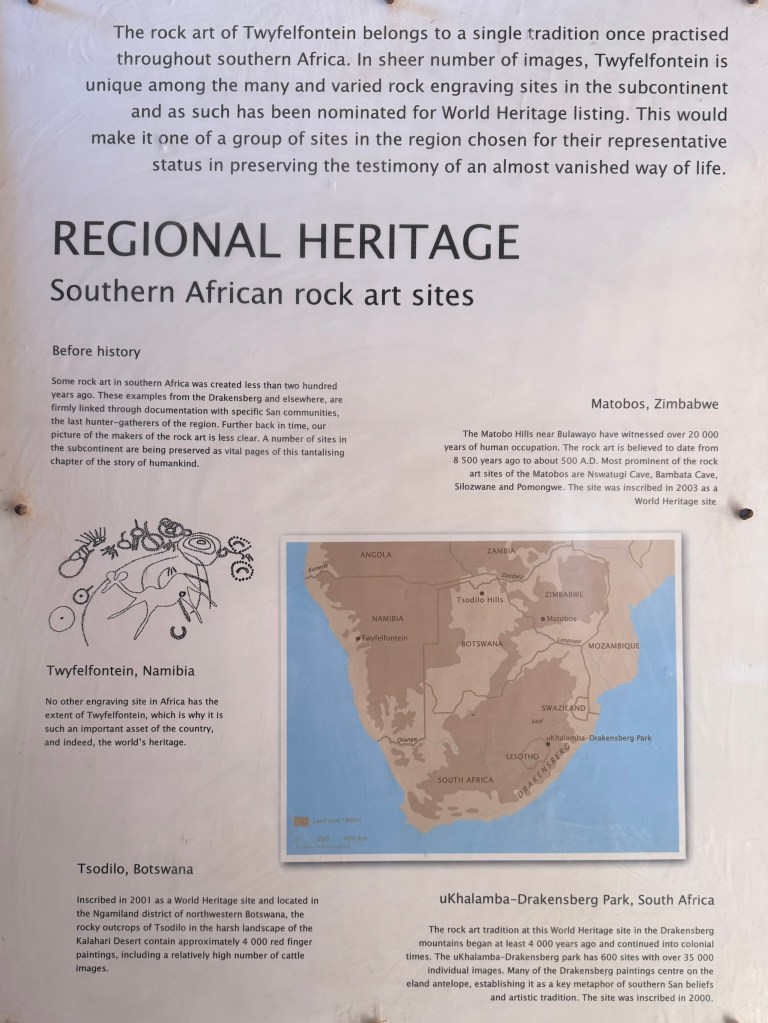
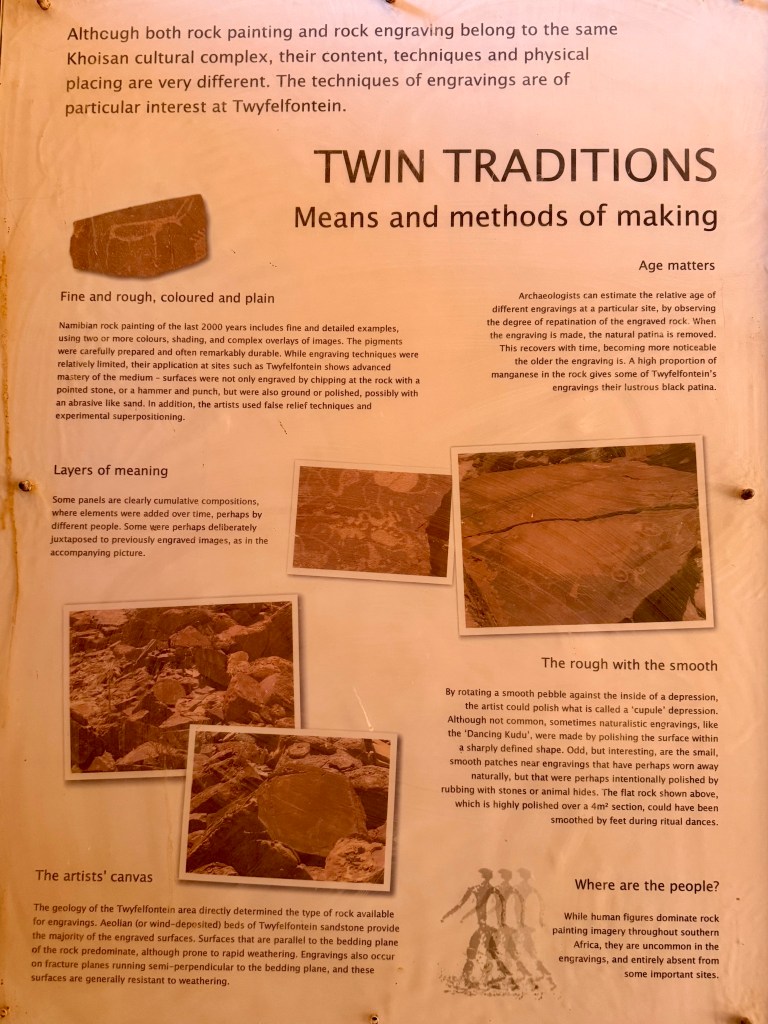
Rock engravings
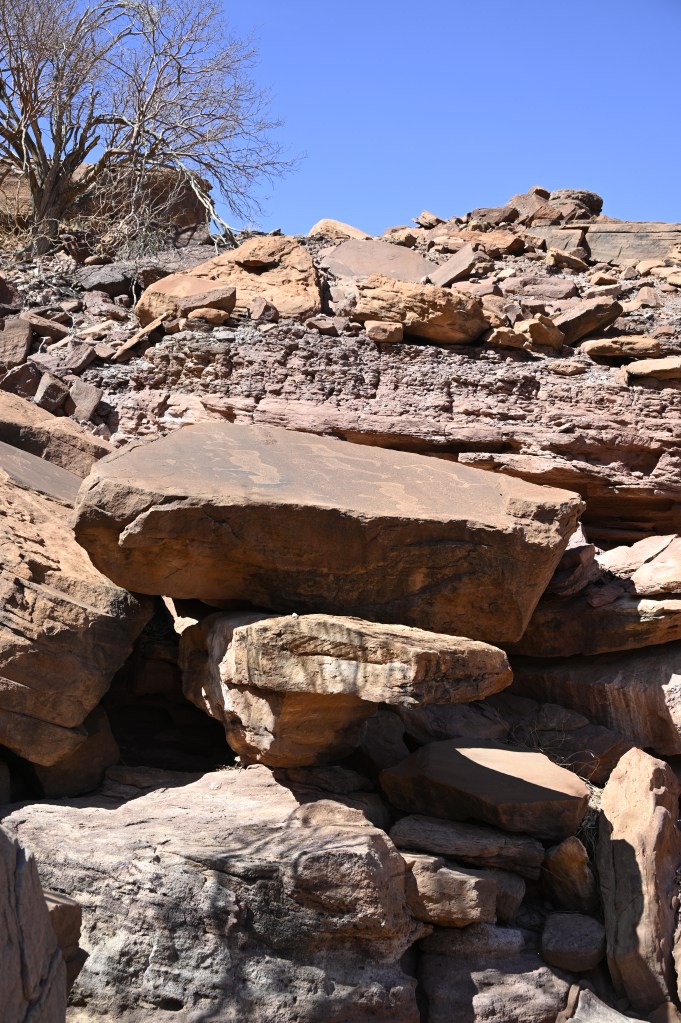
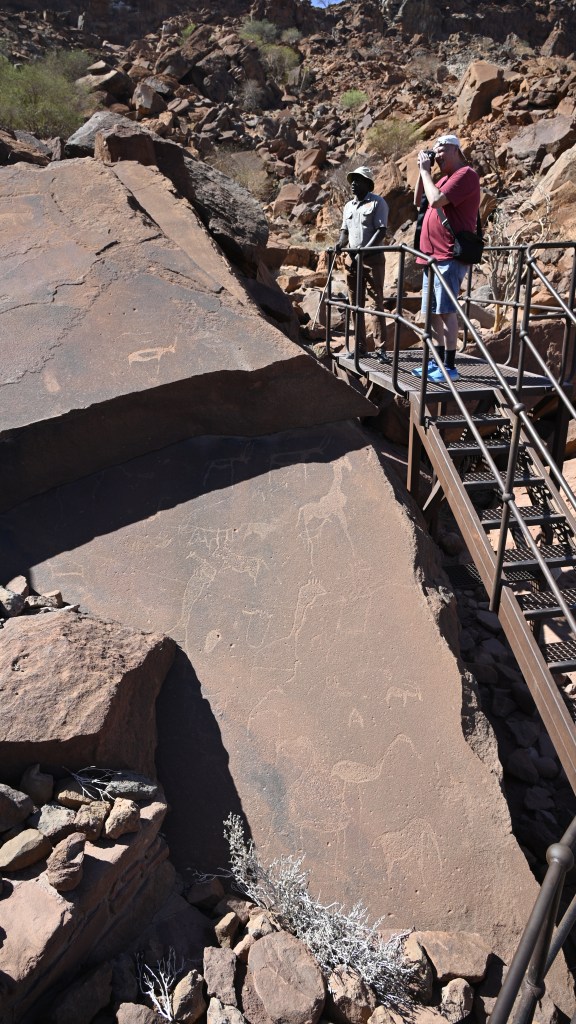
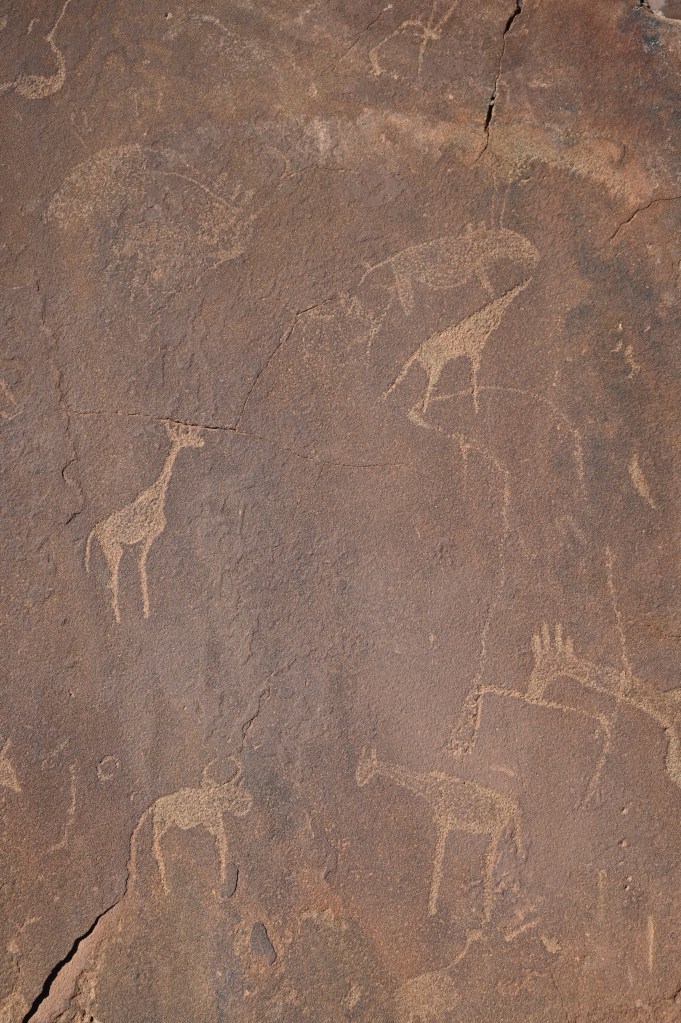
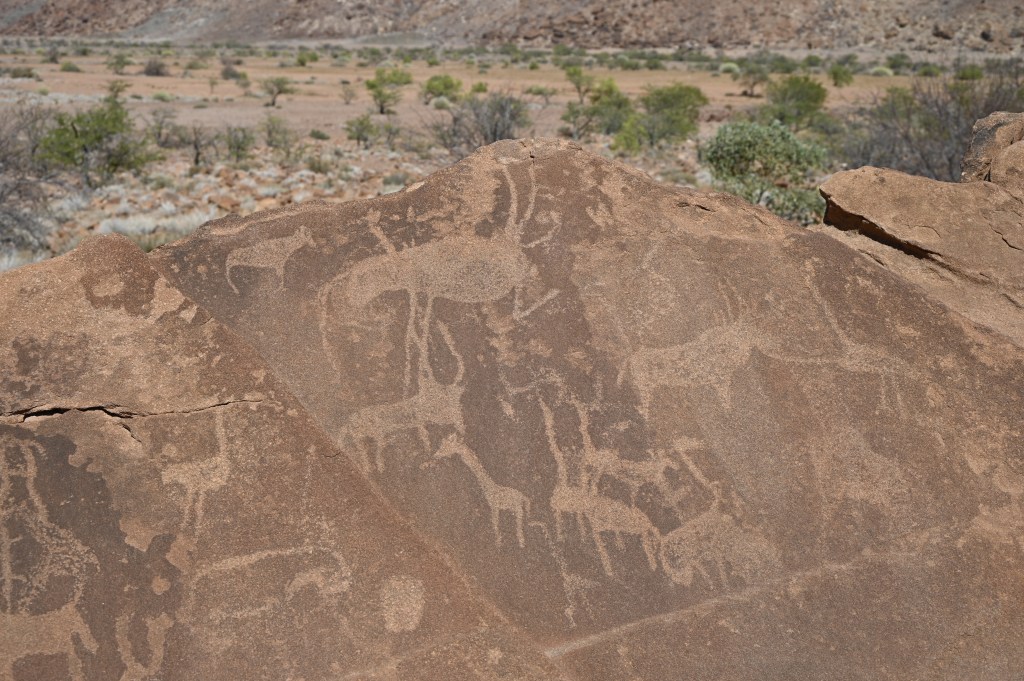
Twyfelfontein, which means “doubtful well”, was recognised as Namibias first UNESCO world heritage site in 2007. It is a site of ancient rock engravings created by the Khoekhoe people around 6000 years ago. The place used to be a sacred place for this people and many of the engravings depict their hunter-gathering ritual practices. I have visited the place once before, 26 years ago with my parents and son, and it was nice to see some if the same engravings being there today, even if one large rock had fallen down and had broken.
Glamping in Twyfelfontein
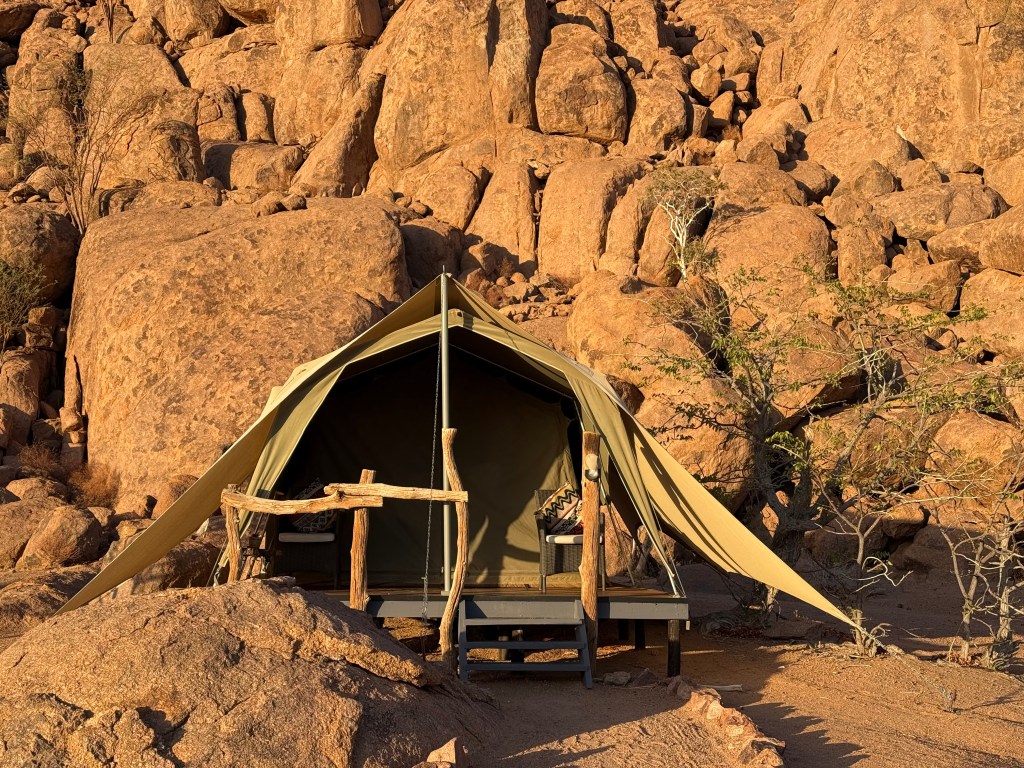
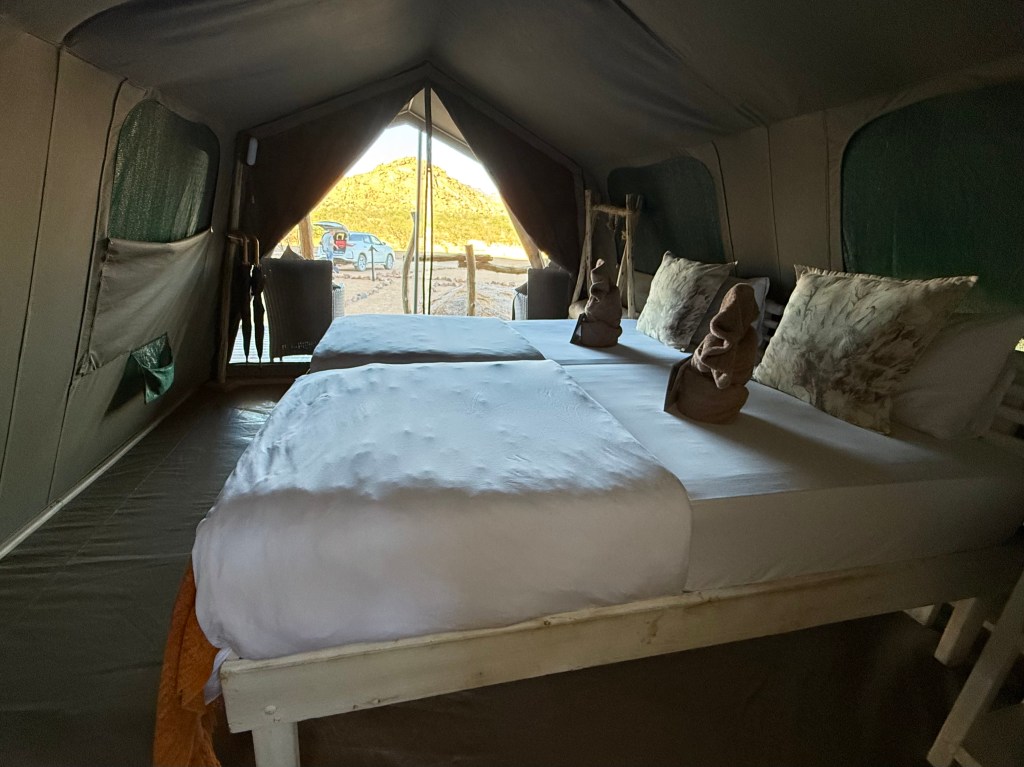
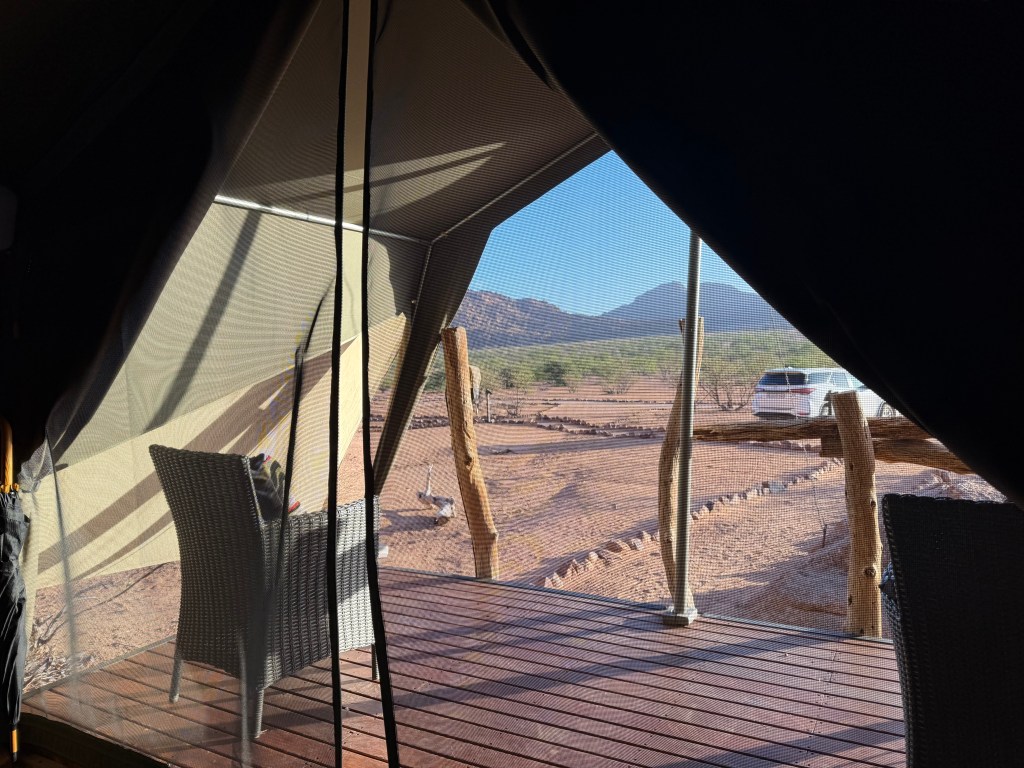
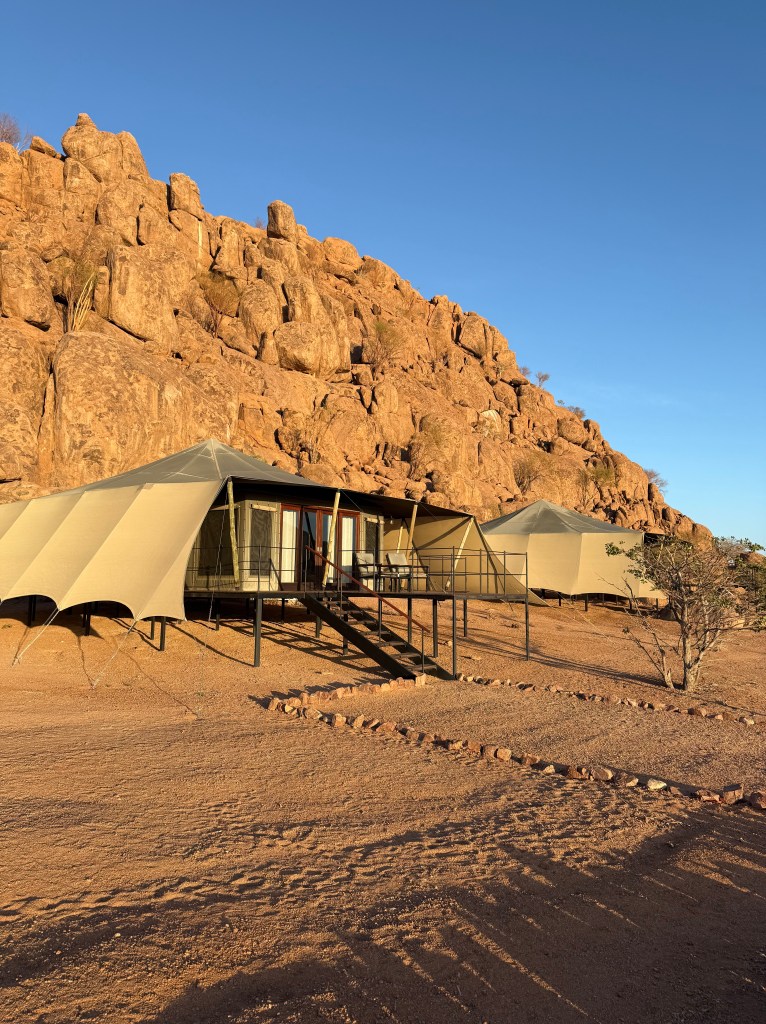
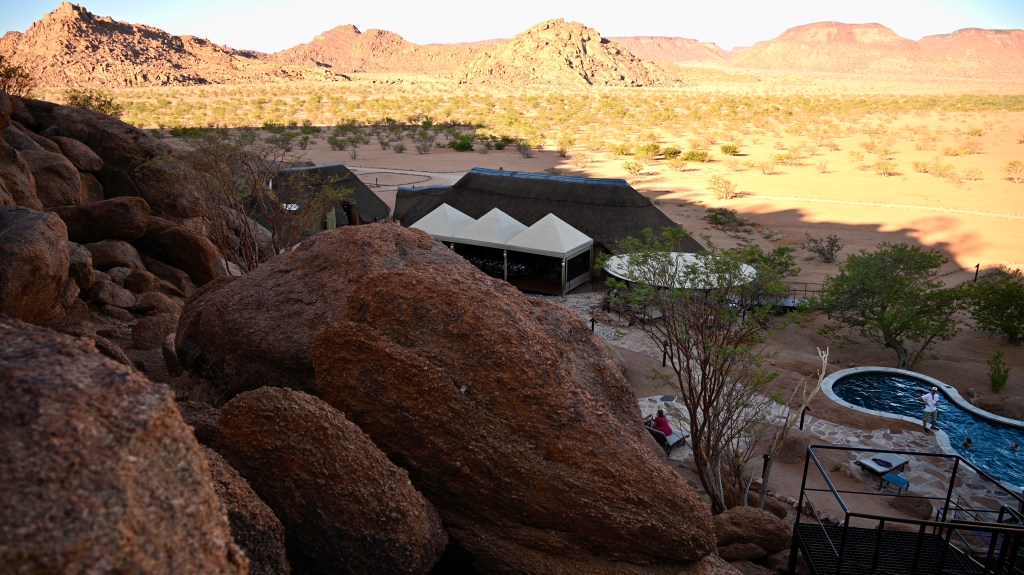
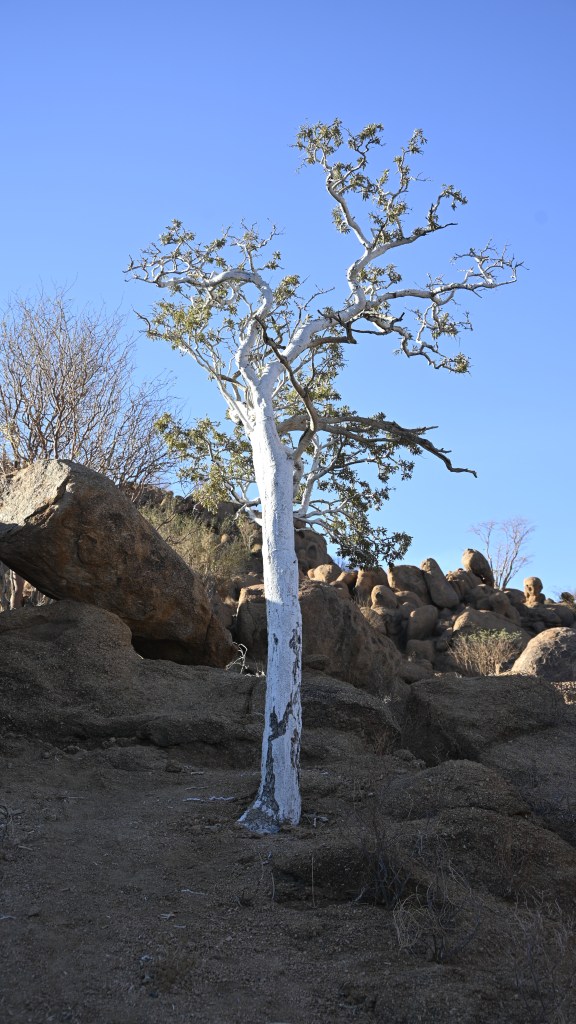
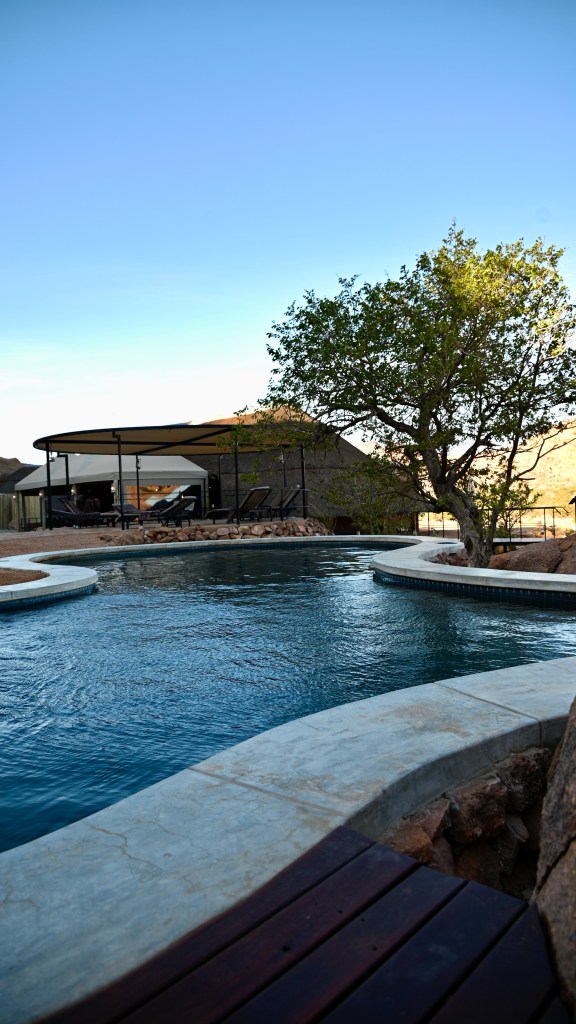
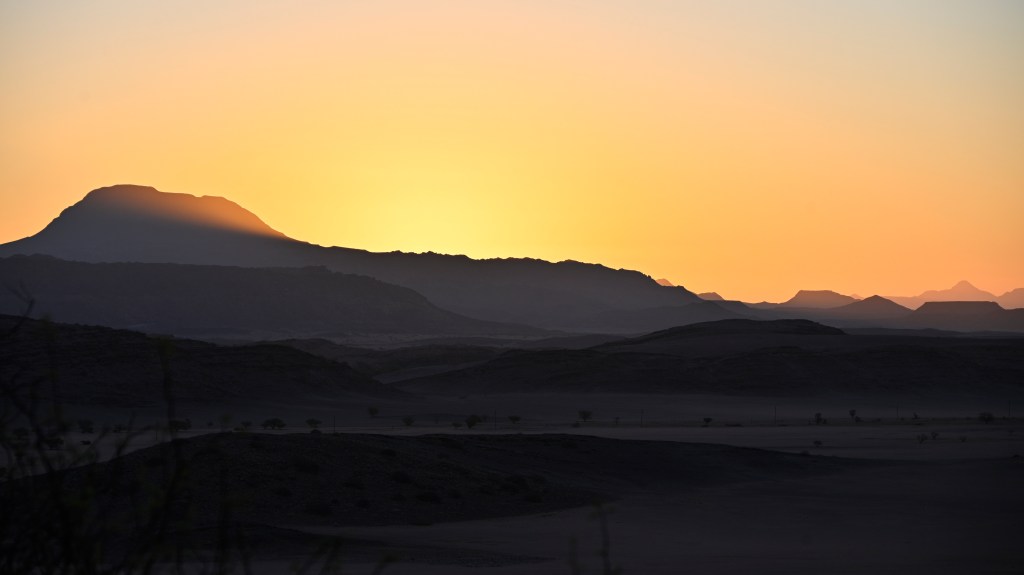
We slept over in a tent at Twyfelfontein Adventure Camp, where we also got a delicious barbecue dinner, breakfast, a swim in the pool and an evening sundowner from the cliffs next to the camp. We had a standard tent, with proper beds and a small bathroom, but had to zip the tent “doors” to close or open. The more expensive “tents” were larger and had proper doors.
Desert elephants
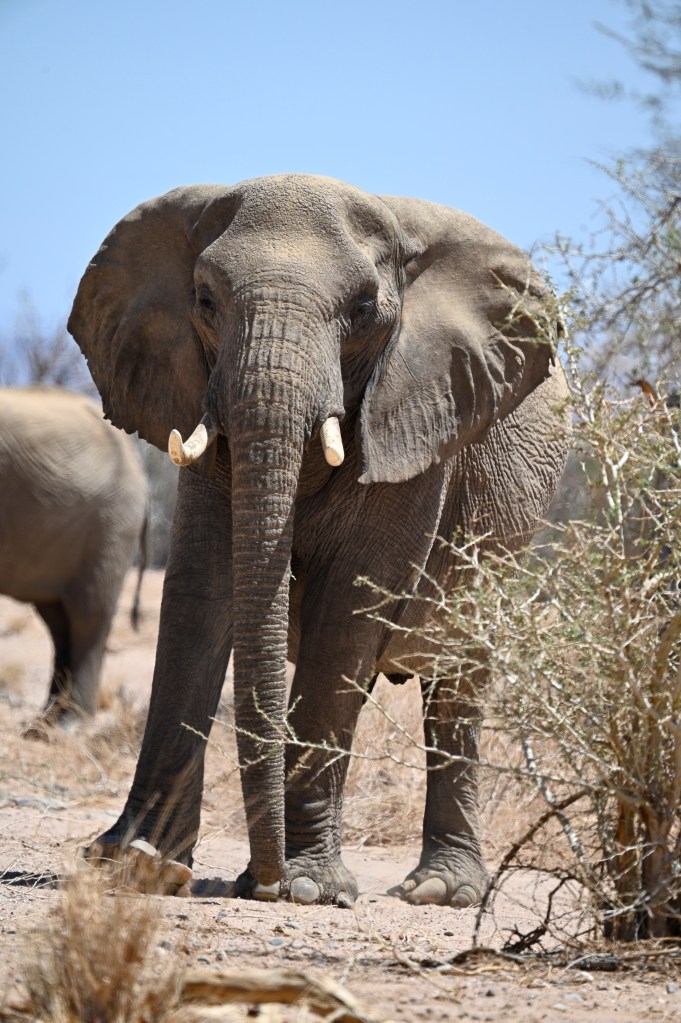
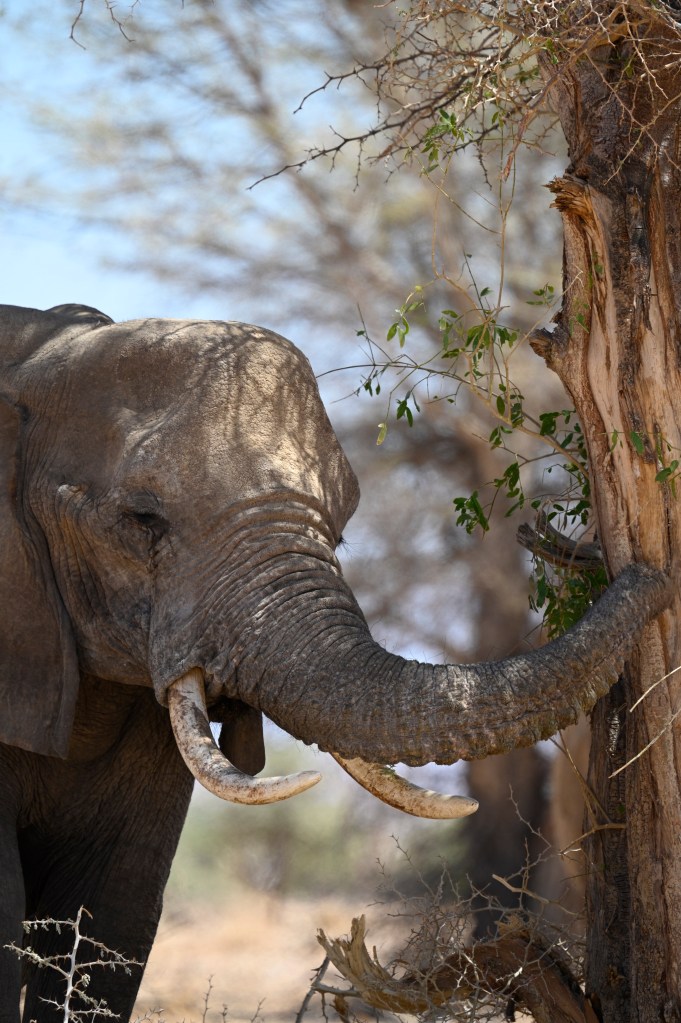
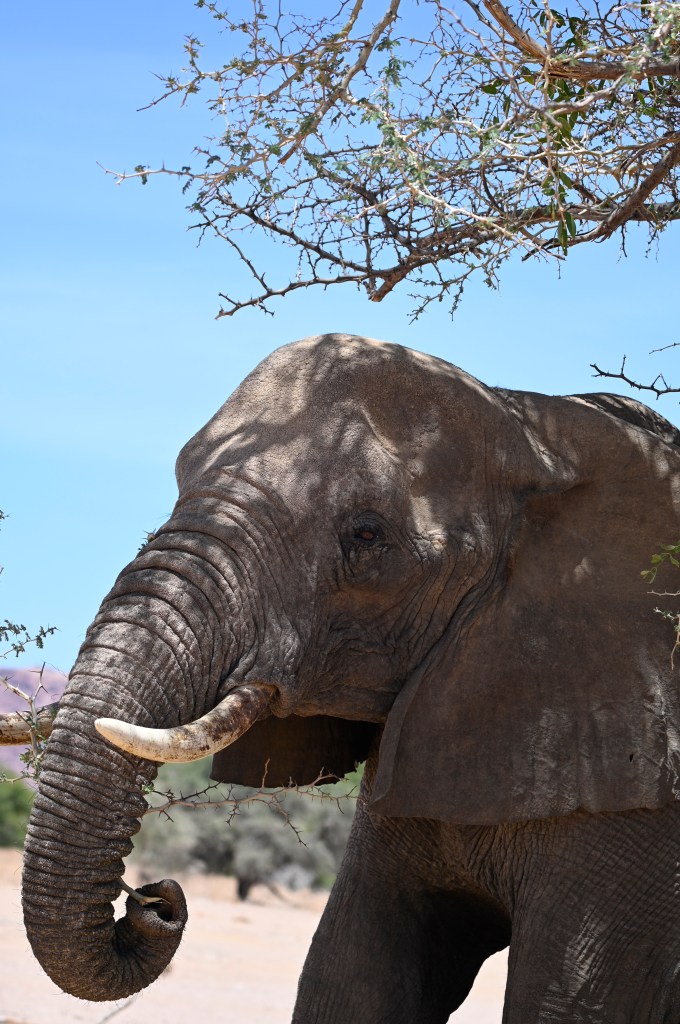
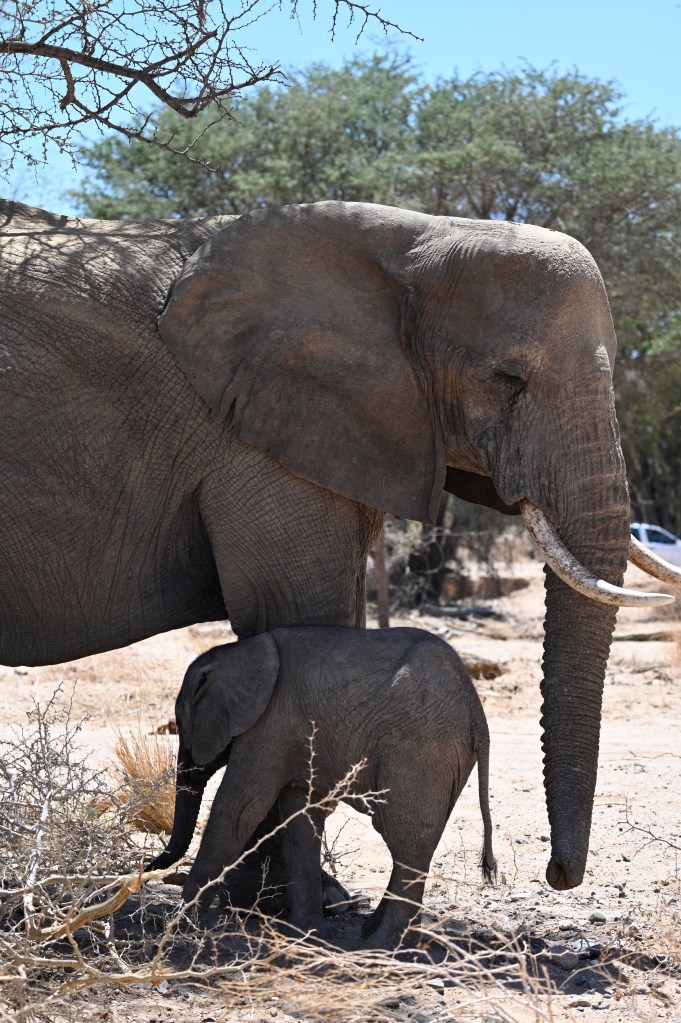
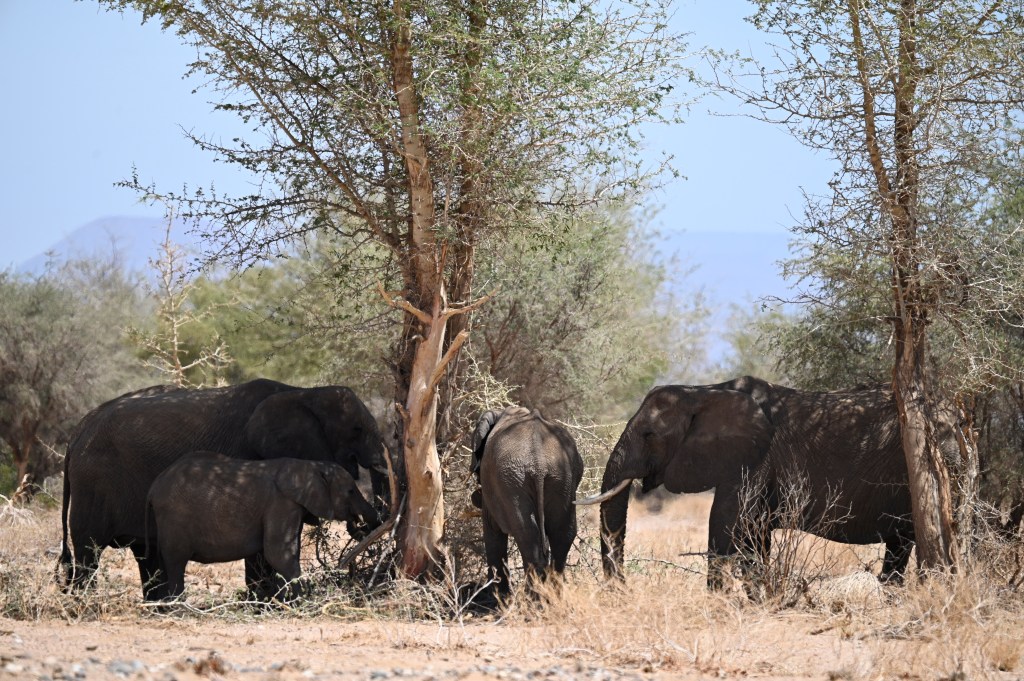
In the dry riverbeds surrounding Twyfelfontein you may find desert living elephants. It is not a separate species from the African bush elephants, but the tribes living here has adapted more to the dry climate and sandy grounds. We had never seen these elephants before and had not planned for any of the guided trips that the camp offered, as those would take the whole morning (from 08-12) and we had to travel to Swakopmund the same day. However we were lucky to meet a man at the parking spot of the rock engraving site, that knew where the elephants were and offered to go with us in our car to show us. It was an amazing experience and we got very close to look at these special animals.

 Laila’s travel blog
Leave a comment