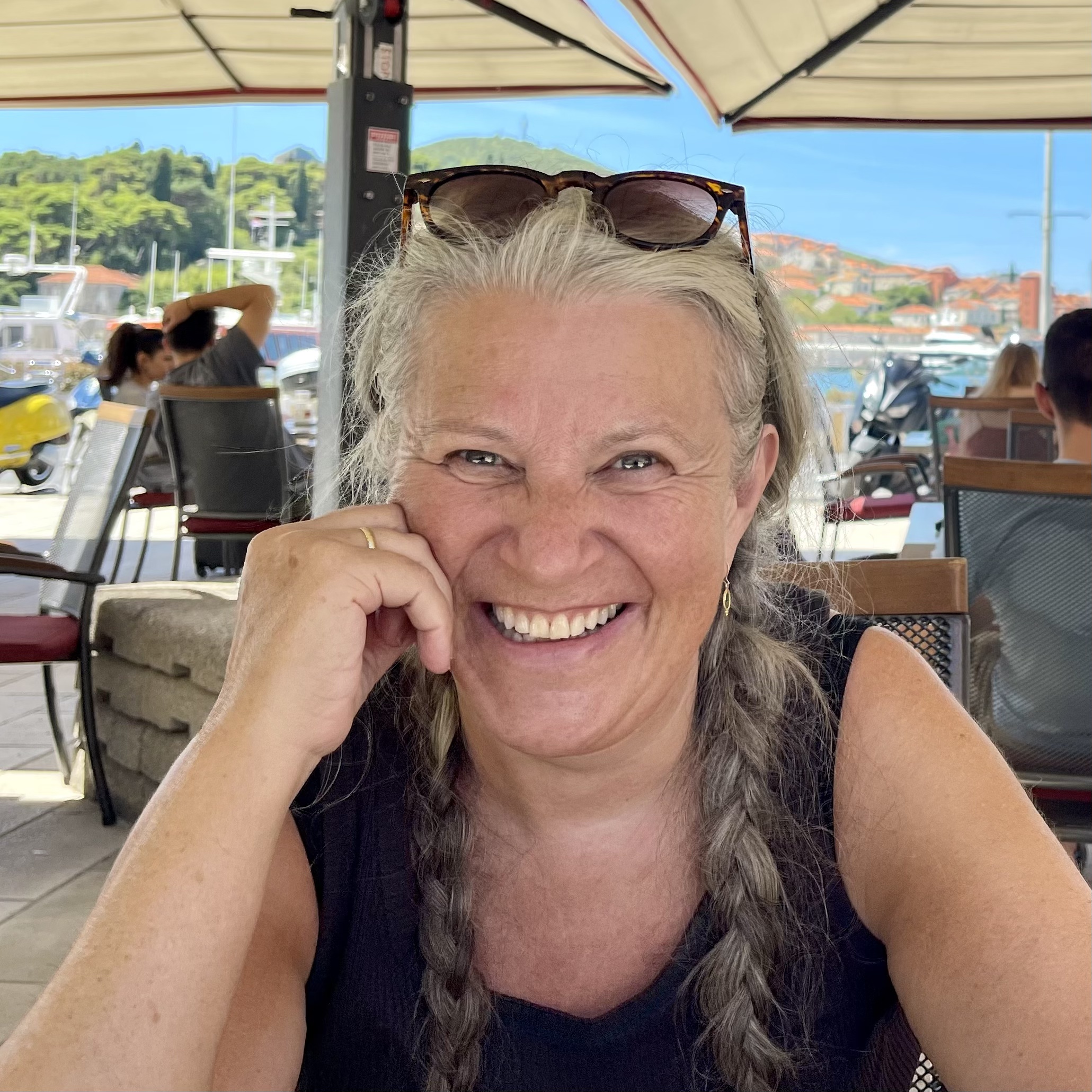
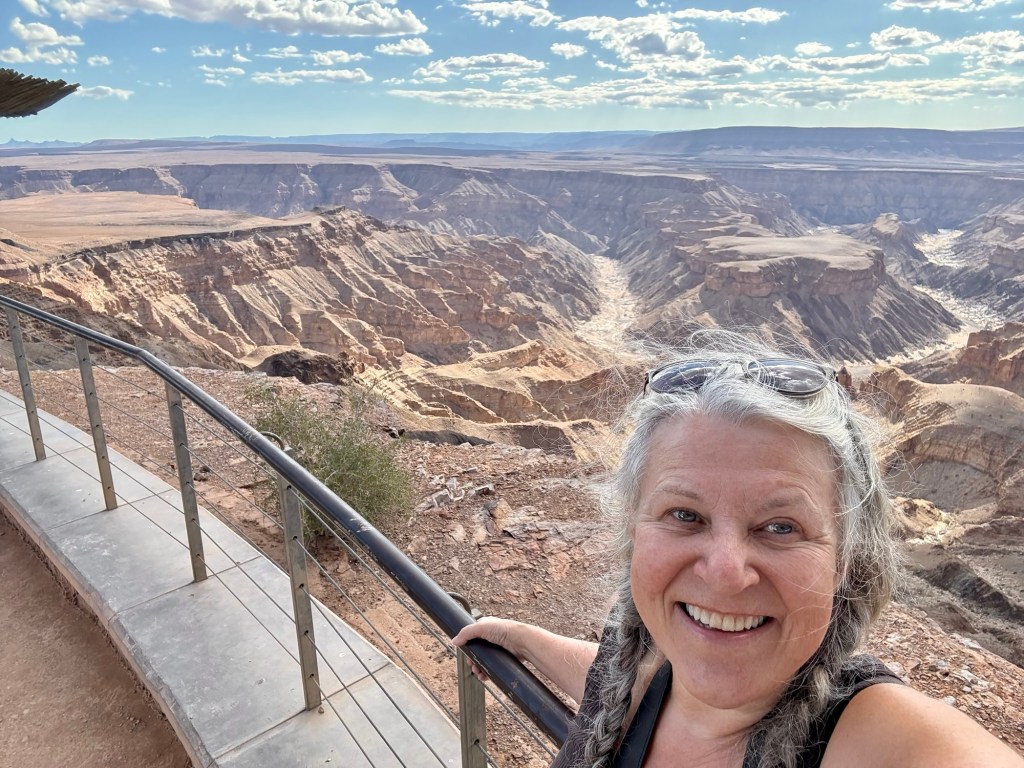
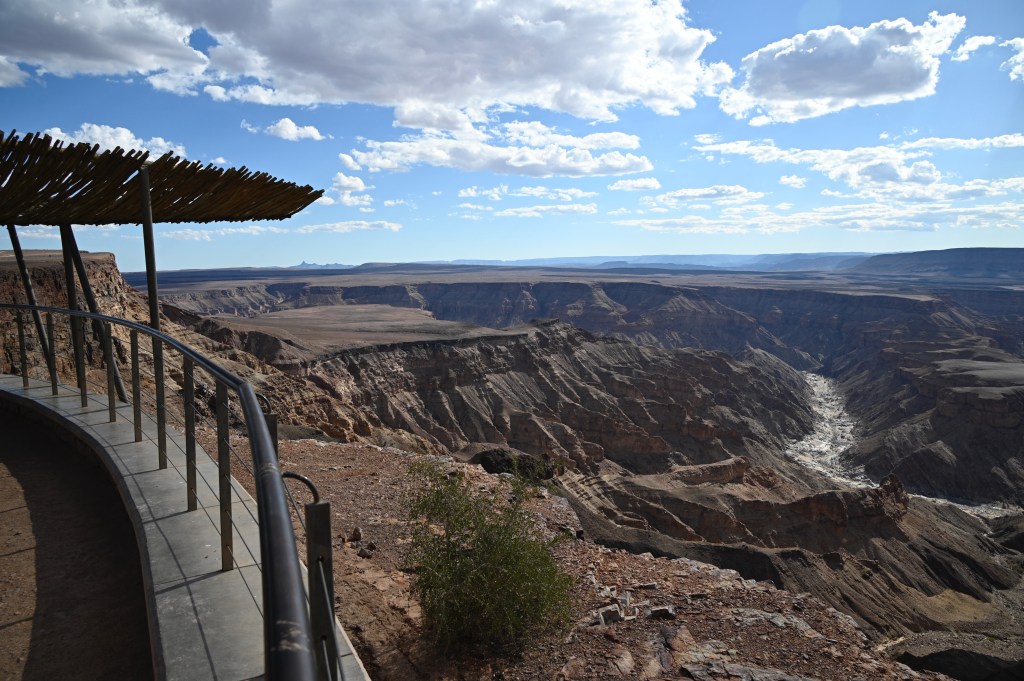
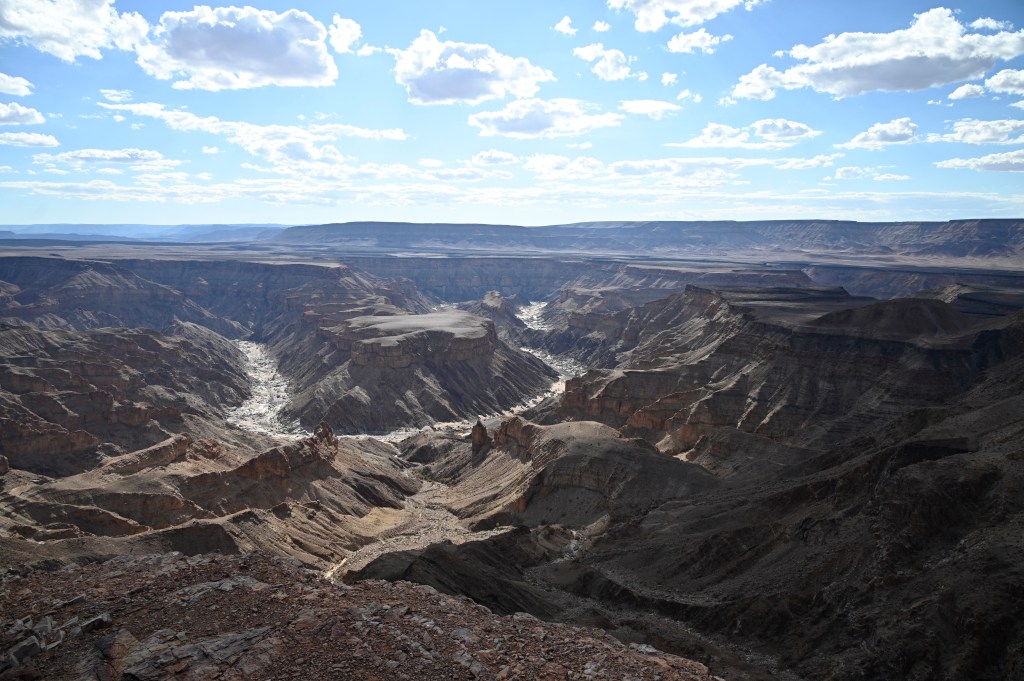
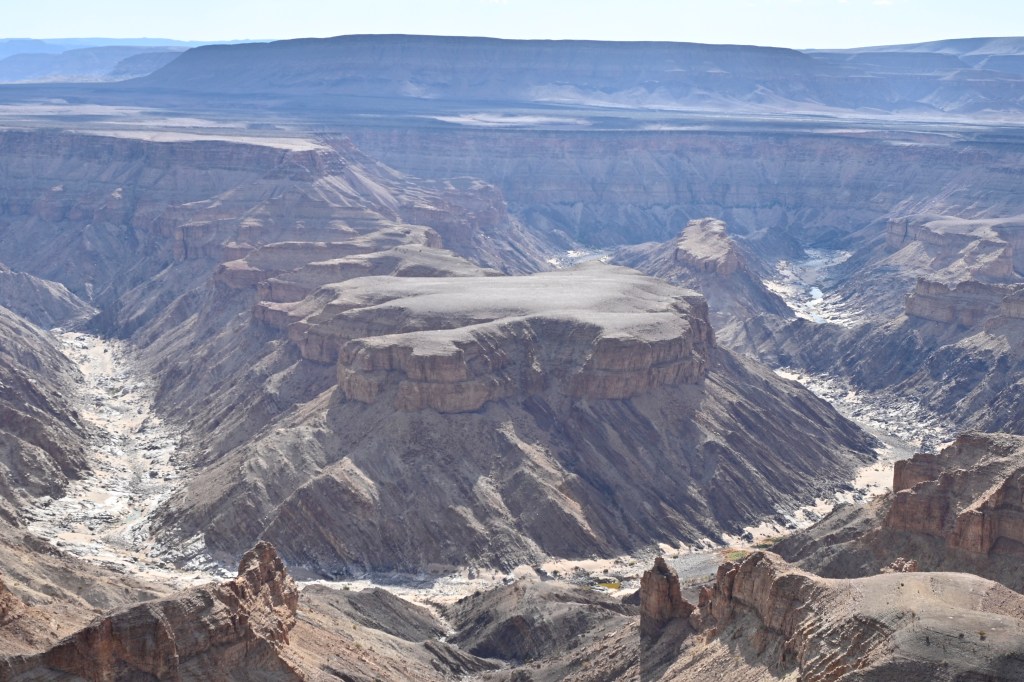
Fish river canyon is the largest canyon in Africa and the second largest in the world (only Grand canyon in the U.S. is bigger). Although the landscape around it seems very flat, the fish river has carved its way through the landscape and formed a ravine that is 160 km long and at places 550 m deep. You can walk down to the canyon floor, and along it, but nowadays only on guided trips. It will take 5-7 days to do a hiking along the 90 km trail and it can only be done at certain times of the year, when it’s not too hot. If you’re interested, you can read a more thorough guide to the Fish River Canyon at Viatu.
When driving to the Canyon, you must pass a gate at Hobas. There you must pay a park fee before you can drive further. The fee varies after number of people and nationality. In my case, it costed 200 NAD. There was also a small shop, selling drinks and t-shirts.
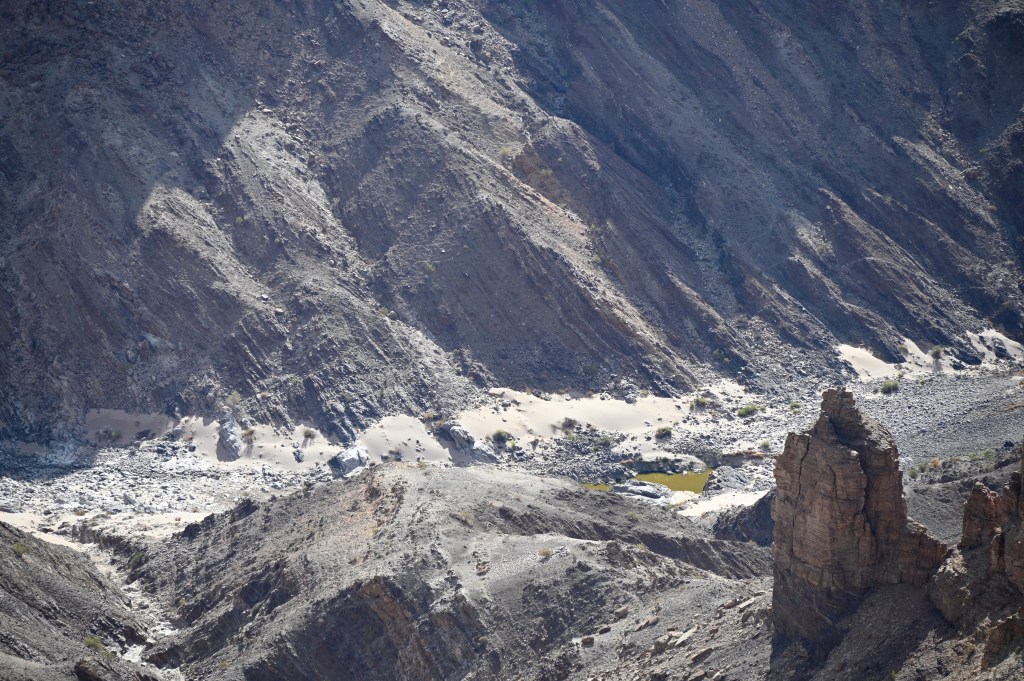
This time I only took a small afternoon drive to the viewpoint over the Fish river canyon. It was also a road-mark showing way to a viewpoint over Sulfur springs, but the road there was so rocky that I did not take the chance to get stuck alone, with no cellphone connection (as the case is in large parts of Namibia.
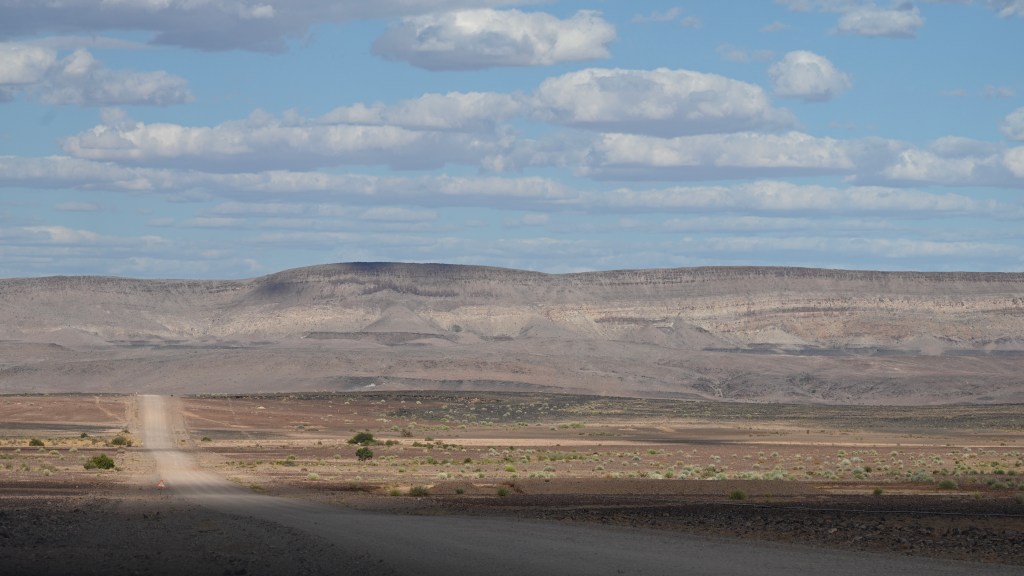
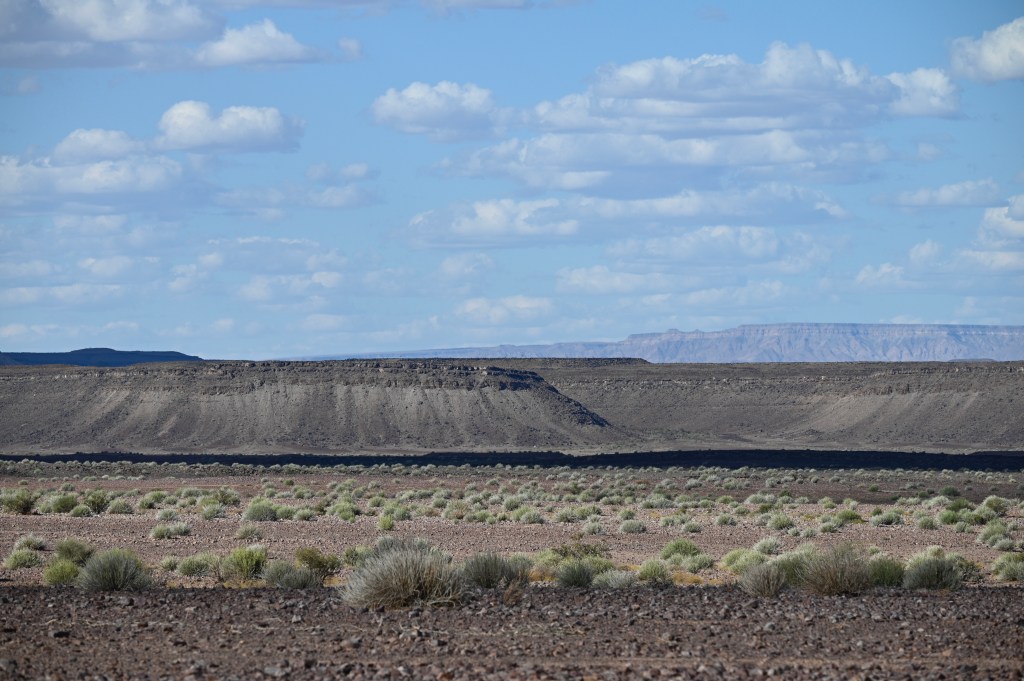
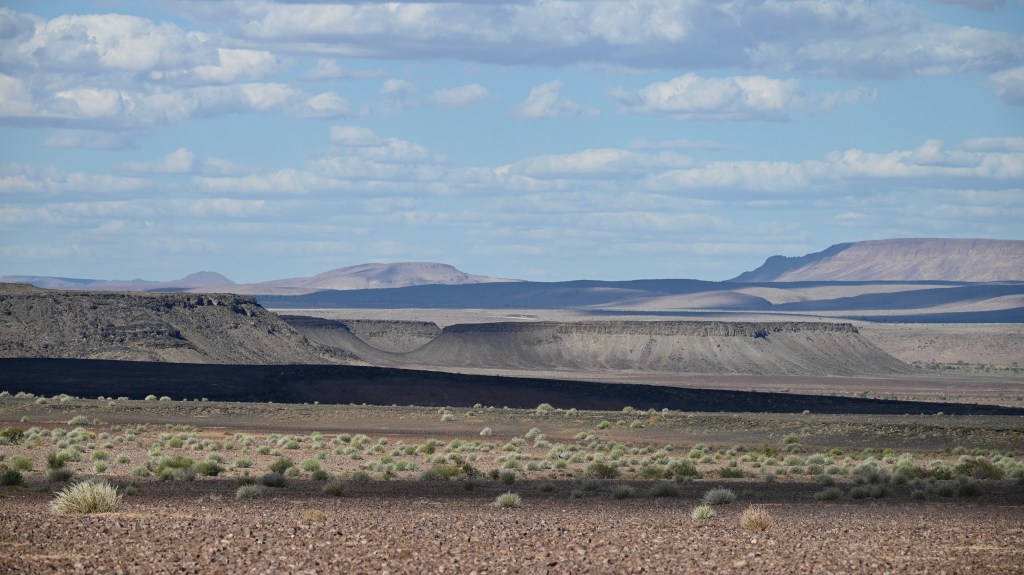
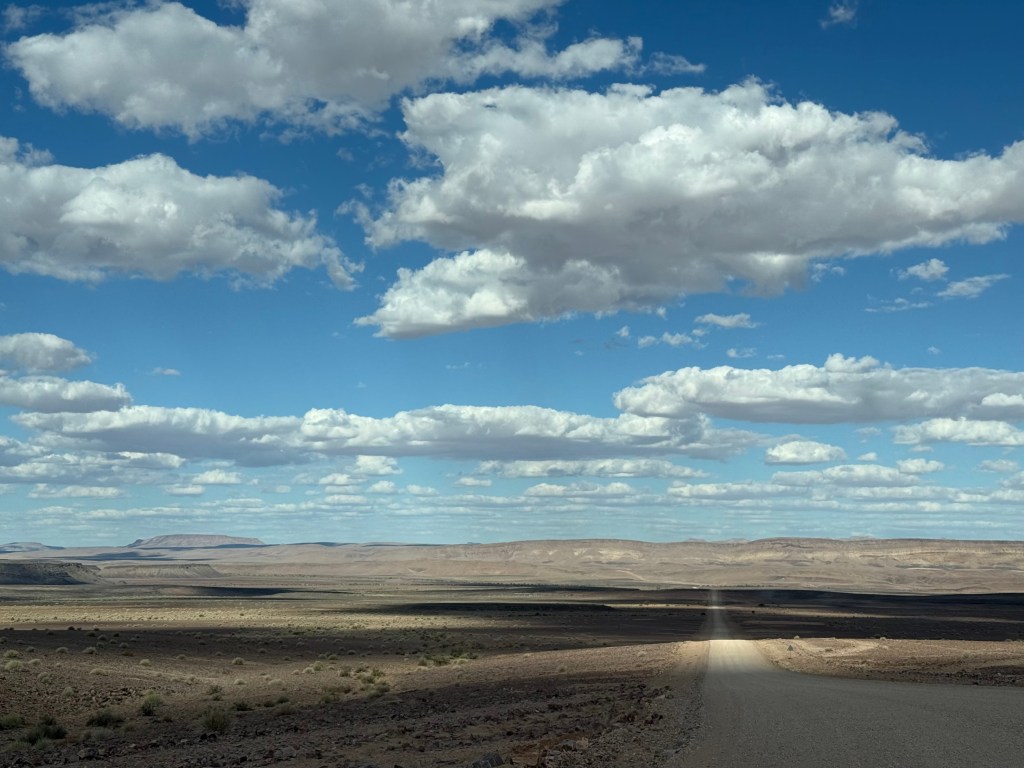
The view of the canyon, as well as the open landscapes you drive through to get there, are amazing!


Hot springs
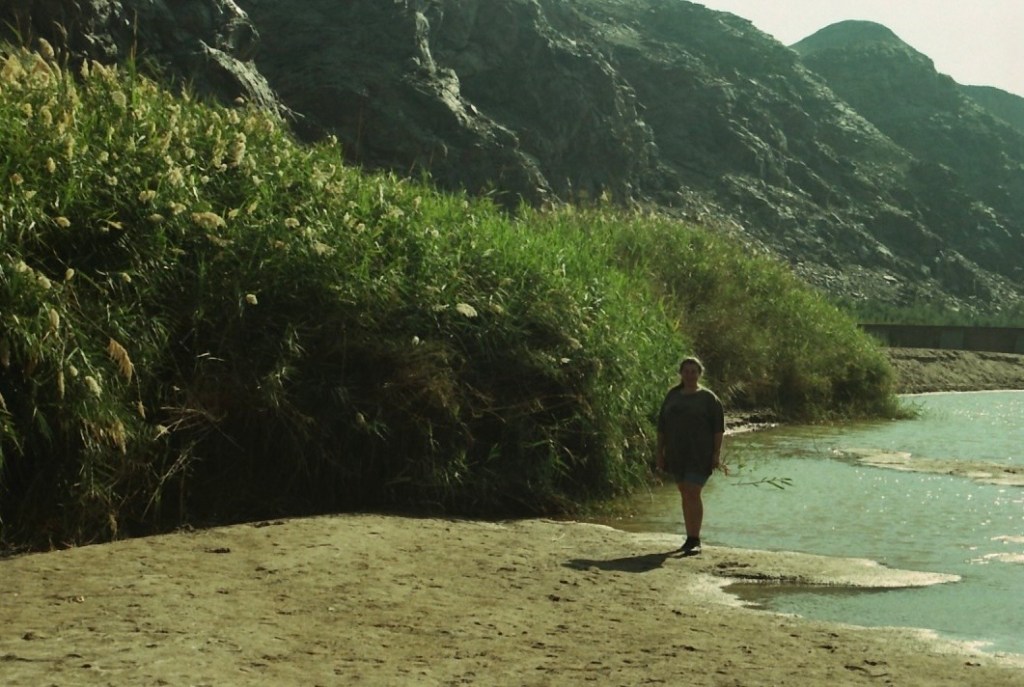
In some spots of the canyon you’ll find hot springs. The most accessible (with car) is Ai-Ais in the southern part. Here you’ll find the Ai-Ais NWR resort, which has thermal pools with supposedly healing properties (especially on rheumatism), as well as accommodation facilities. Years back, when we were there with a local friend, some of the staff showed us the “real springs”, a mud pool hidden between the tall reed in the riverbed. We laid there some time, and I really got dizzy, so some effect it definitively had. There is also hot springs inside the canyon, at a place called “Sulfur springs”
Roads
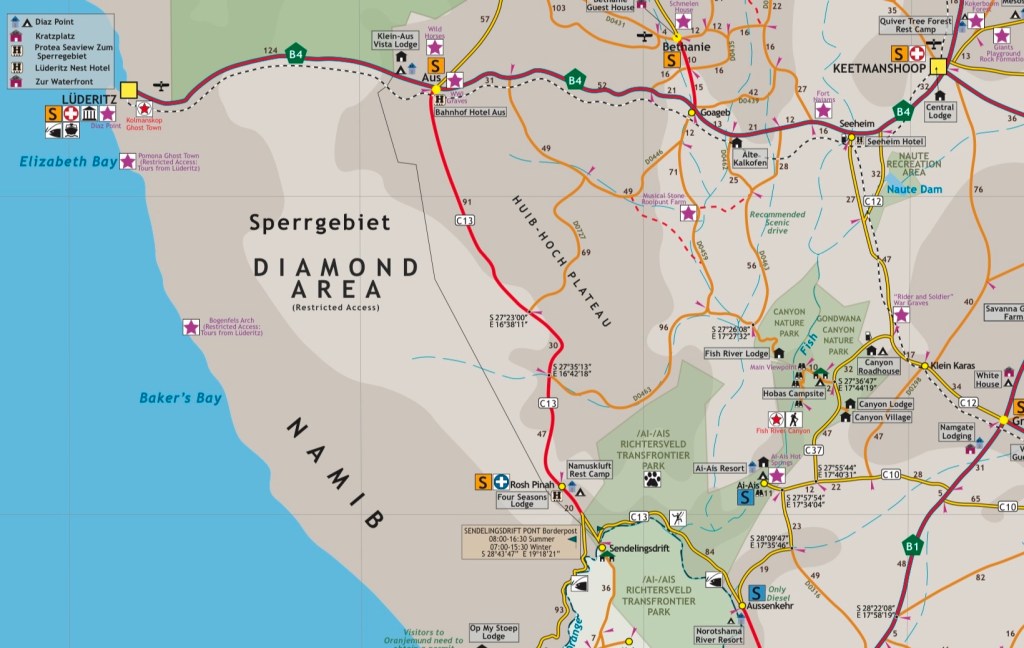
We had originally planned to drive southwards from Ais, on the tarred B13 to the mining city Rosh Pinah and then further along the northern banks of orange river on the gravel part of C13 to Aussenkehr and then again up to the Canyon lodge, passing Ai-Ais on the way. The road to Rosh Pinah is a road I have long wanted to see again, due to its beauty, and one of my dreams has always been to camp along the banks of the Orange river there. However, with the rains and uncertain gravel road conditions (and the promise of a shining pool awaiting at the Canyon lodge if we got there early), we chose not to do the southern route and rather drive the straight and easy tarred road towards Keetmanshop (B4) and turn southwards at Seeheim, on the C12 (smooth gravel) towards the Gondwana Canyon Nature Park, where the Fish river and our lodge (Gondwana Canyon Lodge) was located.
The term Gondwana comes from geology and refers to the large supercontinent, that existed millions of years back when Africa, South America, Australia and more were one. The split up of the Gondwana supercontinent was supposedly the initial cause to the geological forming of the Fish River Canyon.
Gin
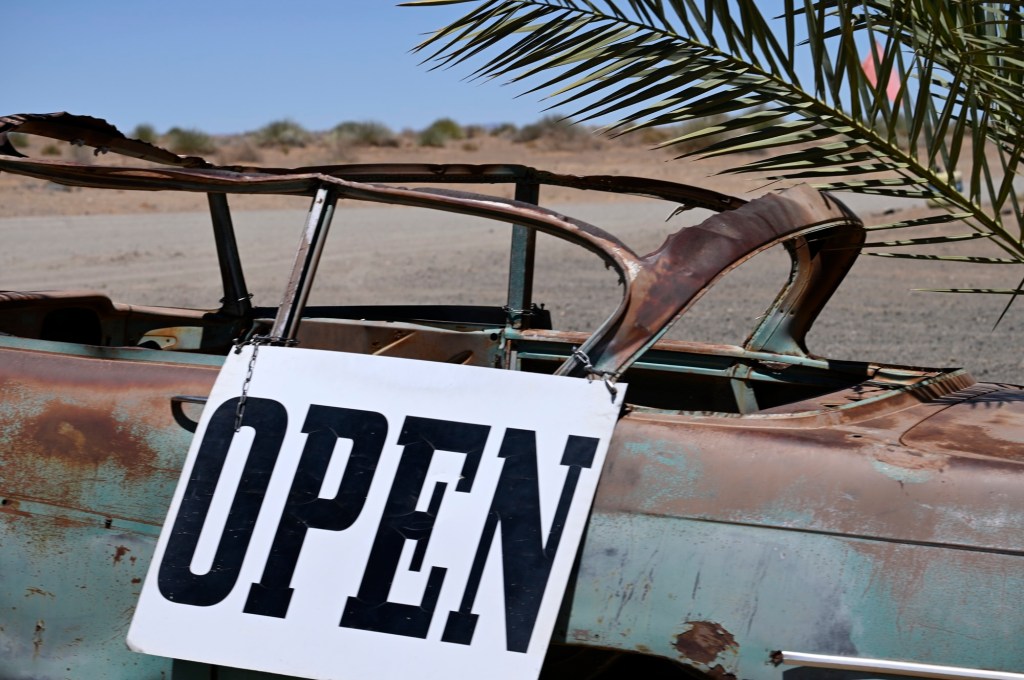
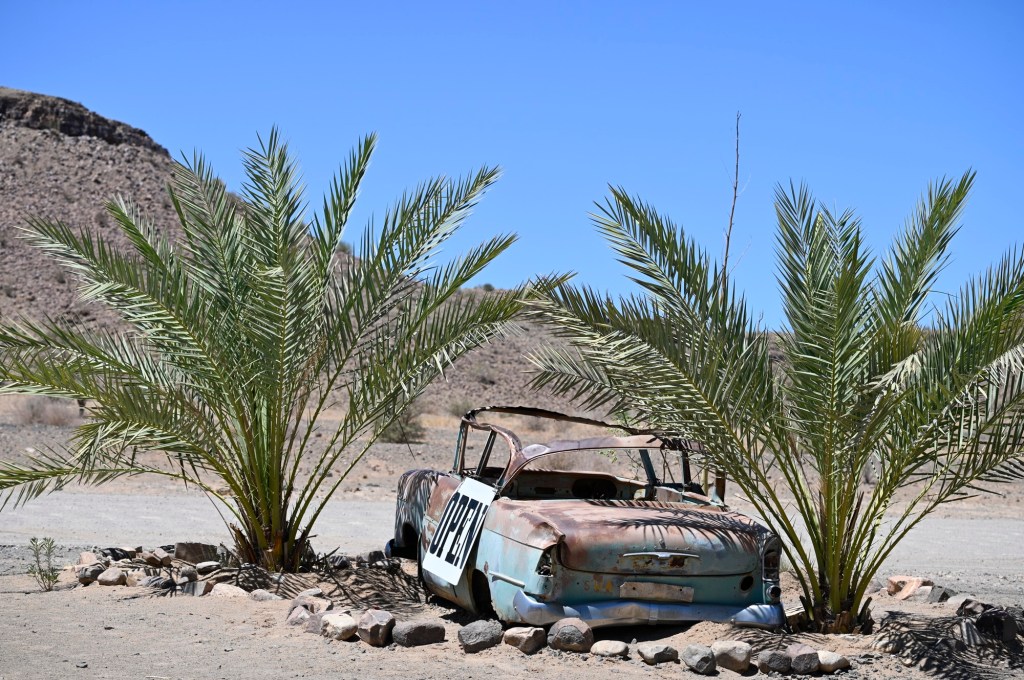
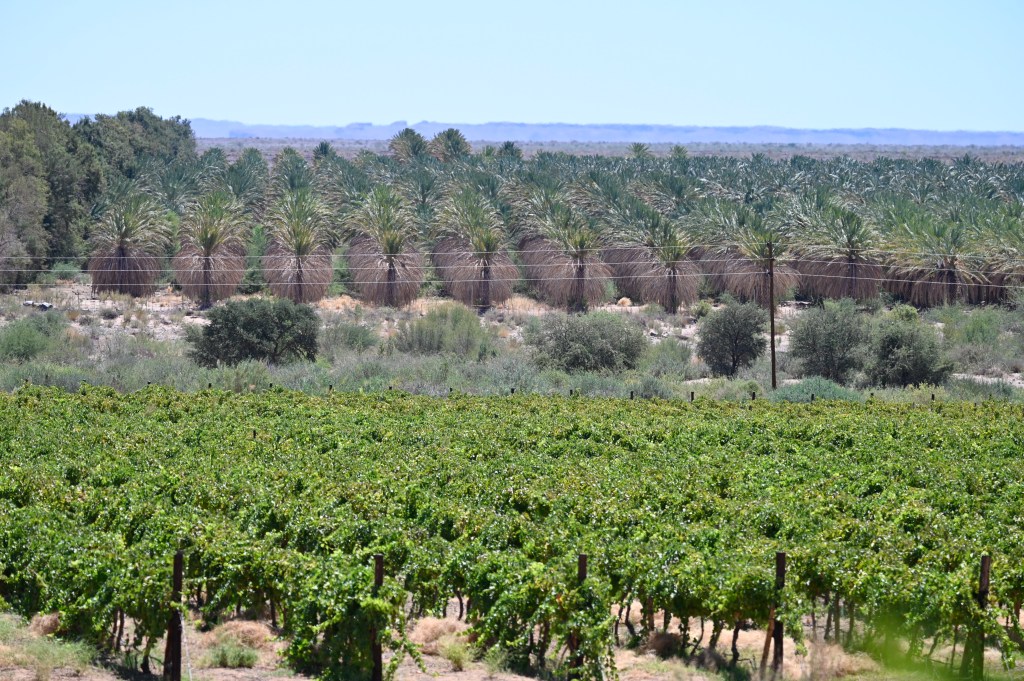
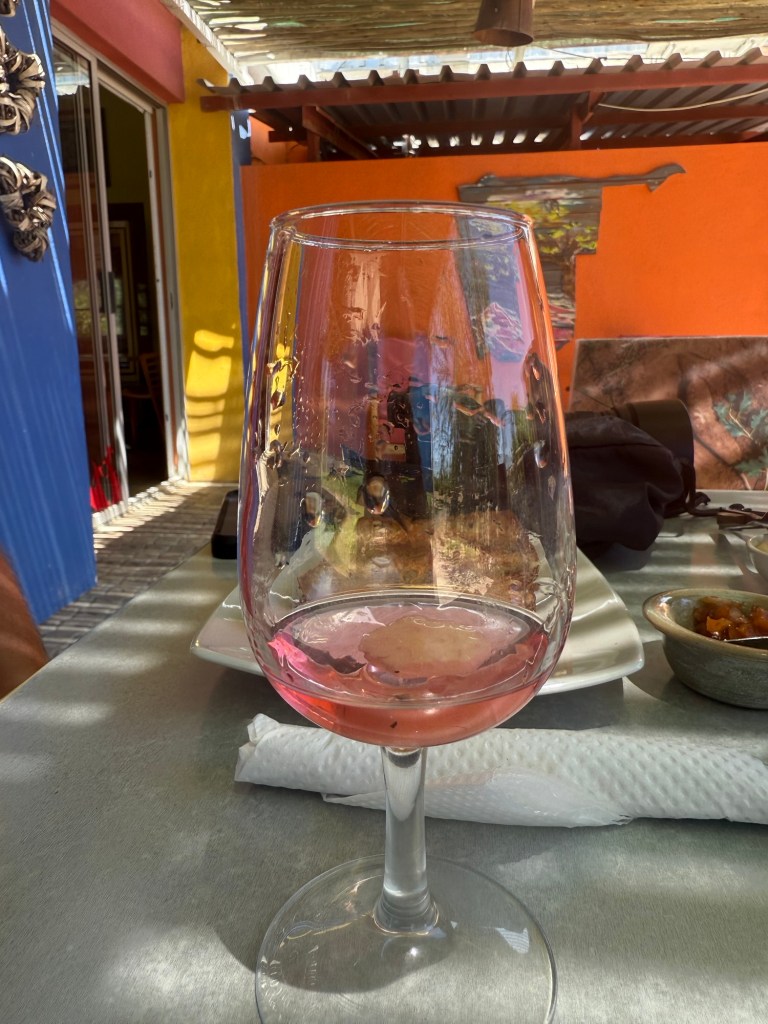
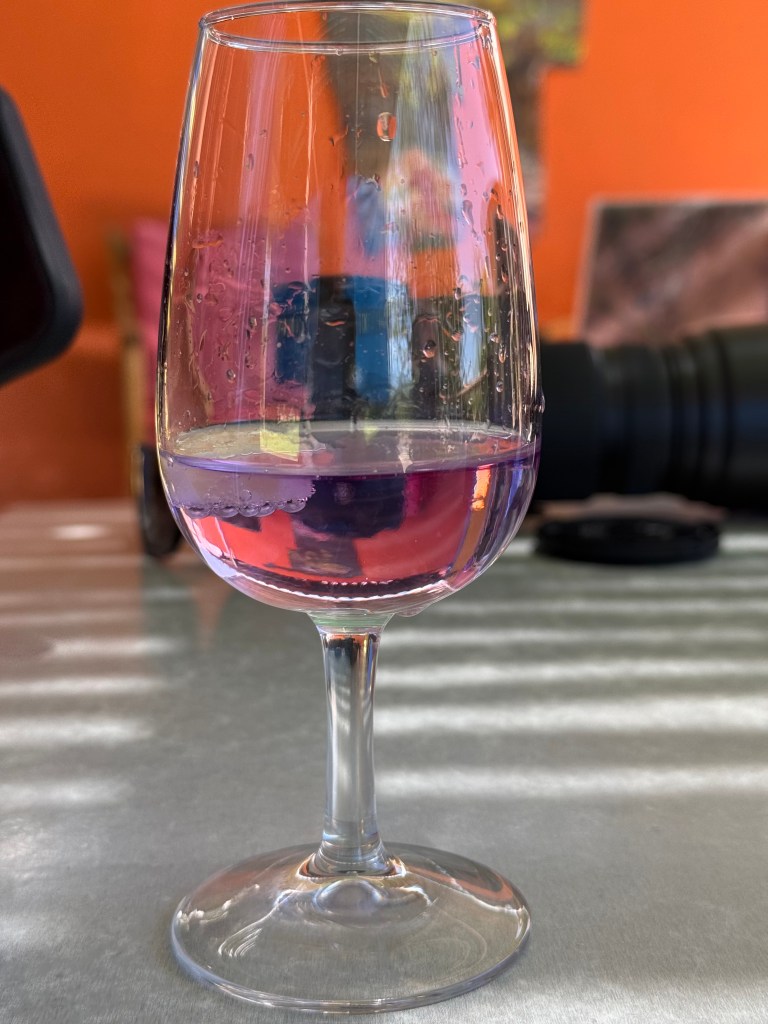
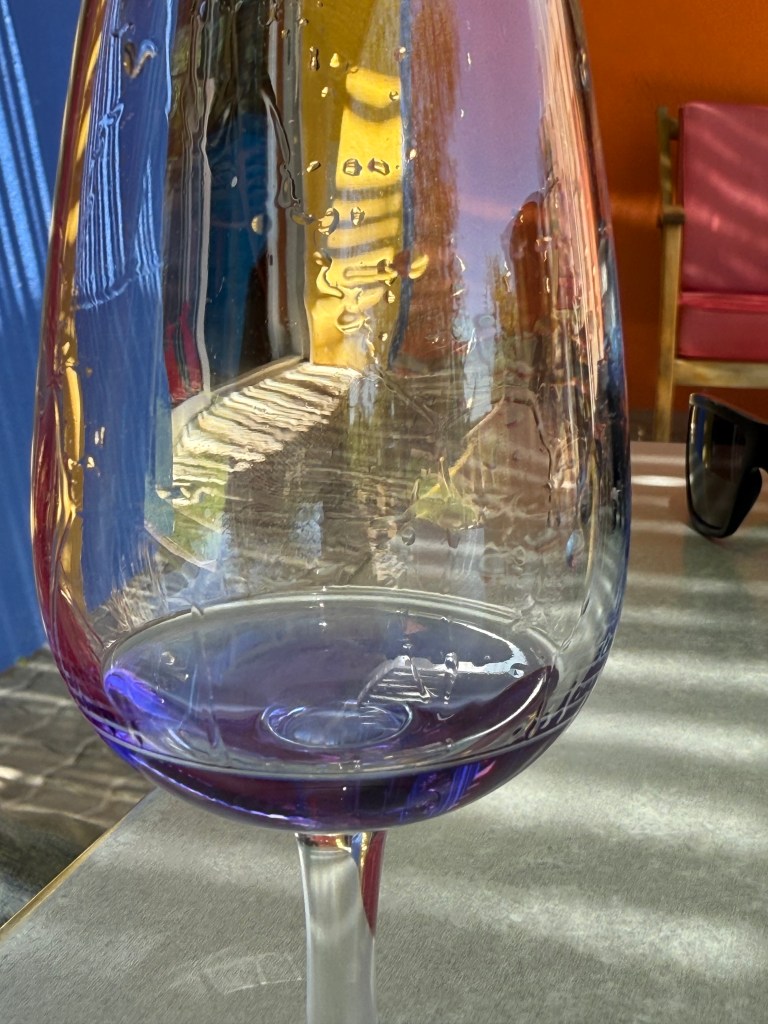
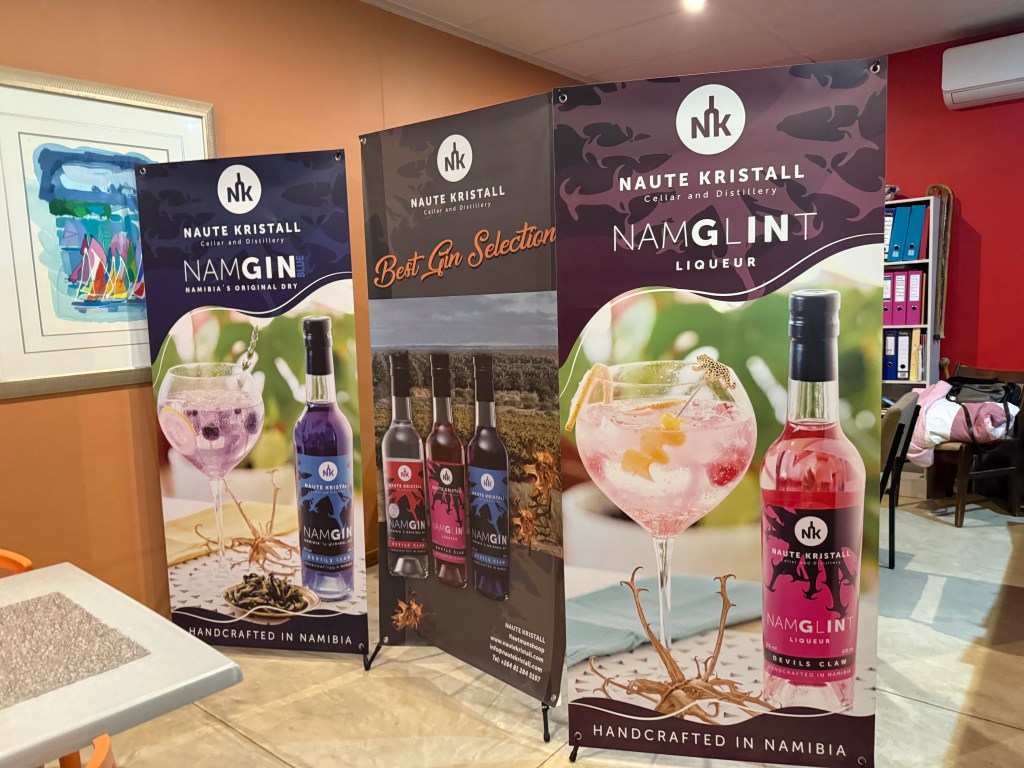
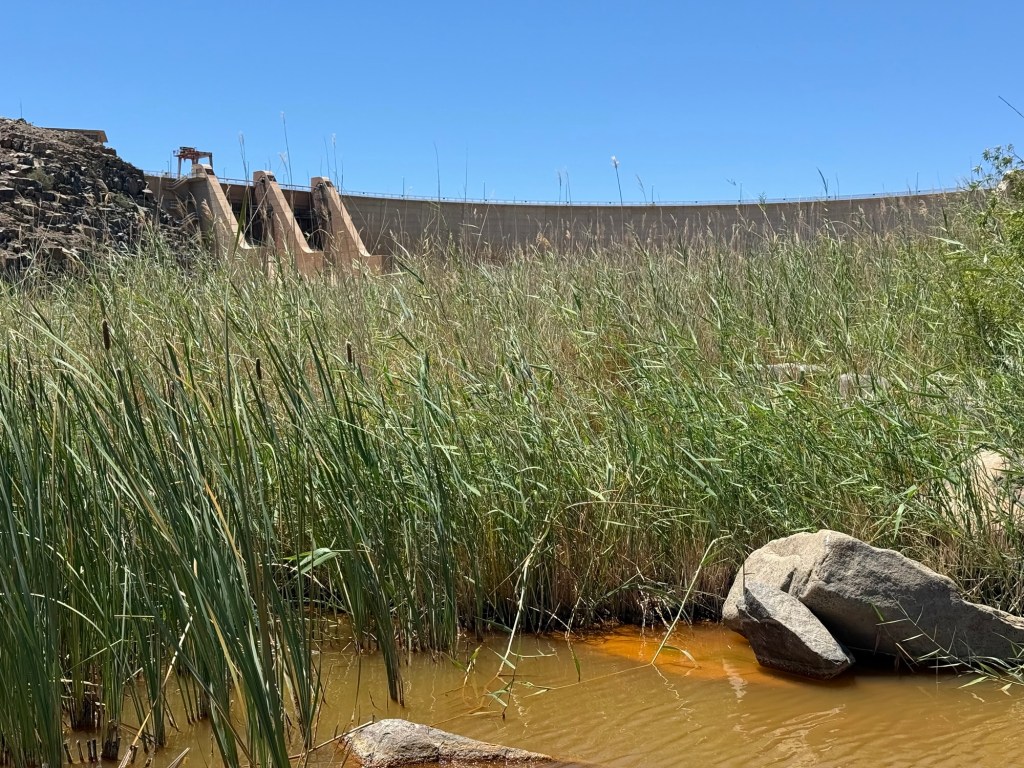
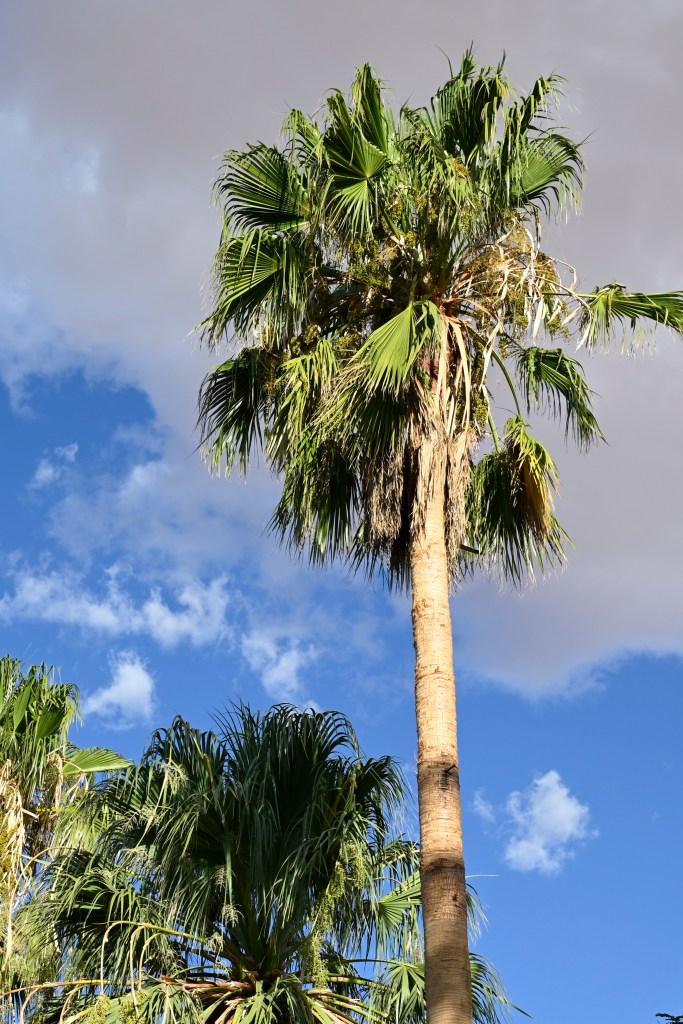
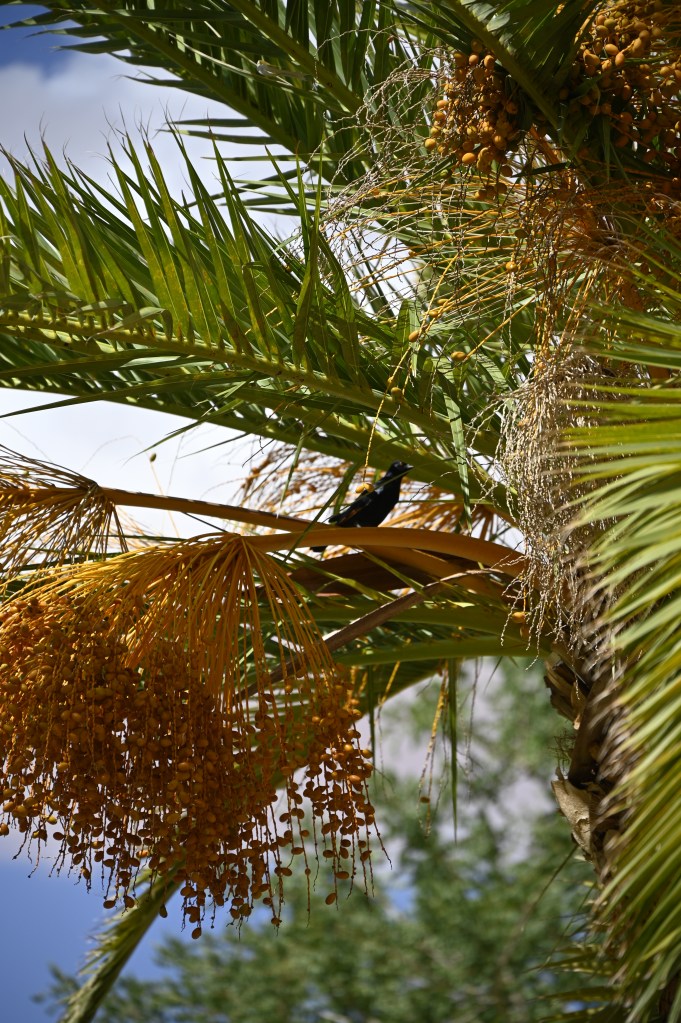
This decision to take the easier road turned out to be a very good choice, especially for my husband, as we found café and gin factory at Naute dam, offering gin tasting for only 80 NAD per person. Naute Kristal Cellar and Distillery is located right below Naute dam and next to a plantation that grows date palms and grapes, which is a rare sight in the else-way dry and arid landscapes of southern Namibia. They use the dates for gin-making and grapes to make a local version of Grappa, which they will call “Nappa” (N for Namibia). The also makes a gin where they use the tubers from the “Devils claw” plant as an important ingredients. Their spirit has won several international competitions. As I was the driver this day, I did not get to taste, but enjoyed toast from home-made bread, the fun of listening to the explanations of the different spirits, watching how the spirit changed it’s colour when lemon was added and not least looking at the wonderful birds in the cafés garden.

Birds
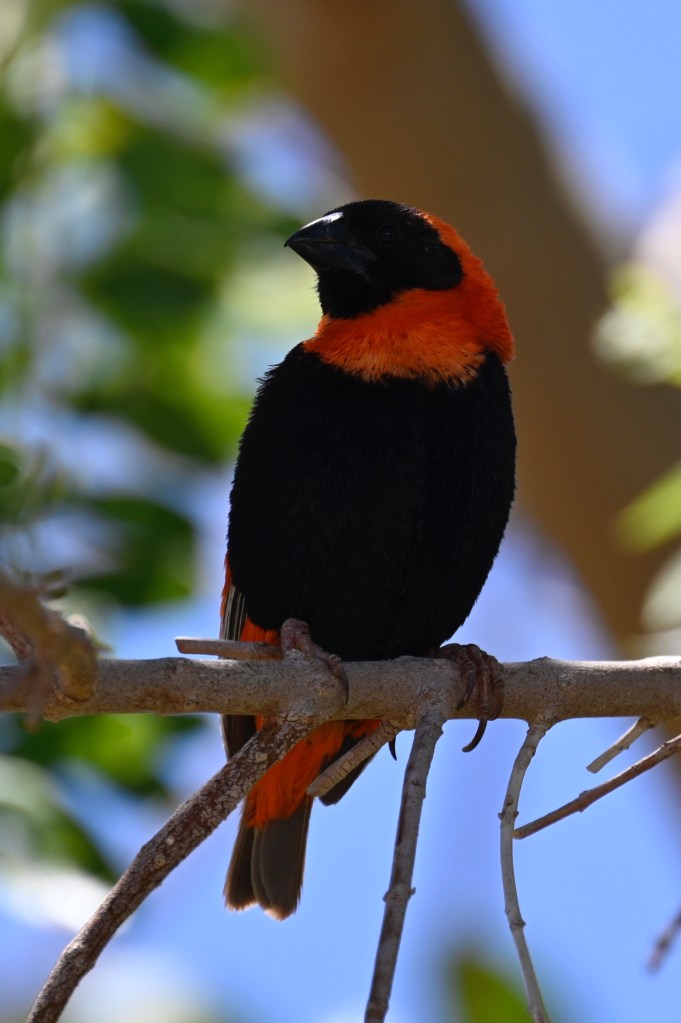
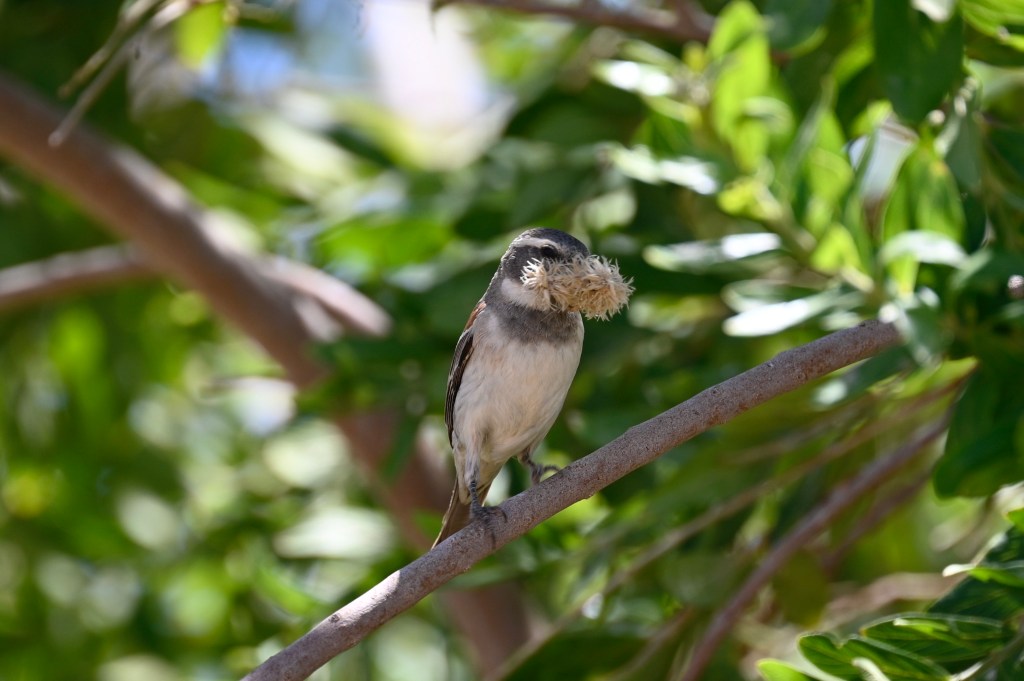
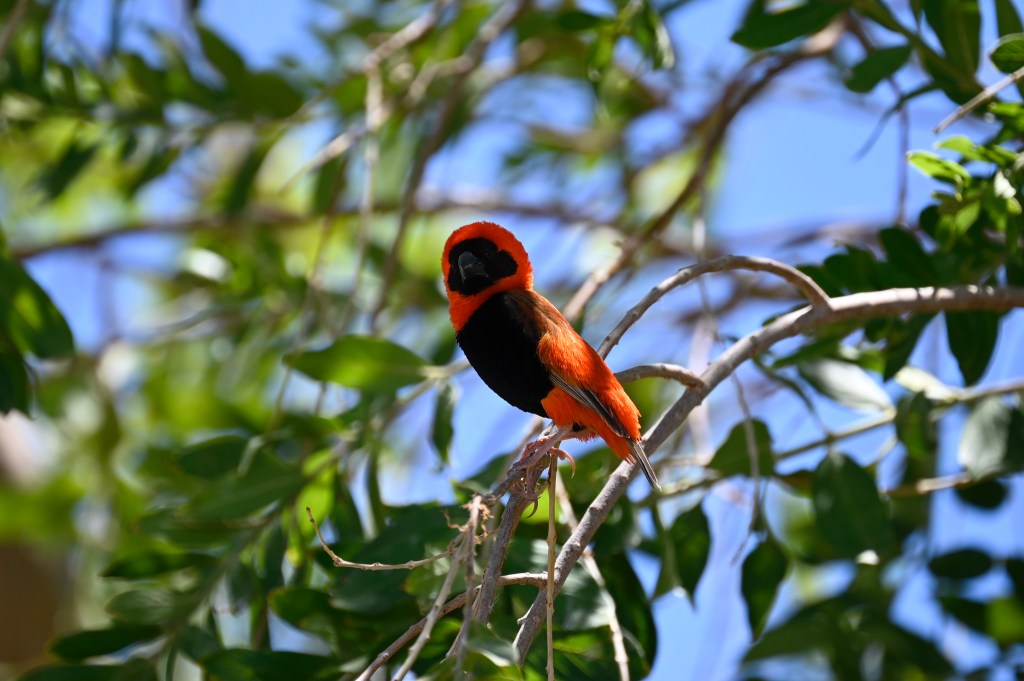
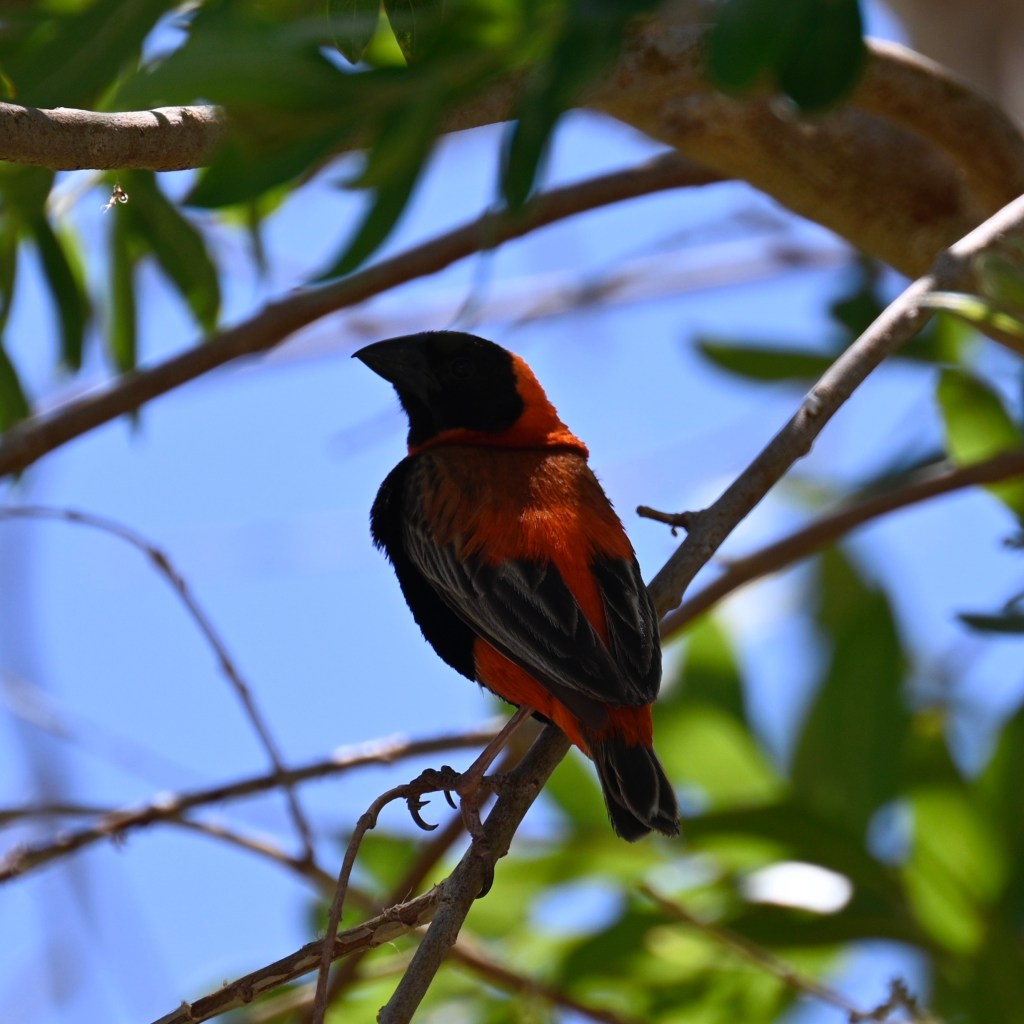
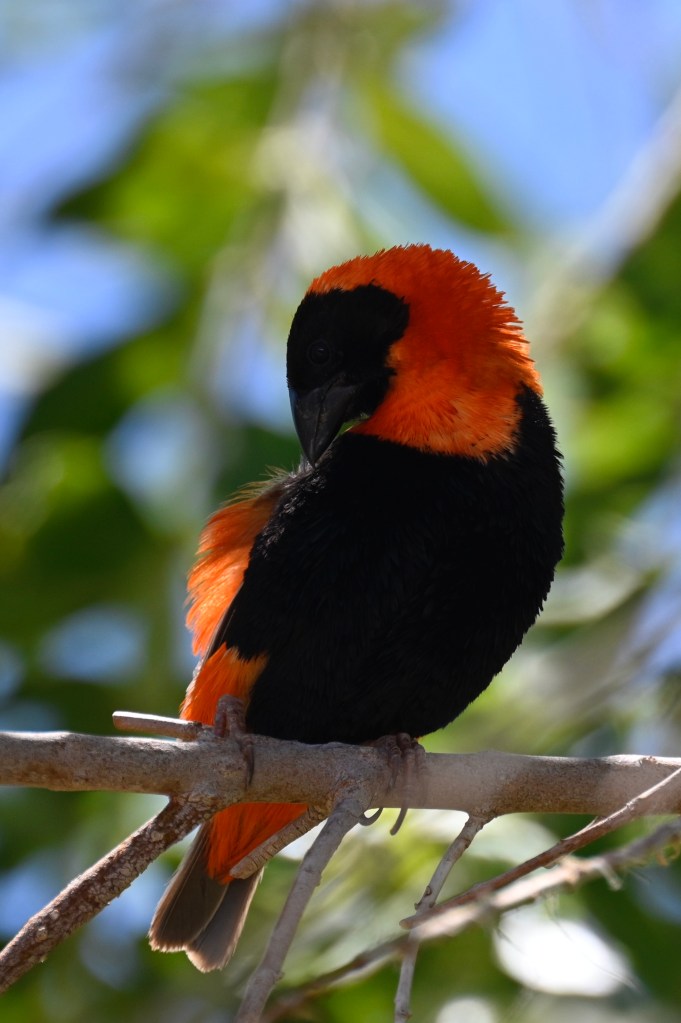
The birds living at Naute were quite spectacular in colour and could not have lived there had it not been for the water in the dam. The Southern Red Bishop is a kind of weaver bird, found in Southern Africa, but normally not in Namibia or Kalahari, as they need a wetter climate. This was the first time I saw this bird. The male and female has different colours and I think we saw them both.
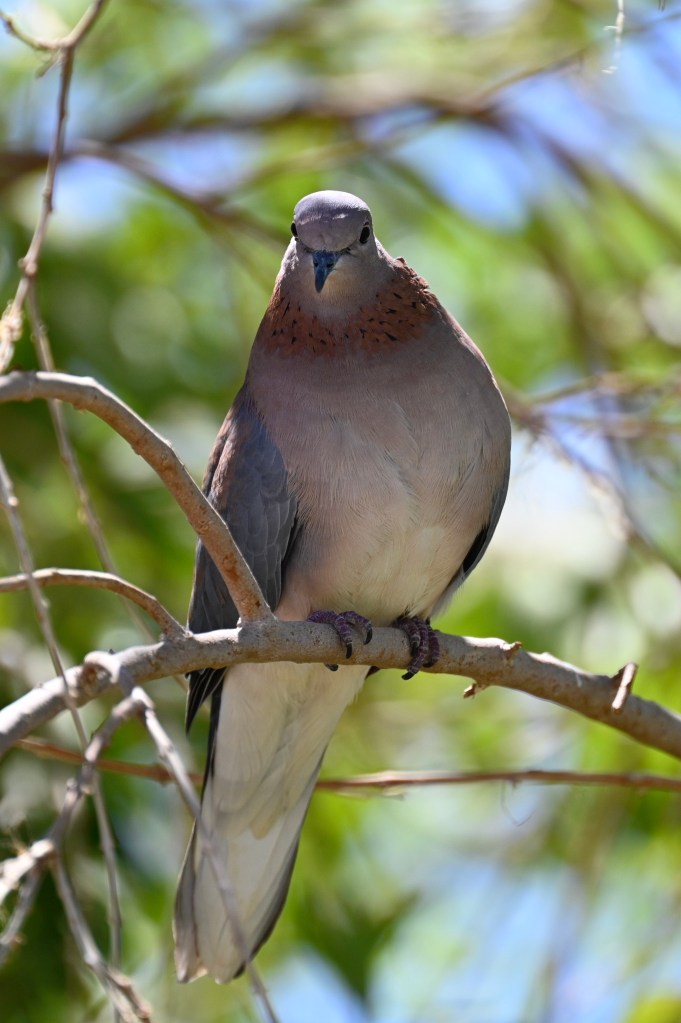
We also saw a beautiful “Laughing Dove” in the garden of Naute Kristal, and had my companion not been so occupied with the gin, he might have got a good sound recording of it’s laughter 🙂
Canyon lodge
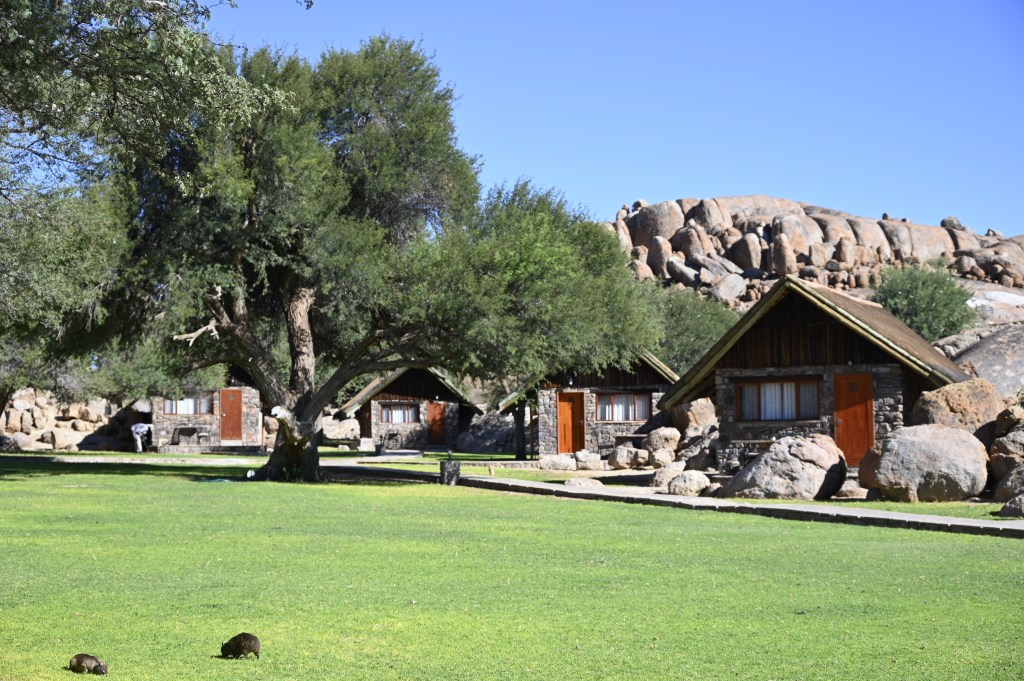
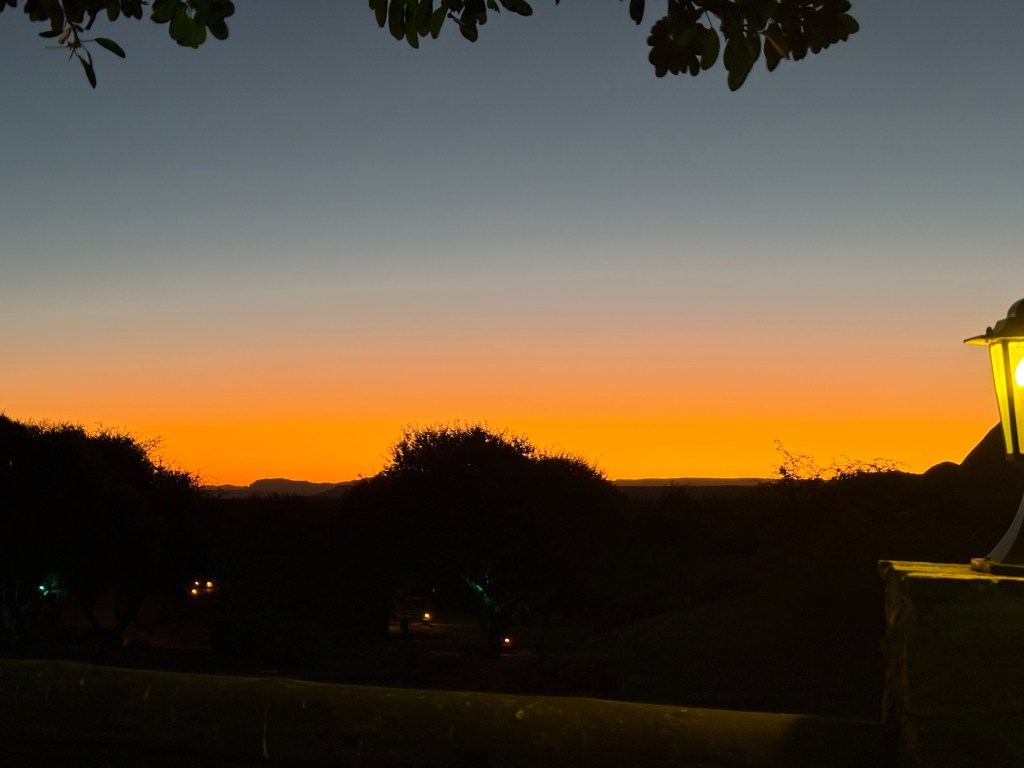
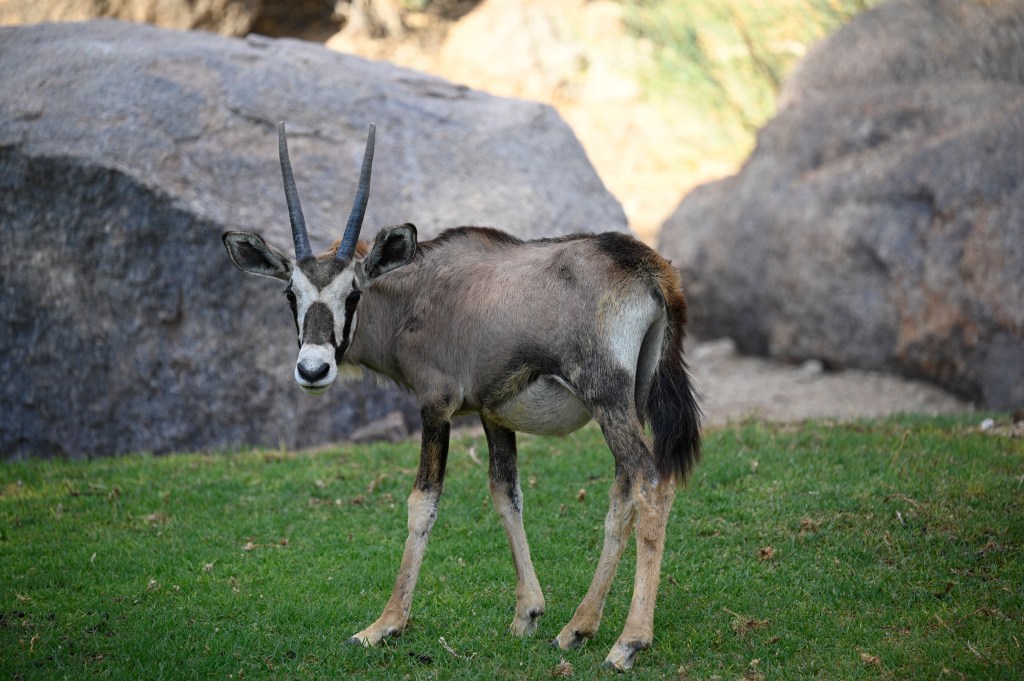
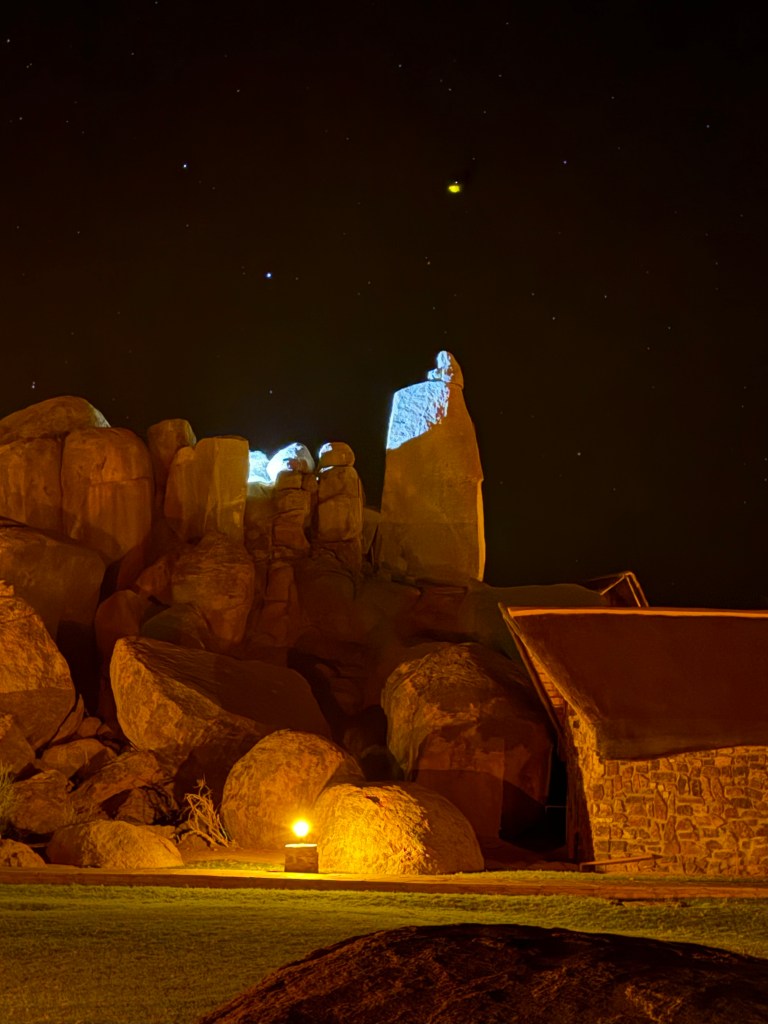
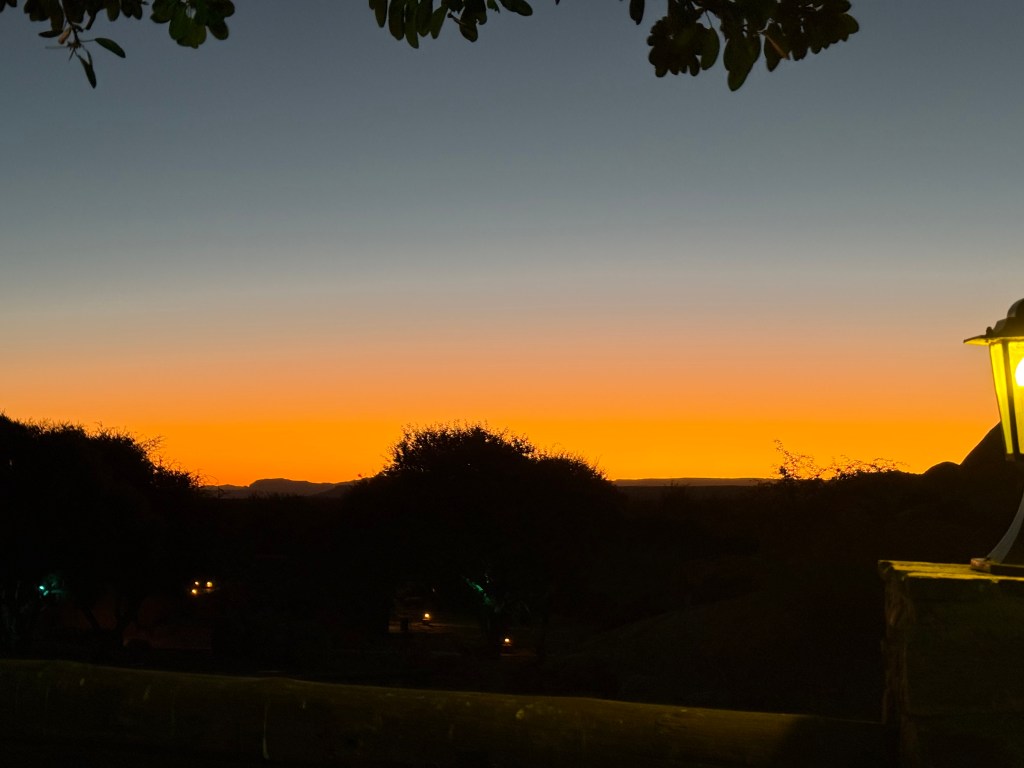
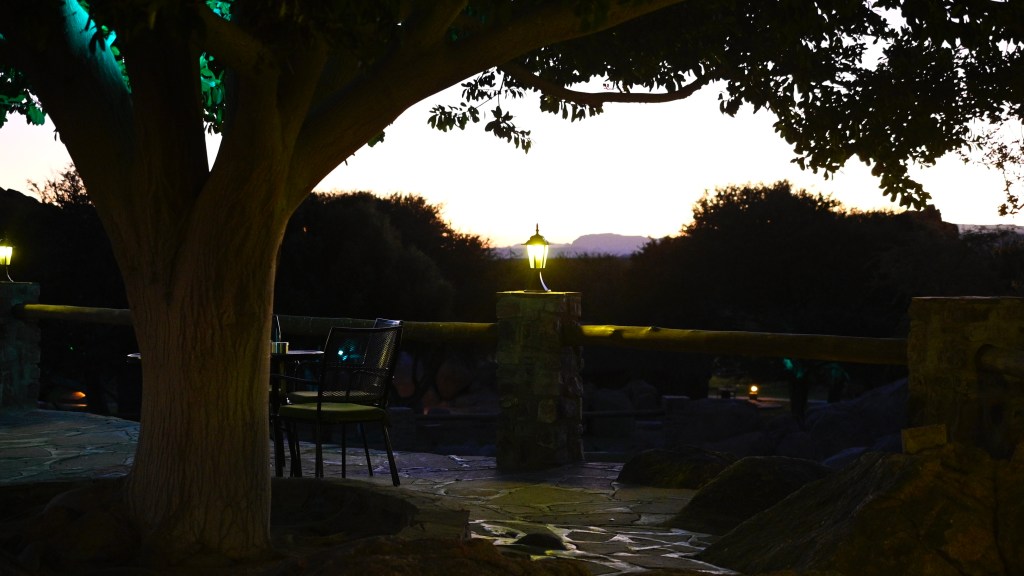
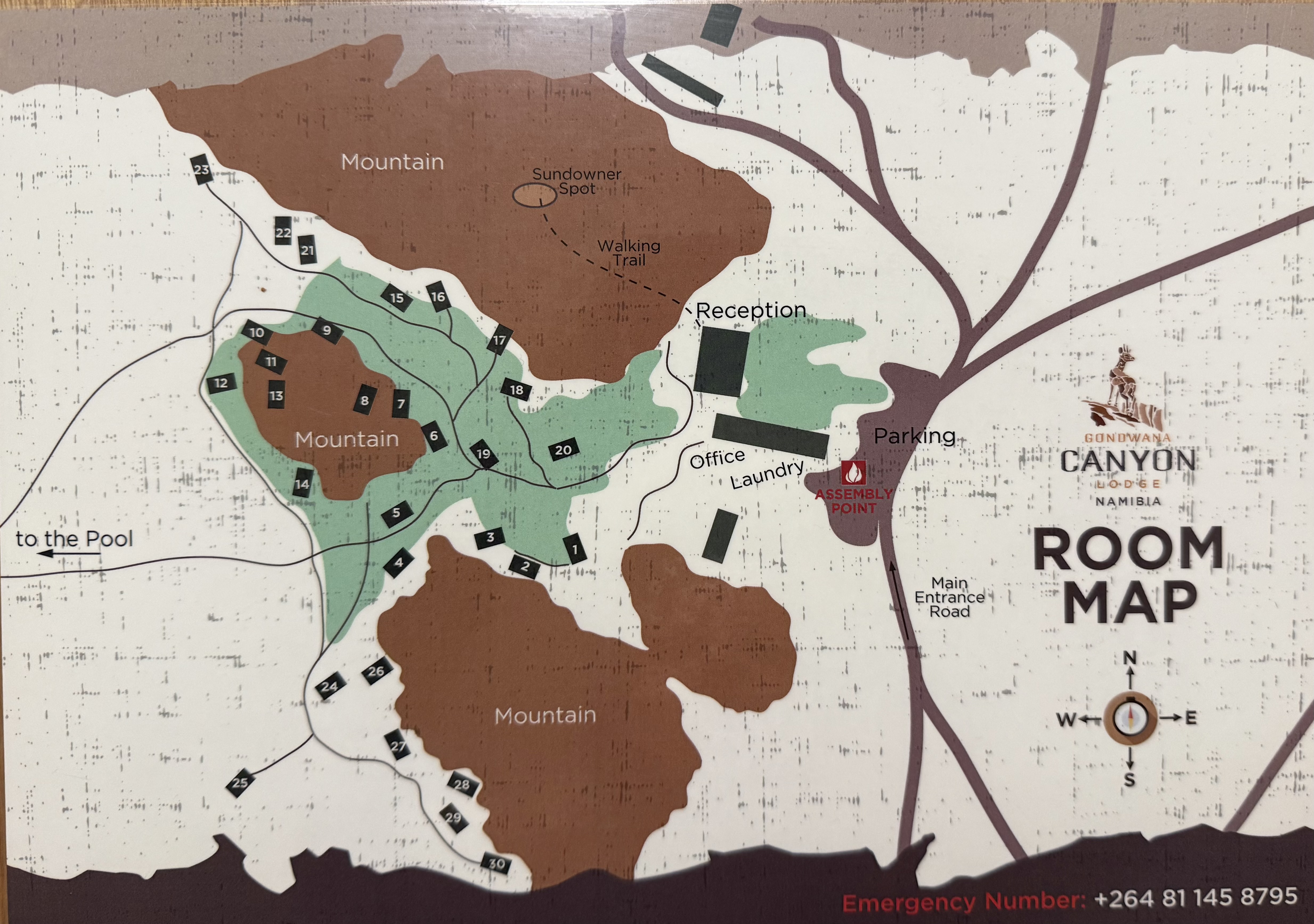
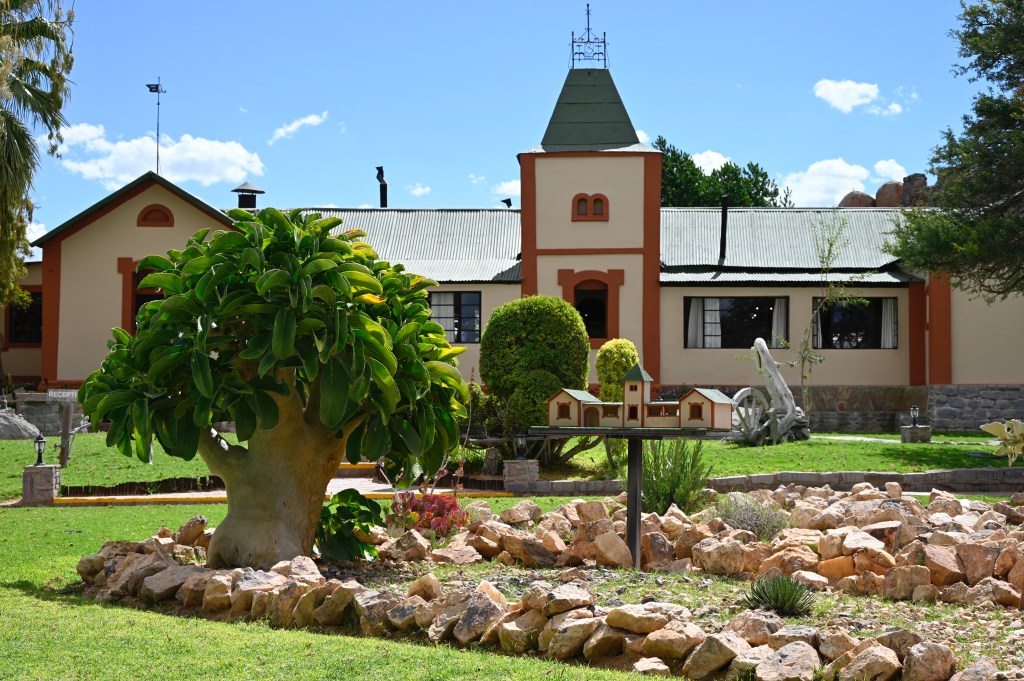
Godwana Canyon Lodge is “The best” place to live when you visit Fish River Canyon. Not because it’s closest, but just because it’s a wonderful place. I visited 26 years ago and in 2025, and it’s still the same! But upgraded. The cabin among the red granite cliffs, with oryxes and daisies walking right outside, the service, the glittering pool and not least the wonderful sunset over the granite boulders. All reminding of the trip I had with my father and then 2-year old son back in 1997. It was still wonderful in 2025, even in the companionship of some Russians ladies with high-healed cowboy outfits. The sunset was still the same and I celebrated the return with a Tafel lager, even though I normally do not drink beer.
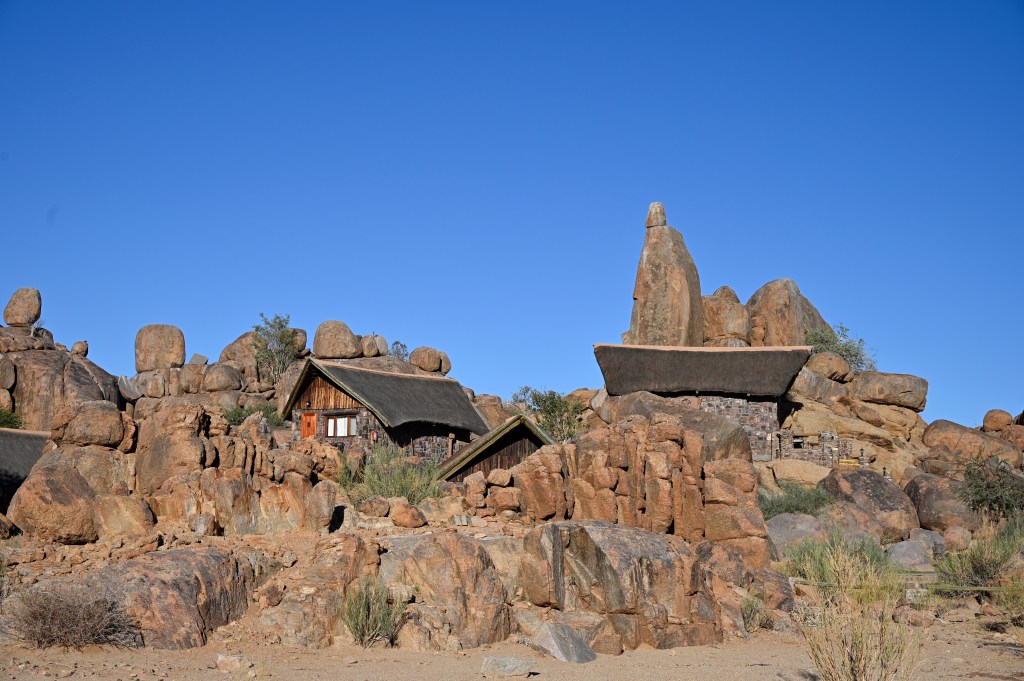
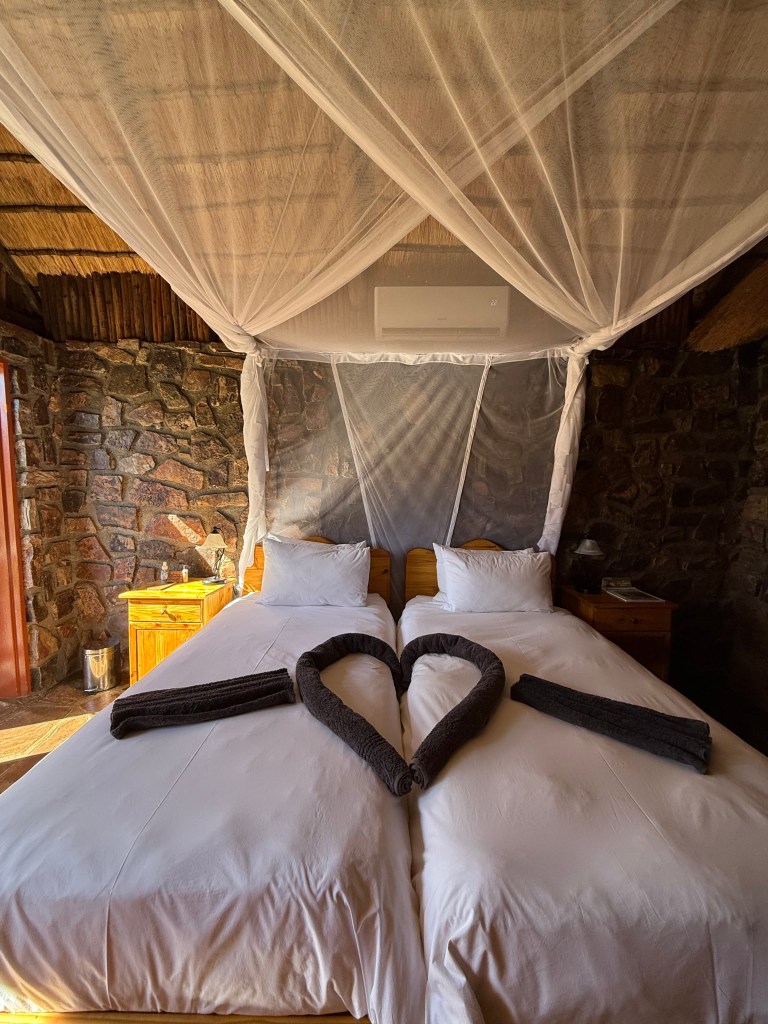
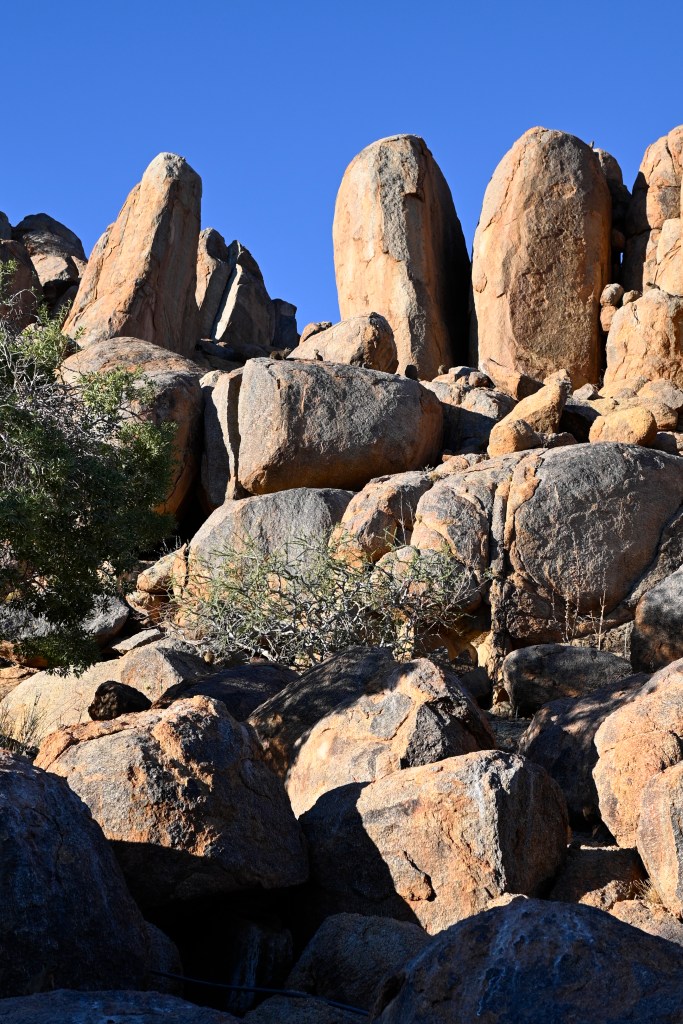
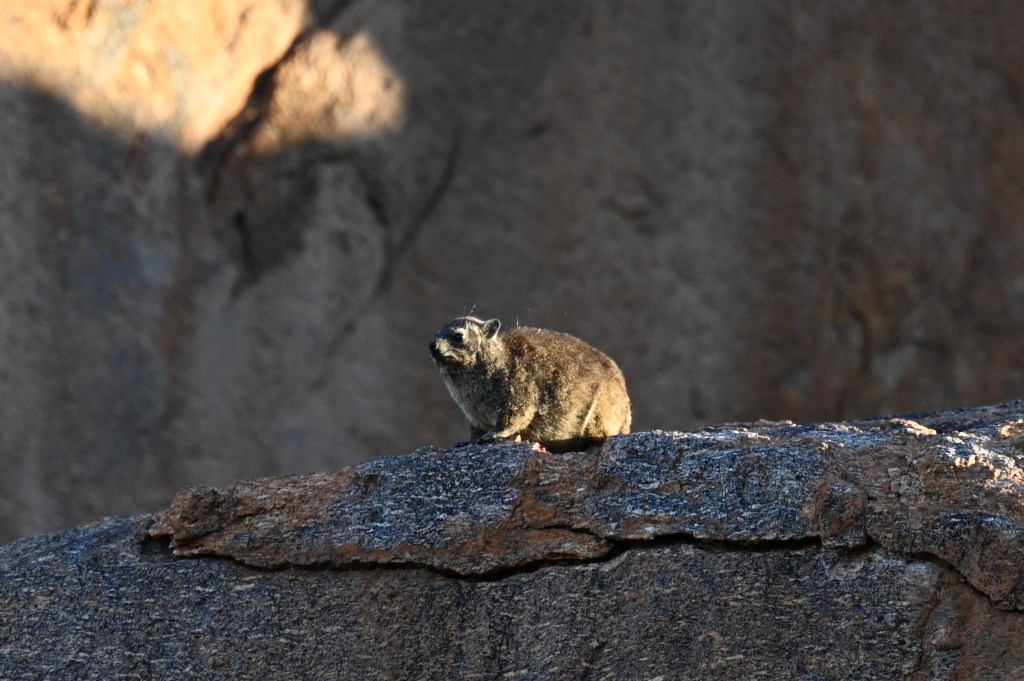
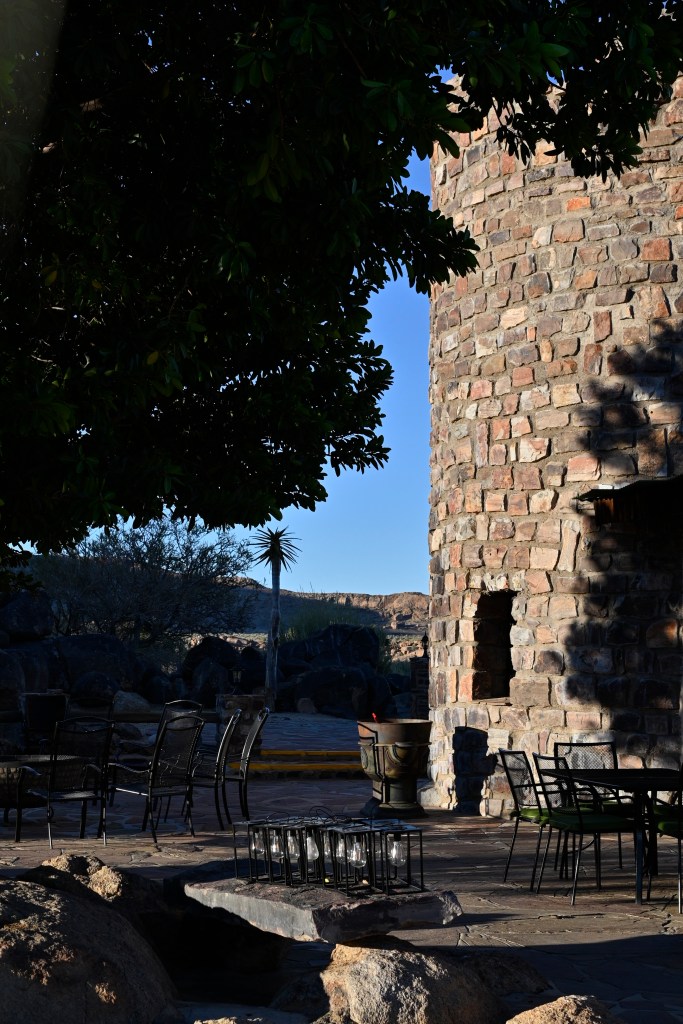
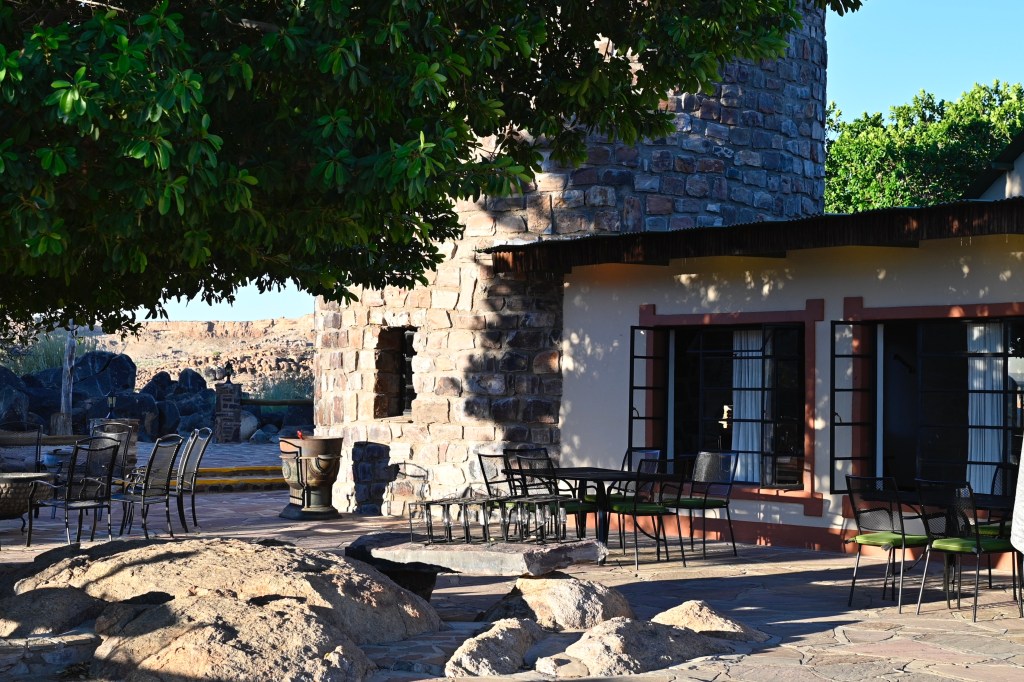
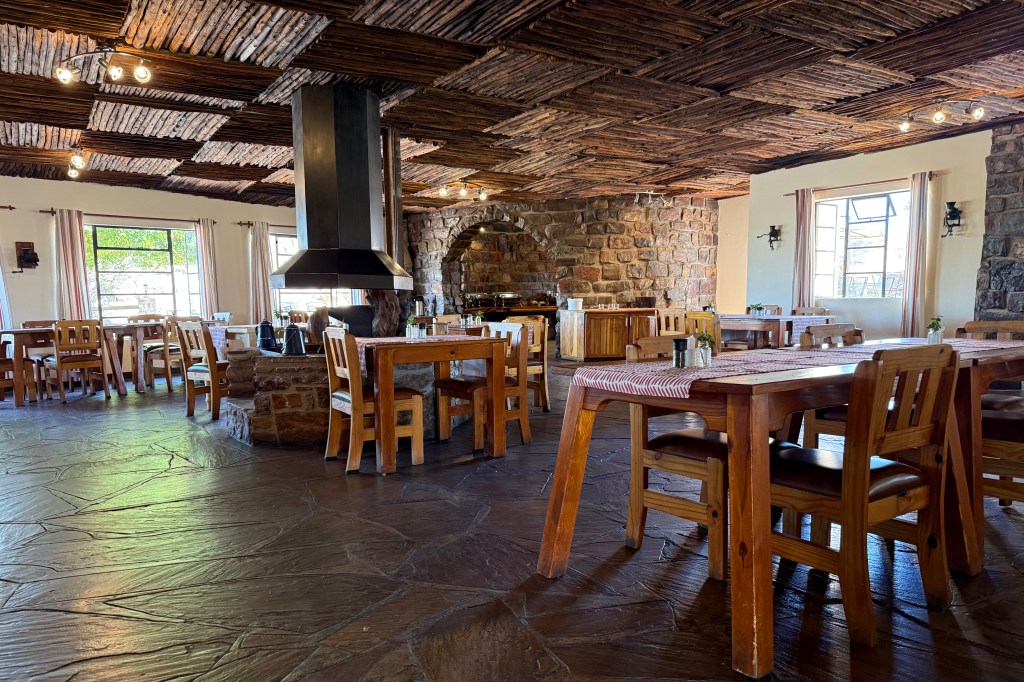
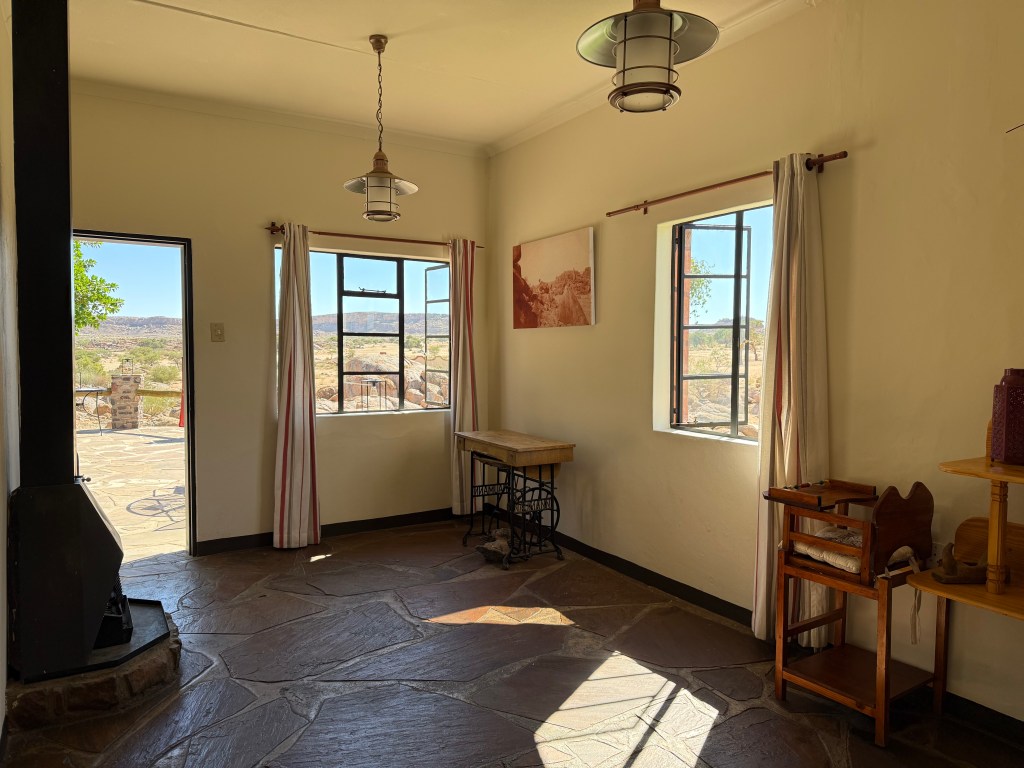
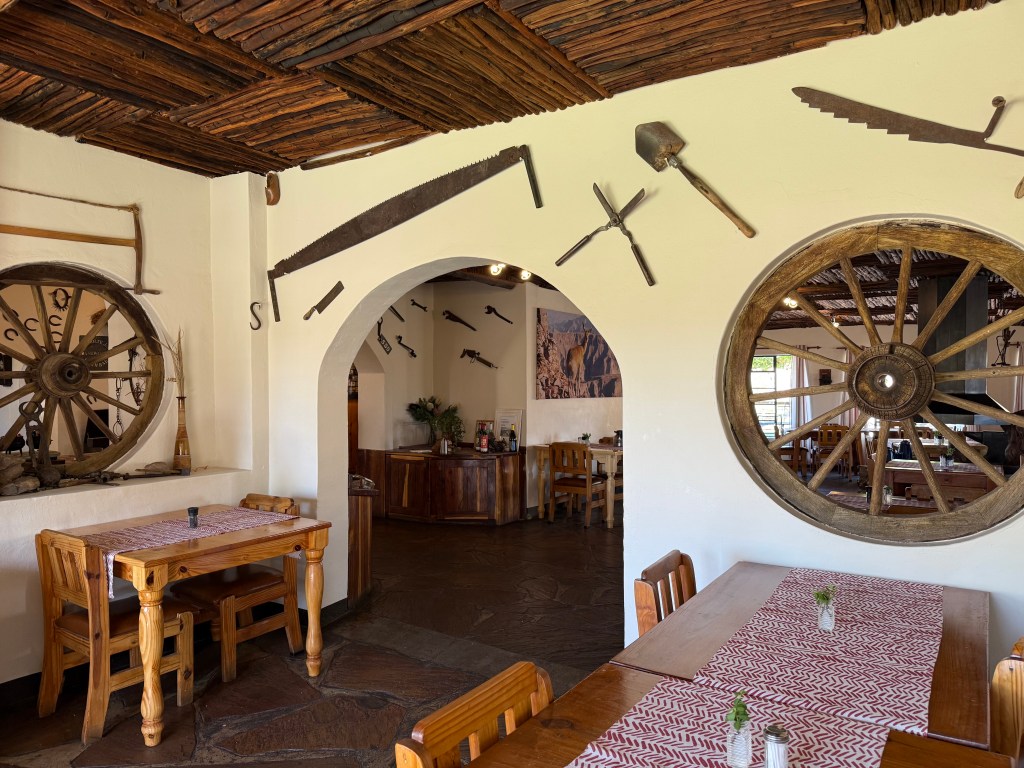
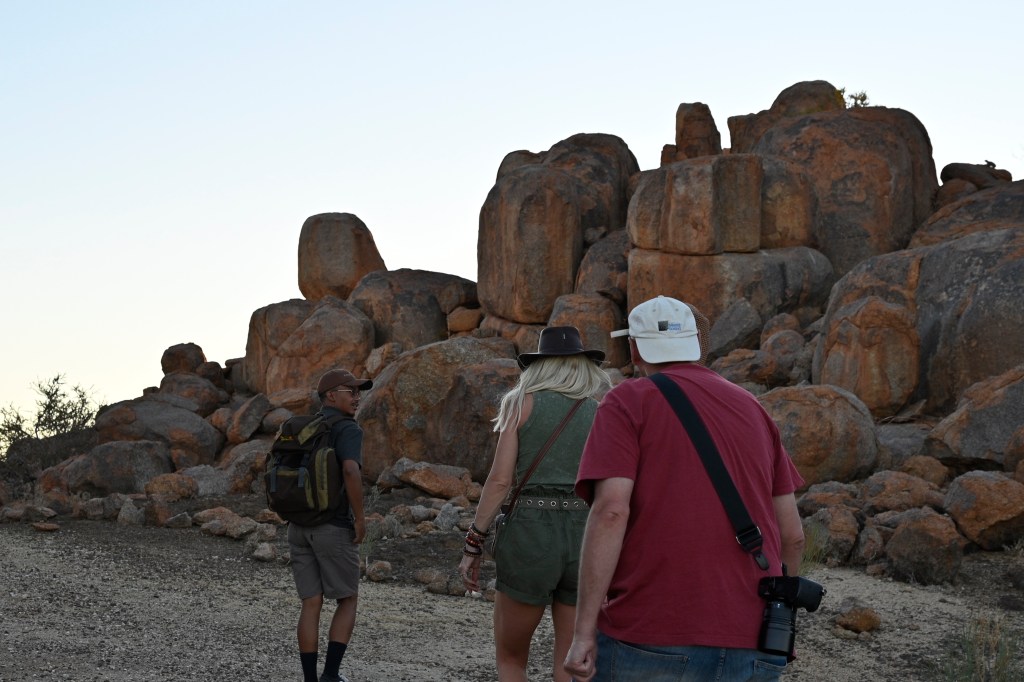

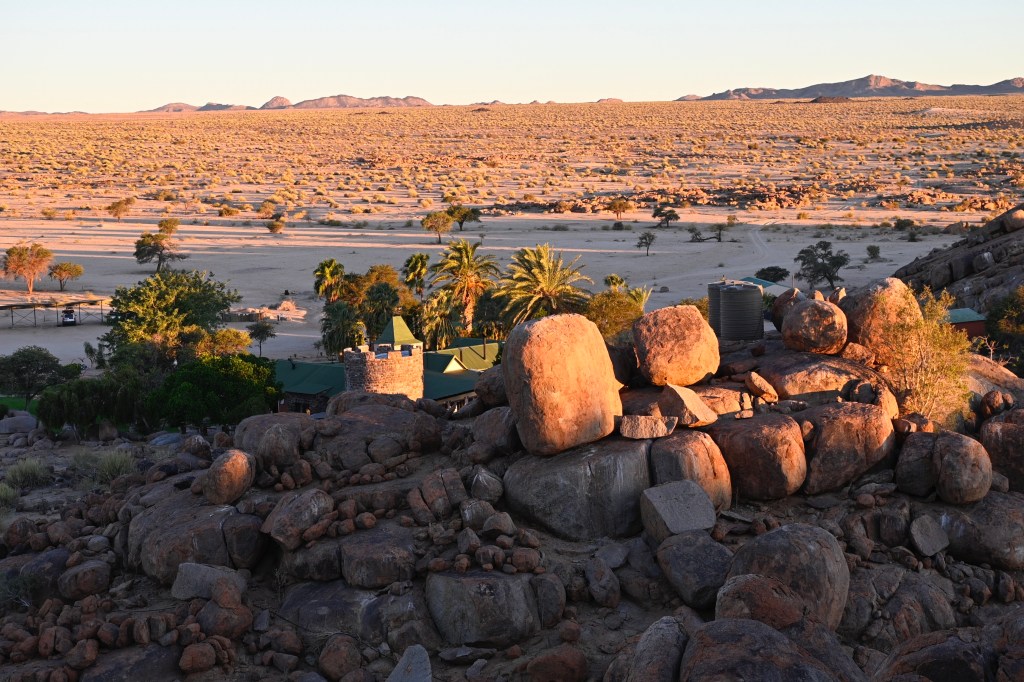
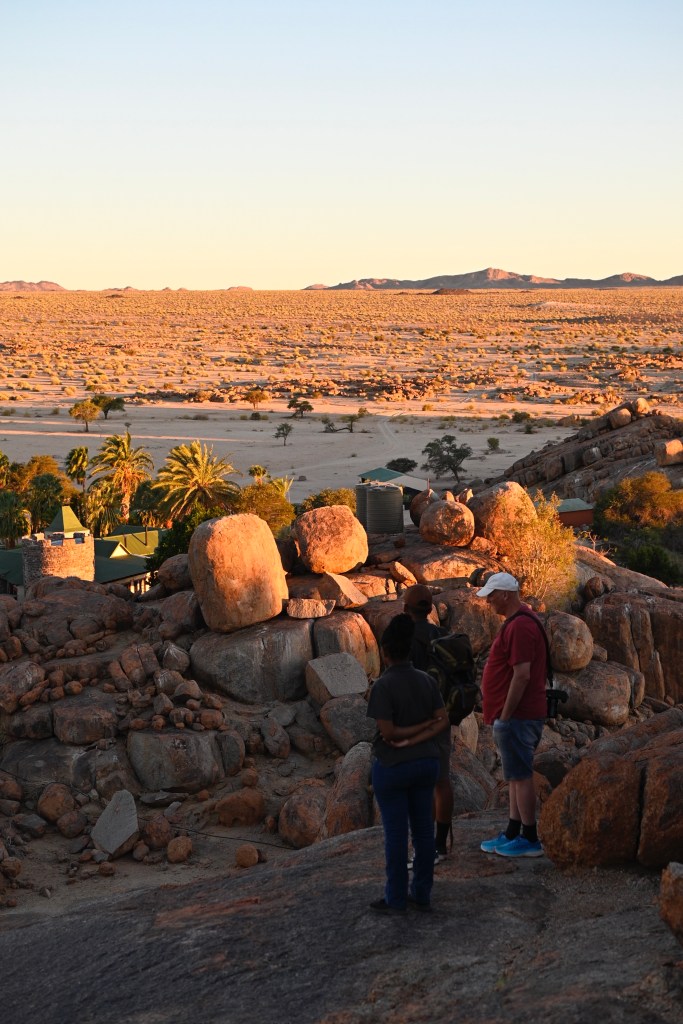
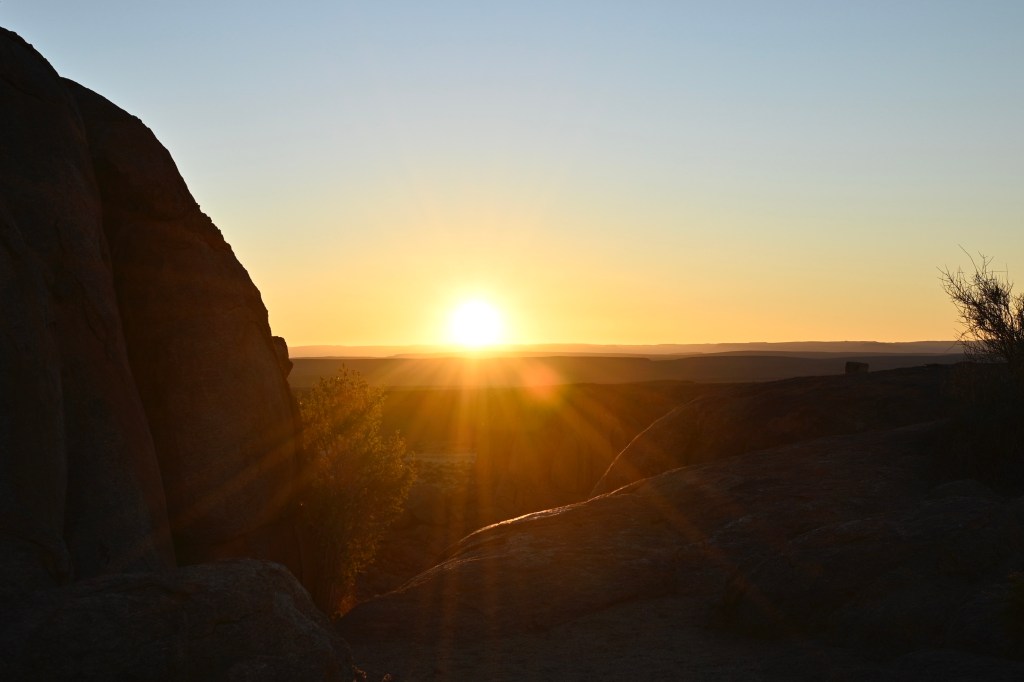
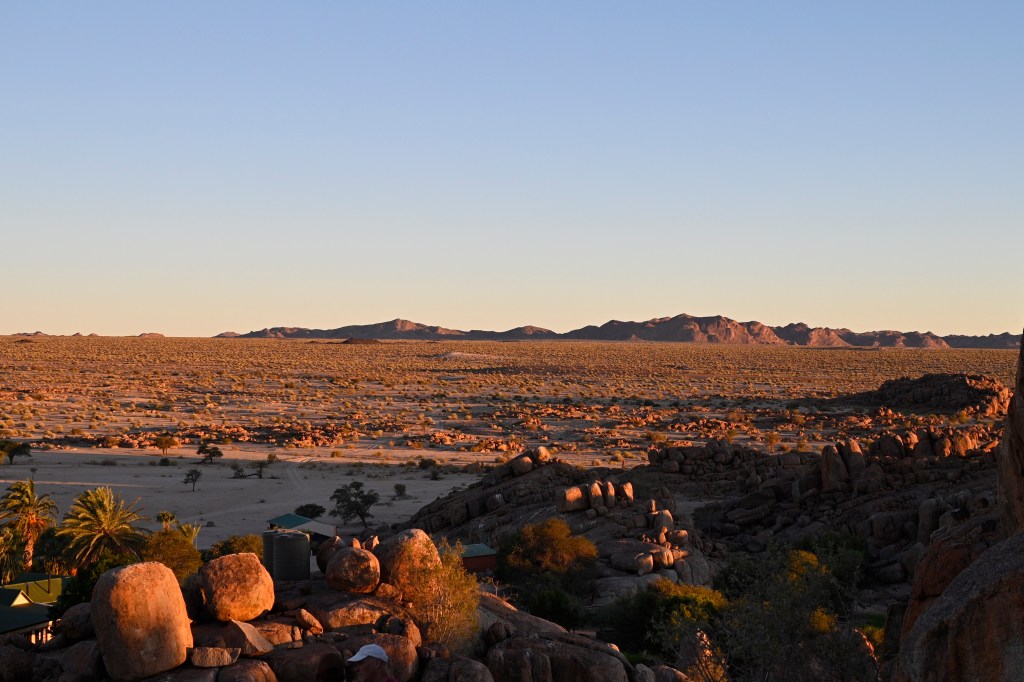
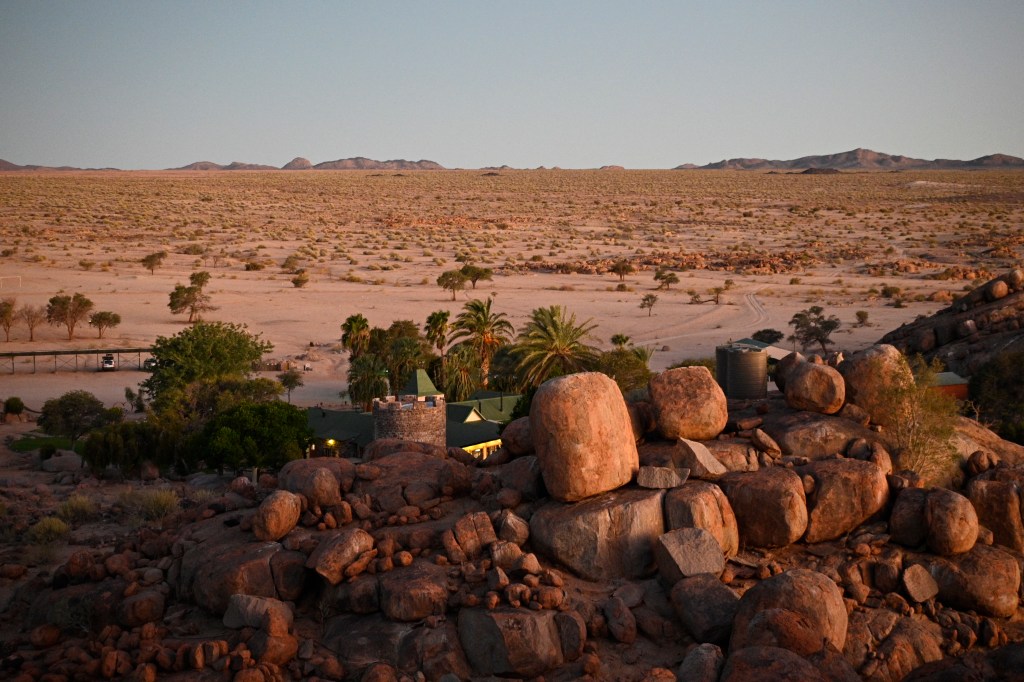
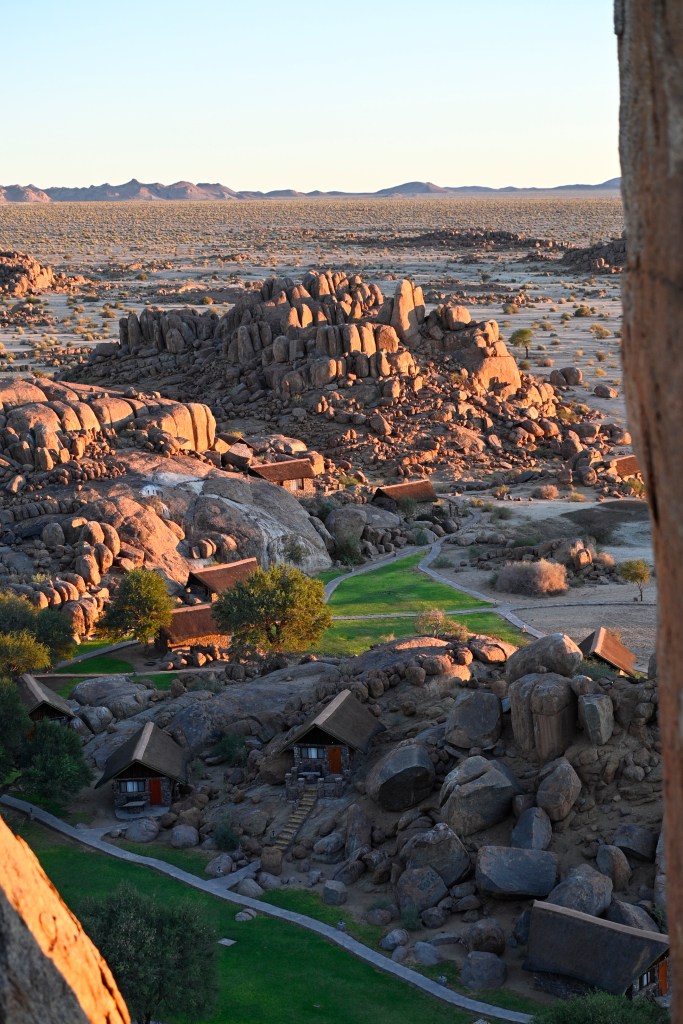
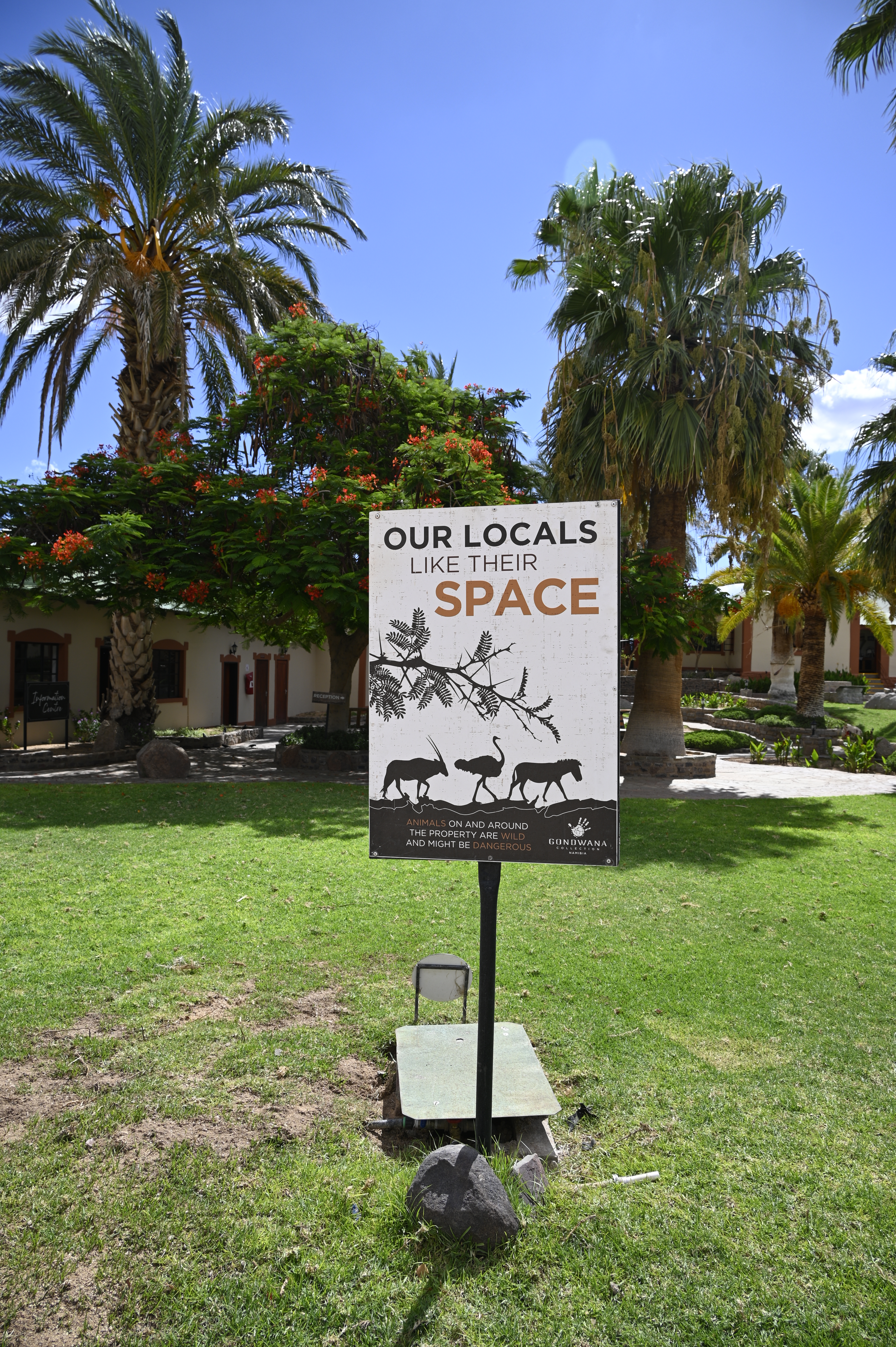
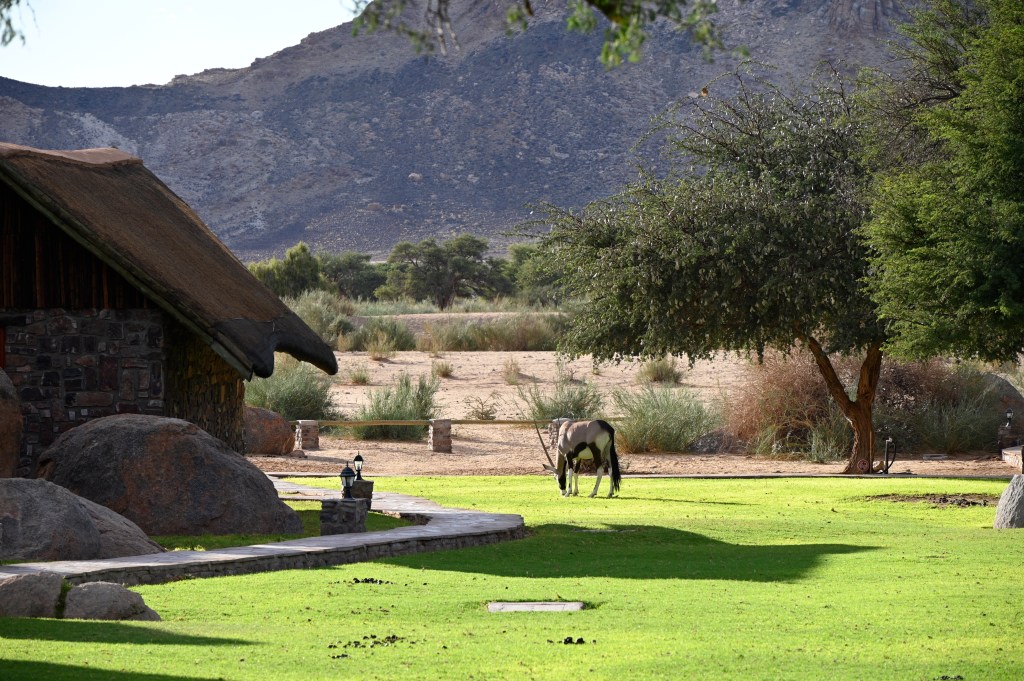
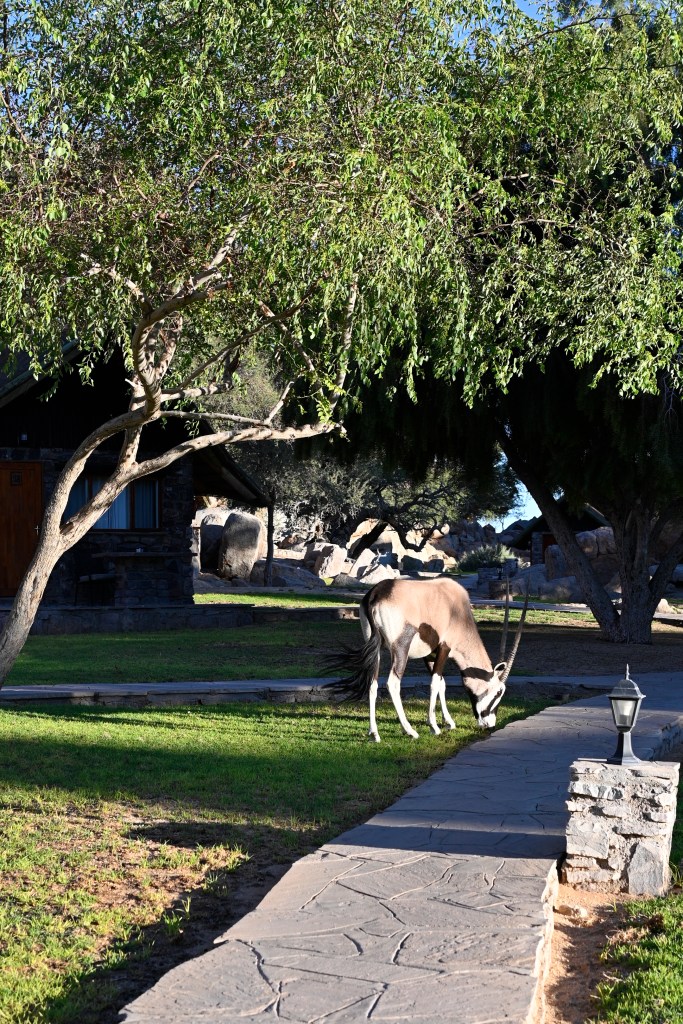
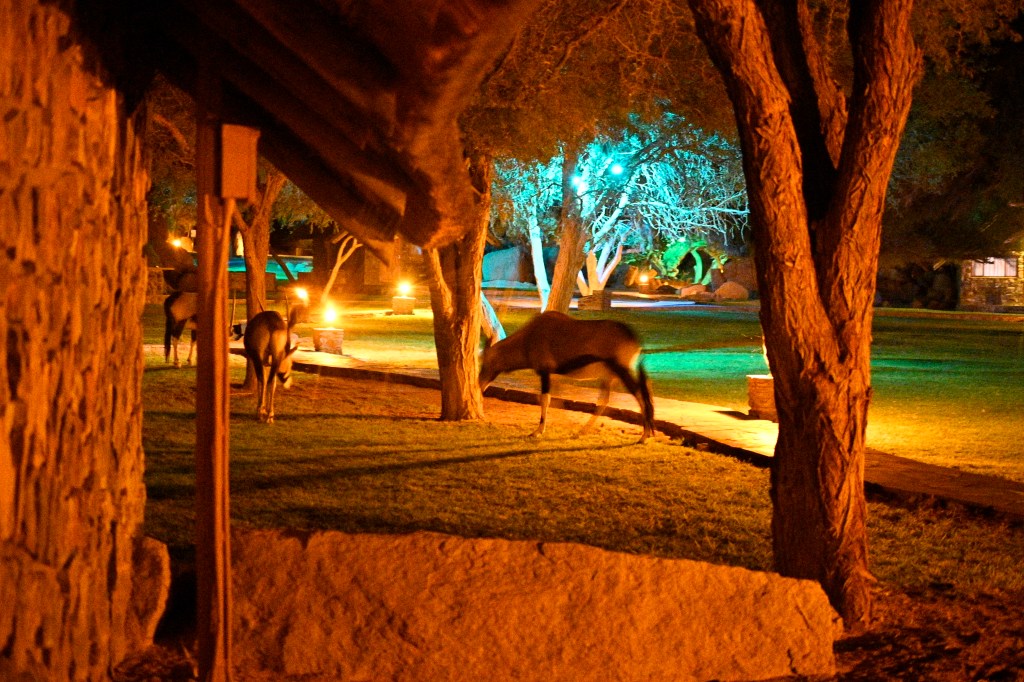
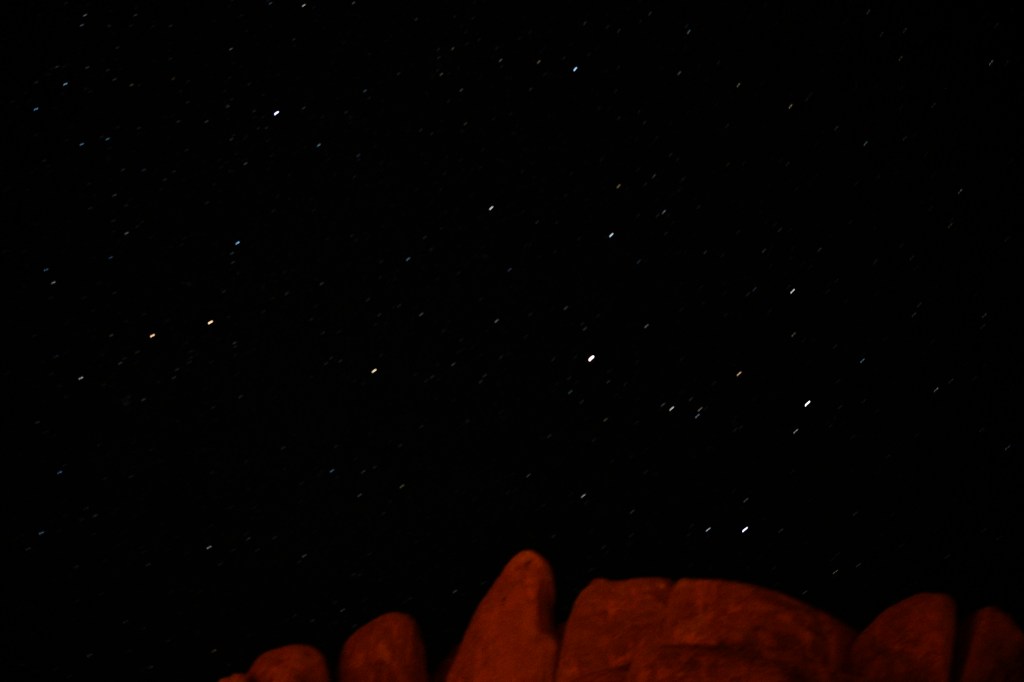
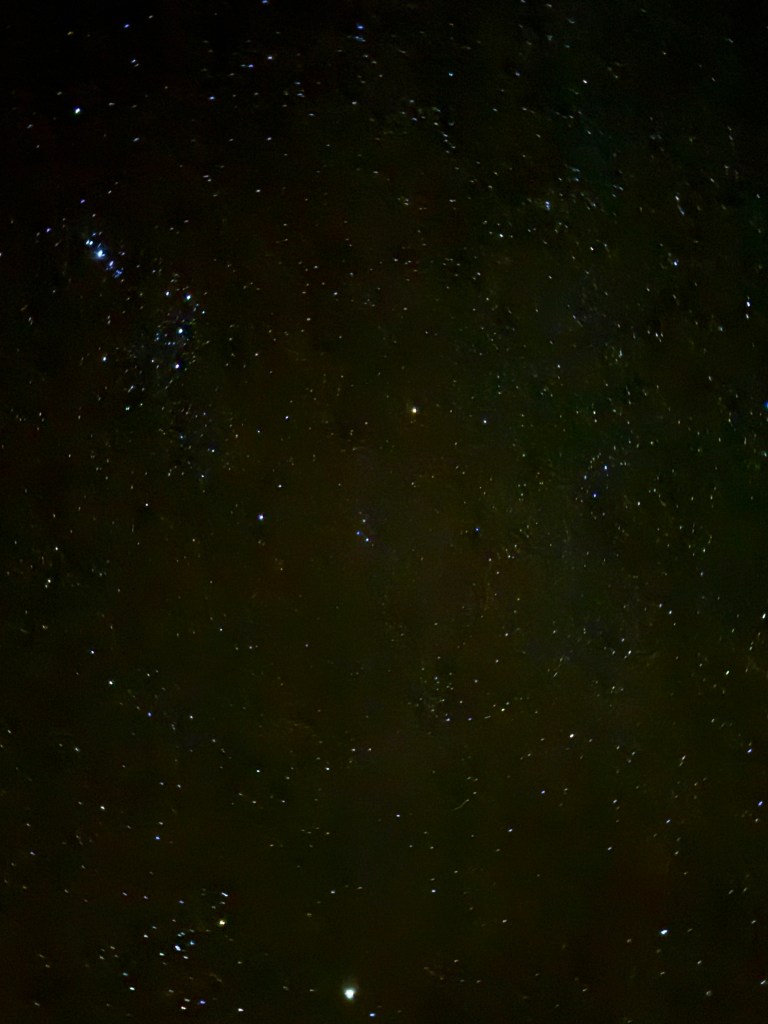
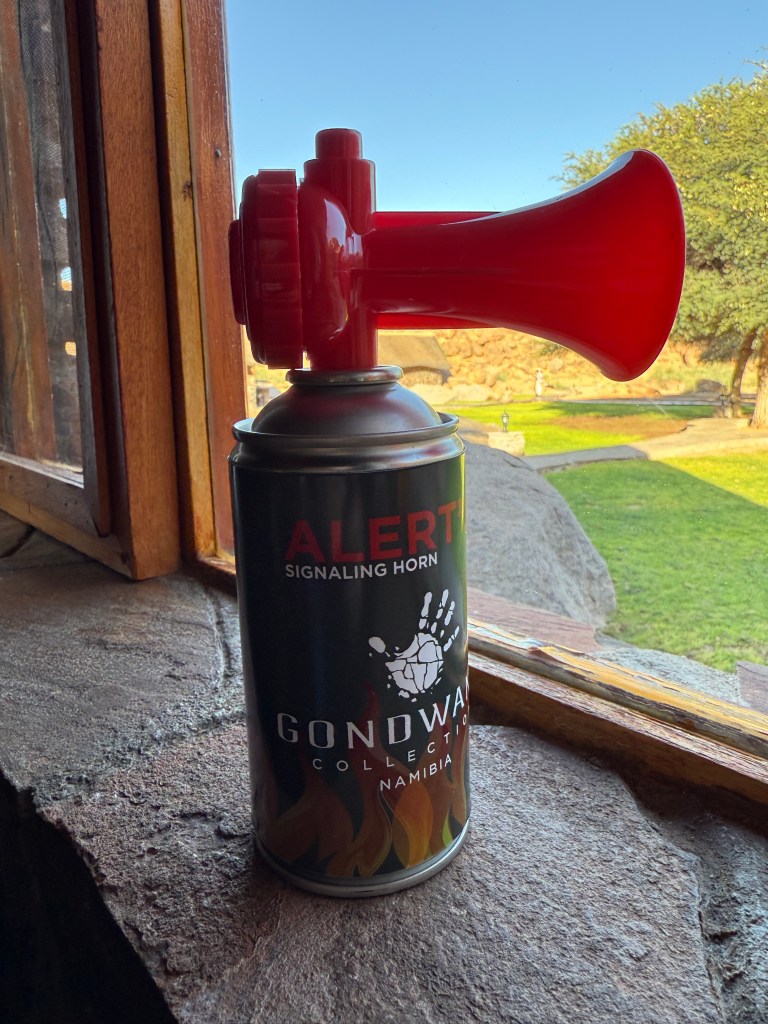
Going back to the cabin in the evening, after a good buffet dinner, gave me a little fright. Outside our cabin was oryxes grazing, peacefully, but still we had to pass their baby to get to our place. And their spears on the heads are straight, long and fearful. We just had to wait and go in circles around to not interfere. They moved away slowly, as we found the door to our place and thereafter we got to see the night stars. Later on we found a signal horn in our room. To warn if we were in danger.
Pool
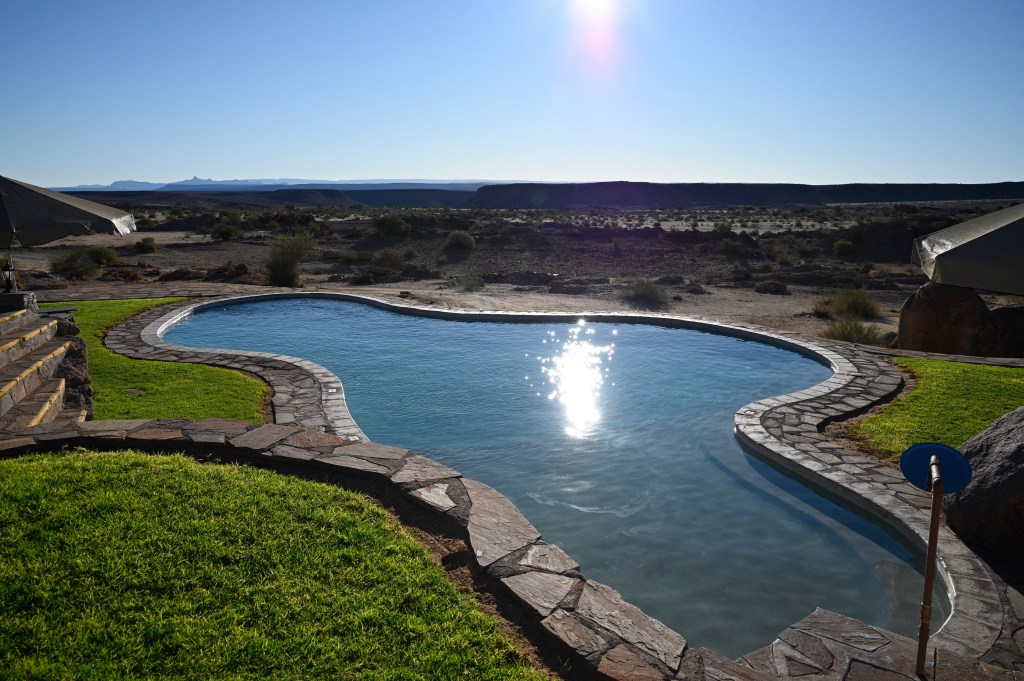
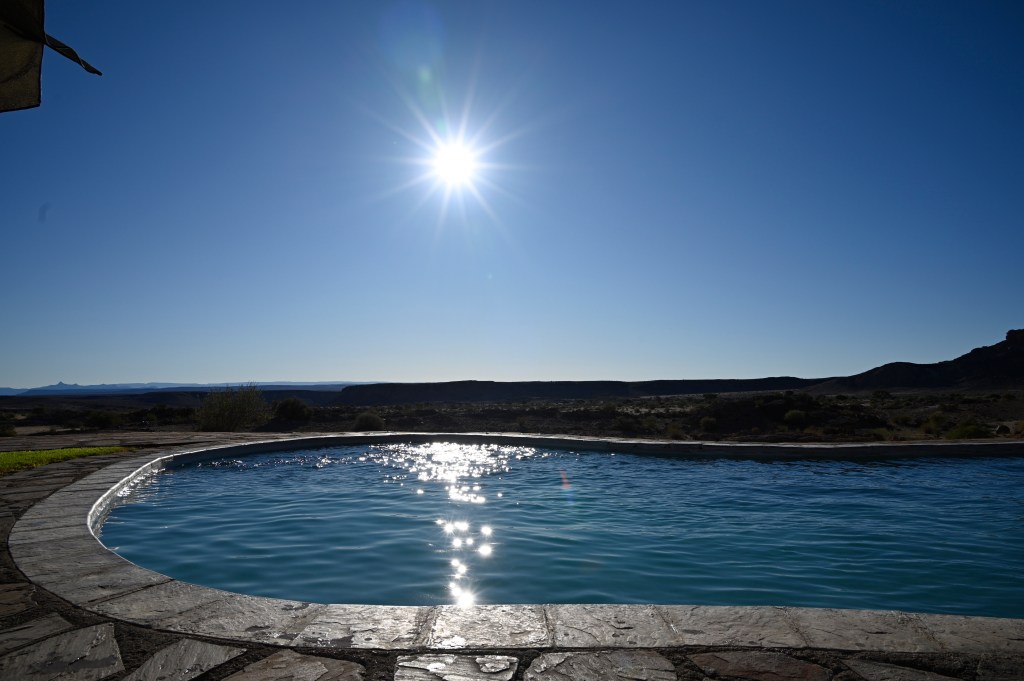
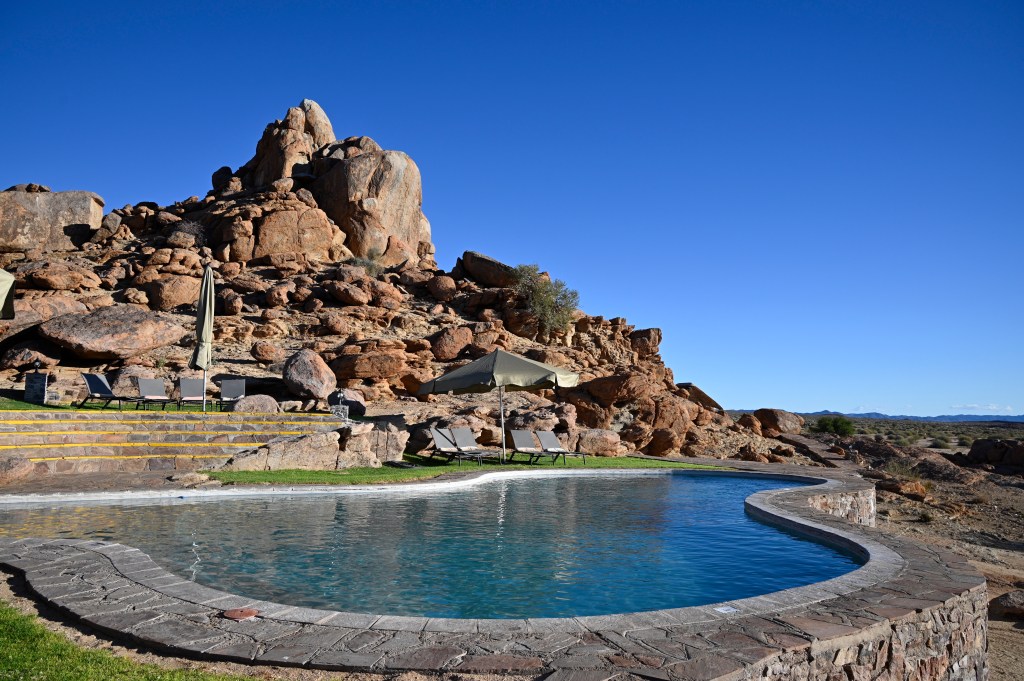
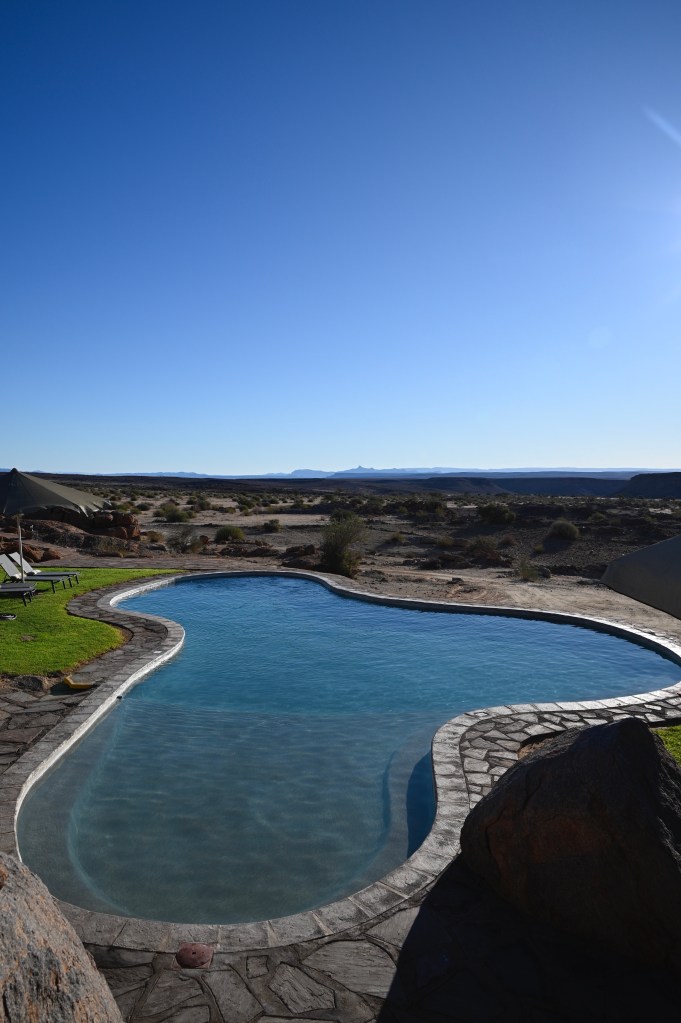
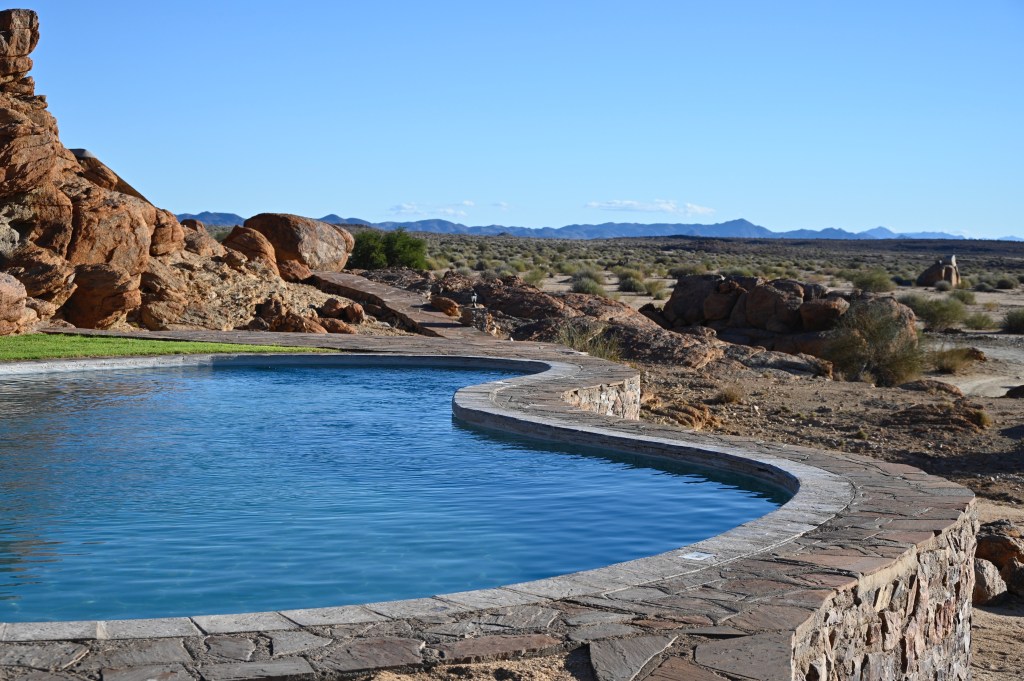
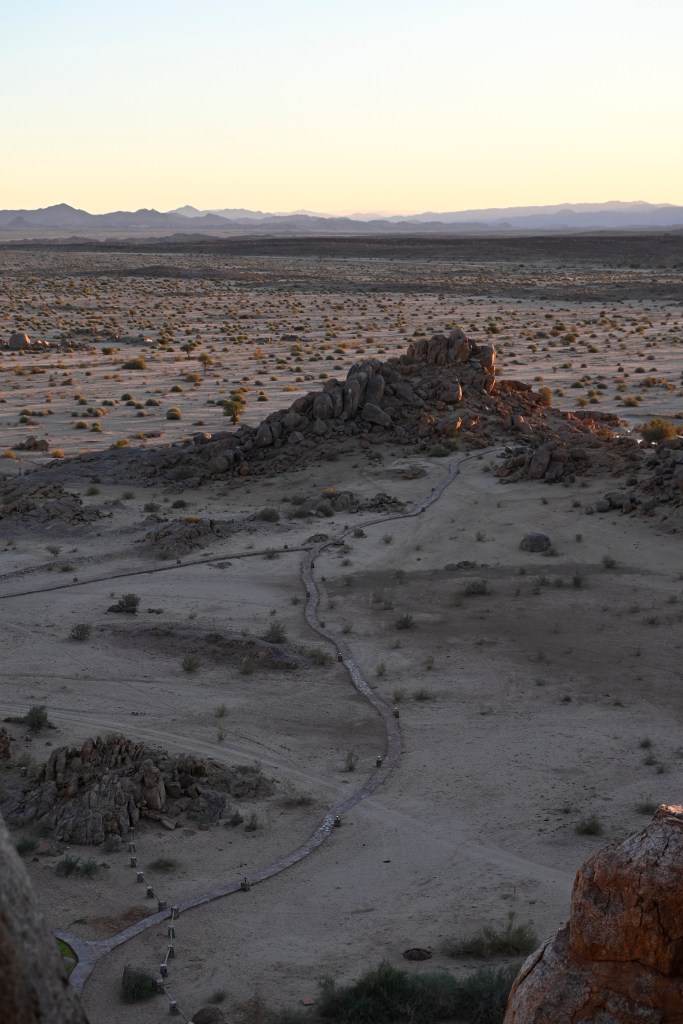
The swimming pool at Canyon lodge is very nice. It is a little away from the main living area, so you must take a small walkway there, but it’s not far. When you come there and see the view, you don’t want to leave. There are sun-beds, umbrellas, towels available and also some wifi, even not strong. There is a bar, but that was closed when we were there. It might be different in the high season.
Vegetation
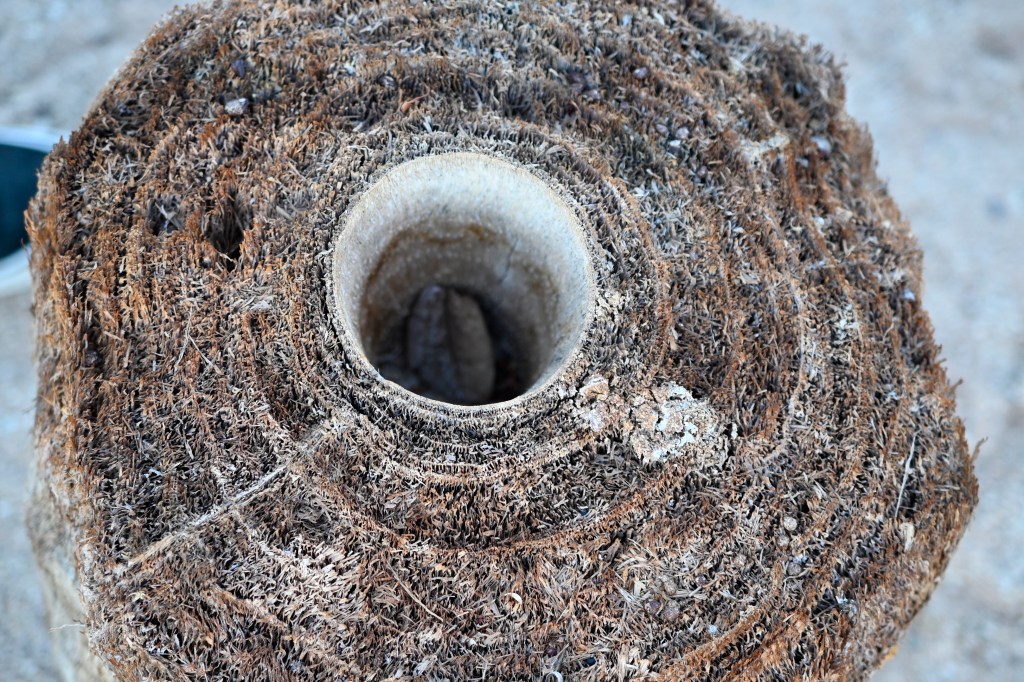
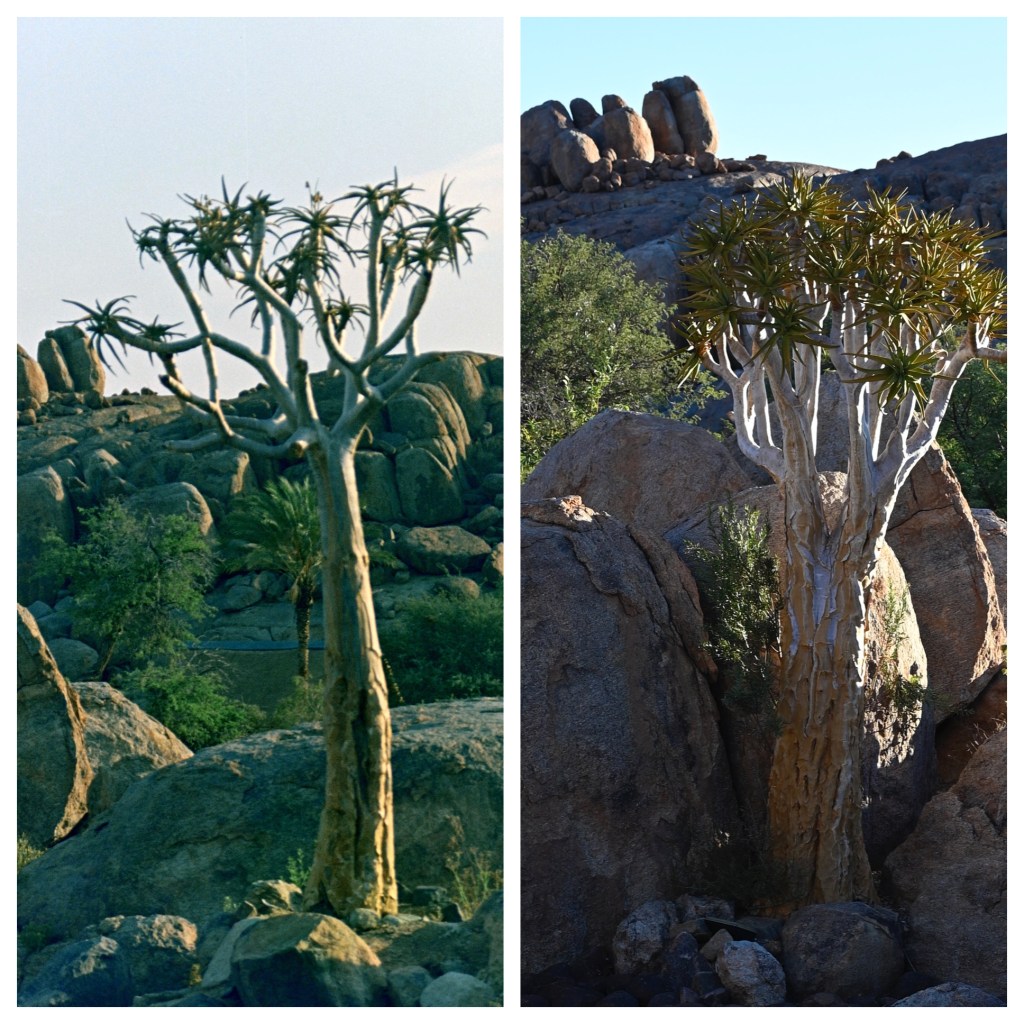
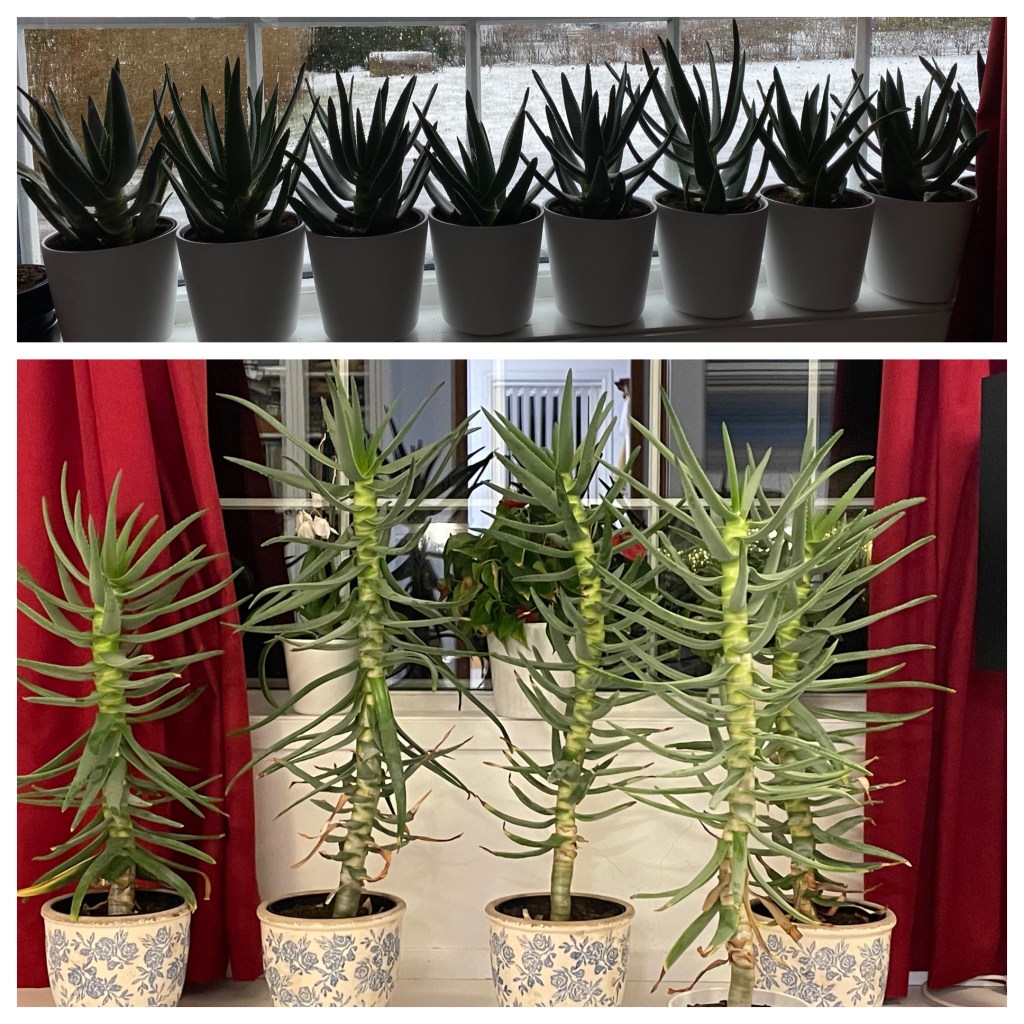
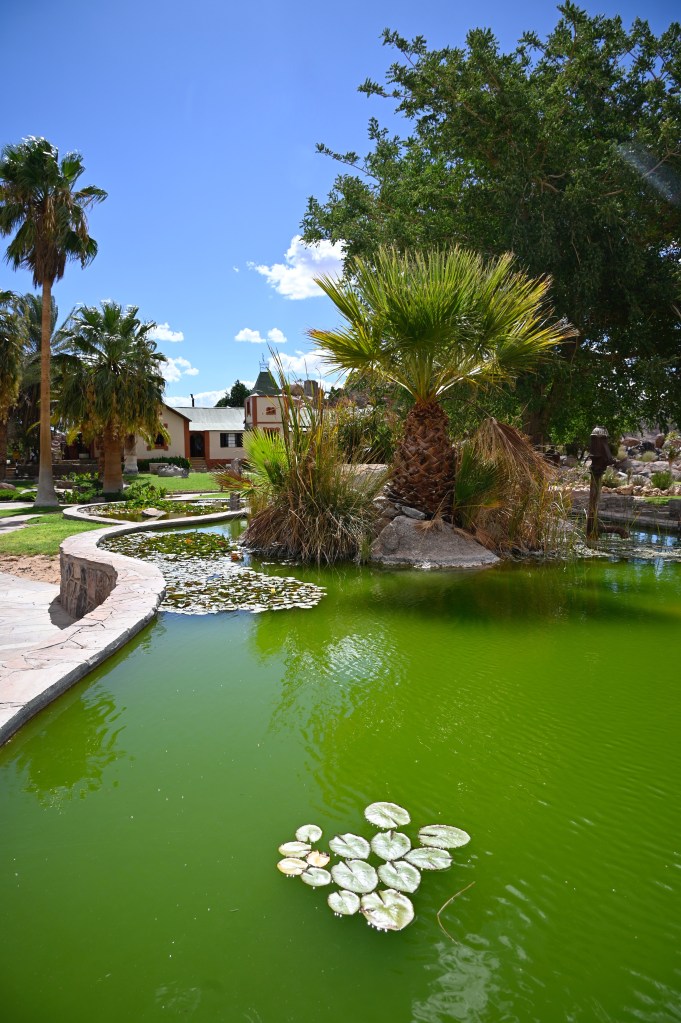
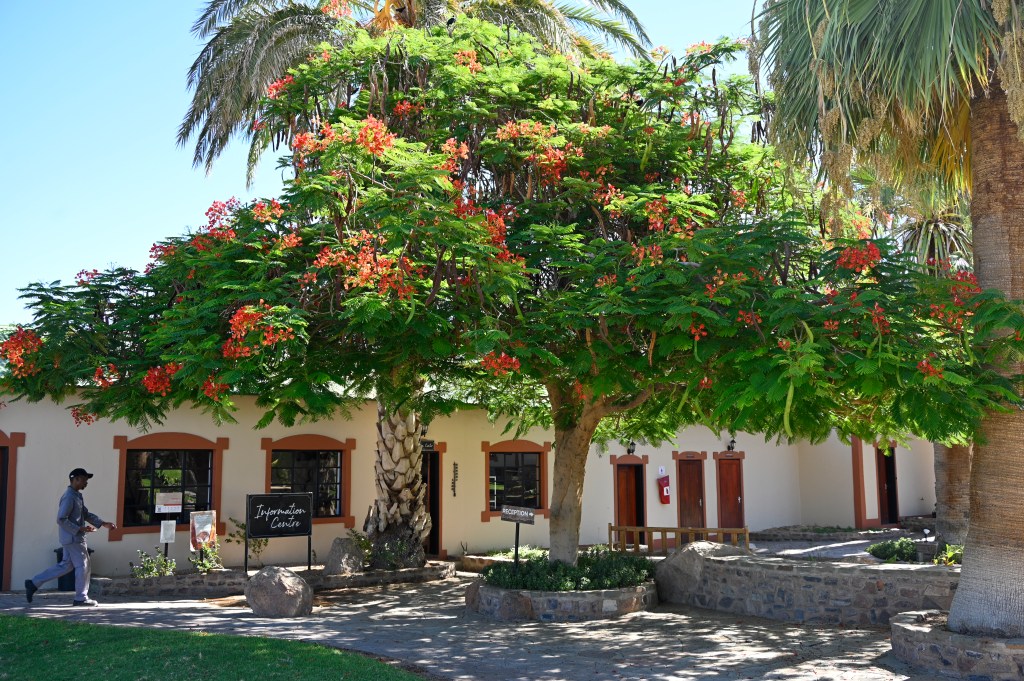
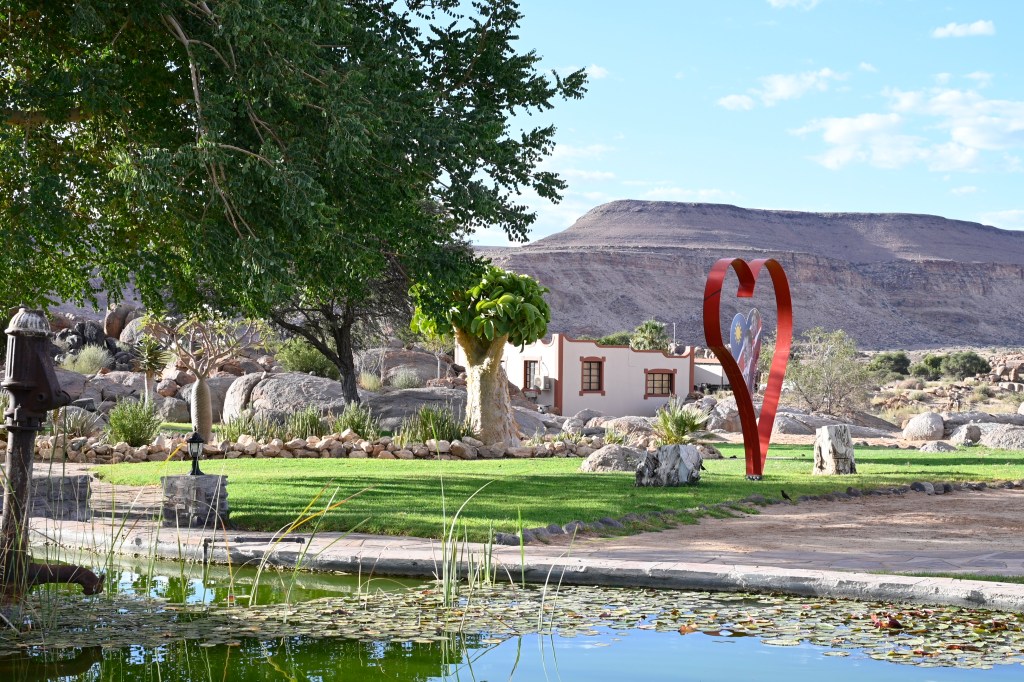
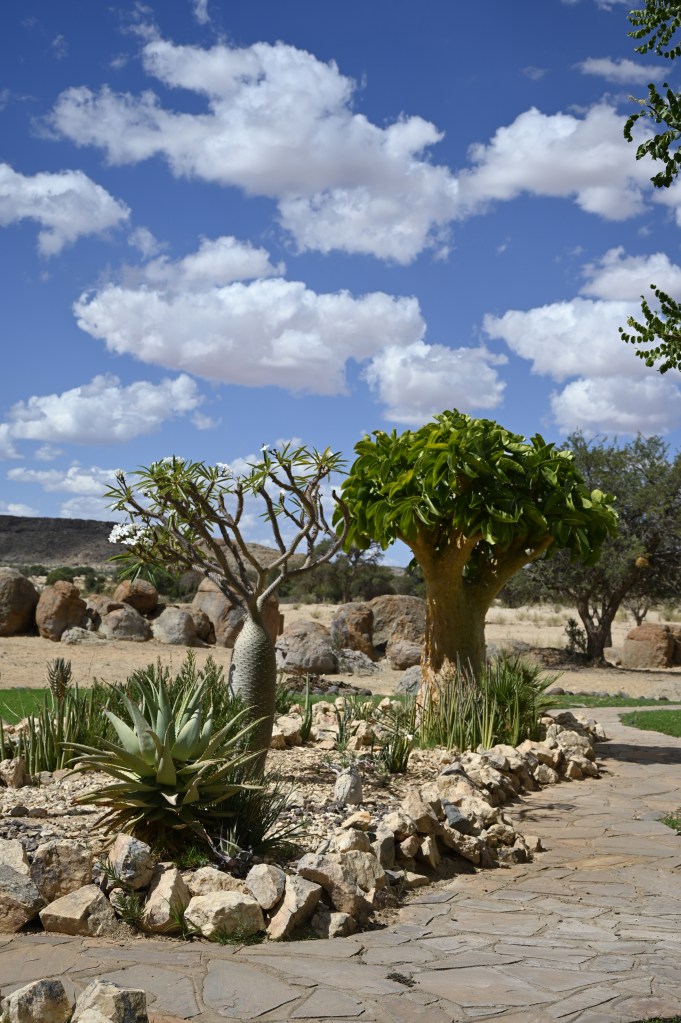
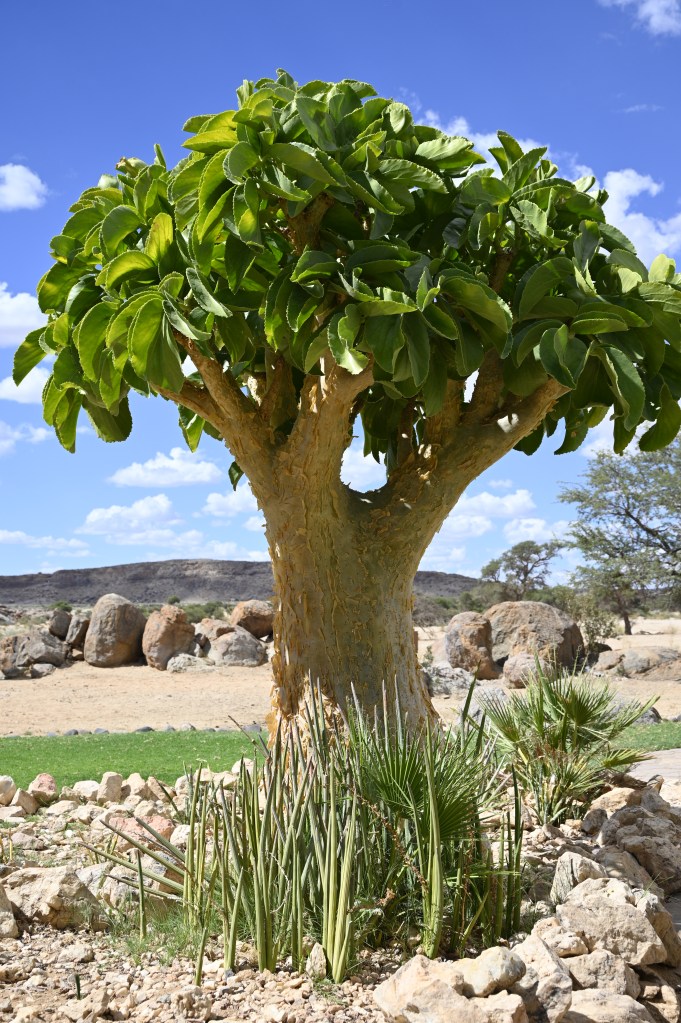
The gardens at Canyon lodge is really beautiful. It was something with the rock formations that allowed water to stay in this place and the had a natural well, that had been there for ages. A Quiver tree (Kokerboom) which was there 26 years back was still there, only a little bit wide and taller. We were told that they could live for 300 years. The reason for the name was that the inner stem of the tree is hollow and this part could be used to carry quivers. The tree is located only in this area of southern Africa, and you can see them on the driest places, often on top of or on the side of a rocky mountain. Outside of Keetmanshop, there is an are with many of these trees, called Quiver Tree Forest, which we have visited a couple of times. Eight years back, my husband visited the place and brought me some seeds, which have grown very well in my living room, i now thus have a little “quiver tree forest” in my living room in Norway, and wonder what shall become of these when they grow into large trees.
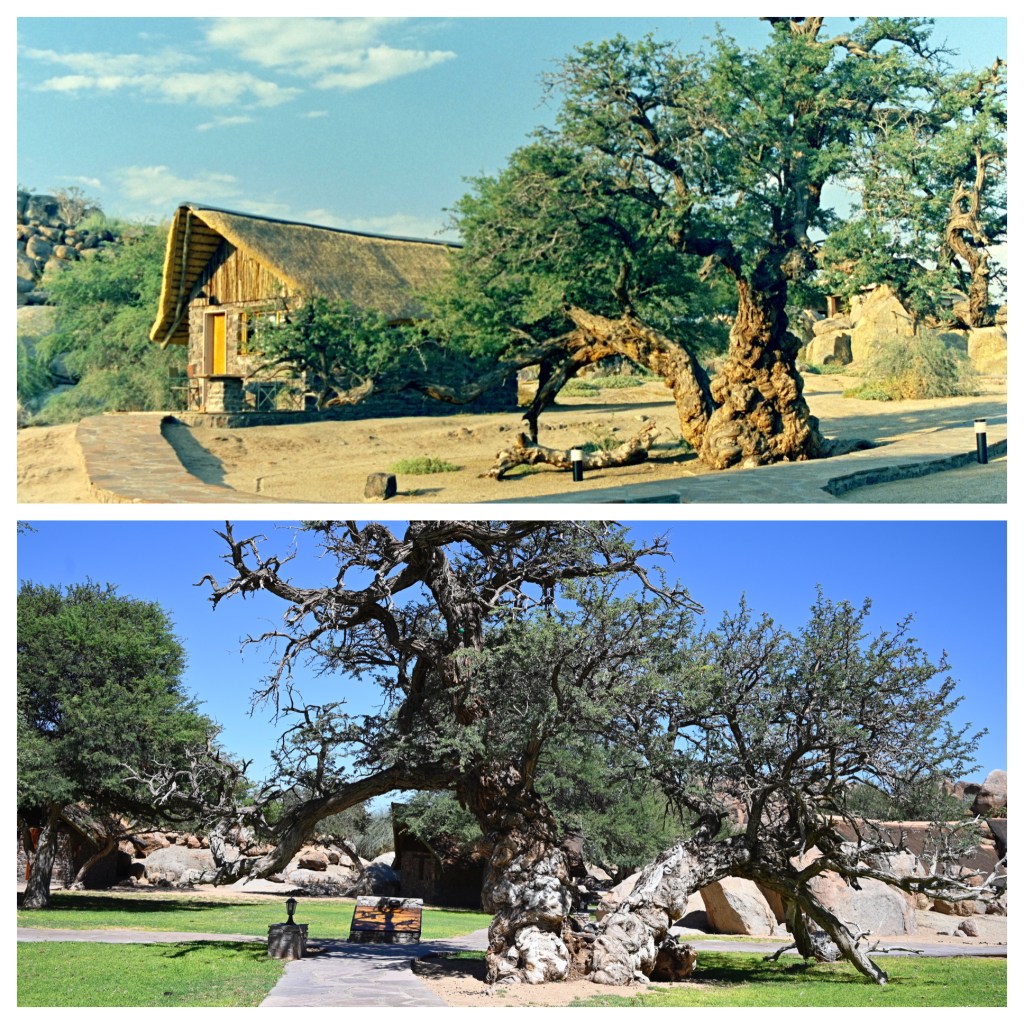
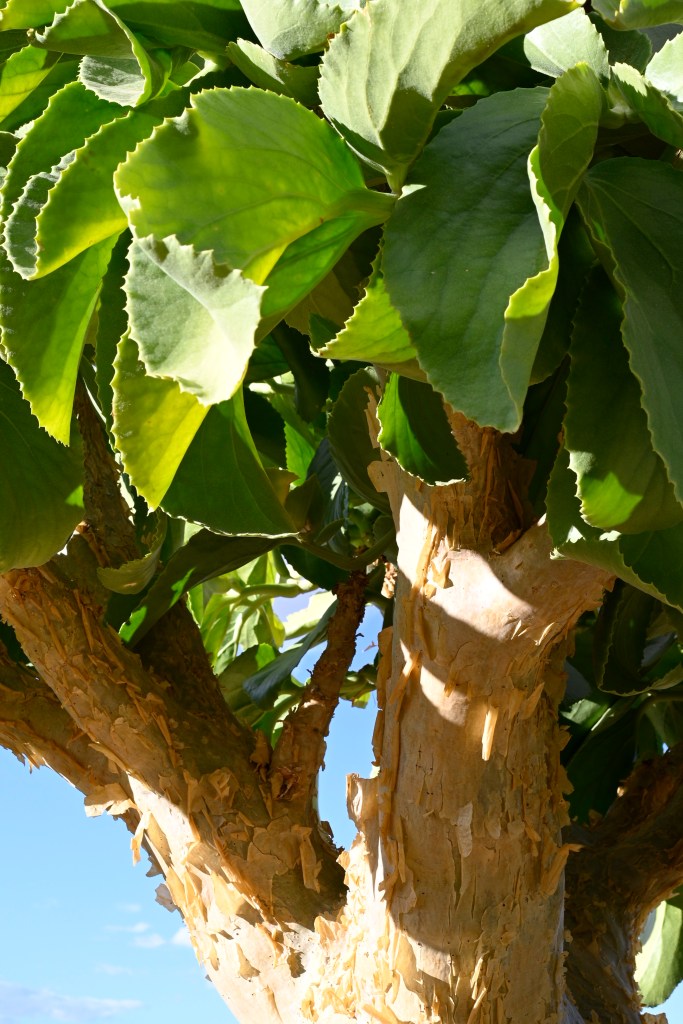
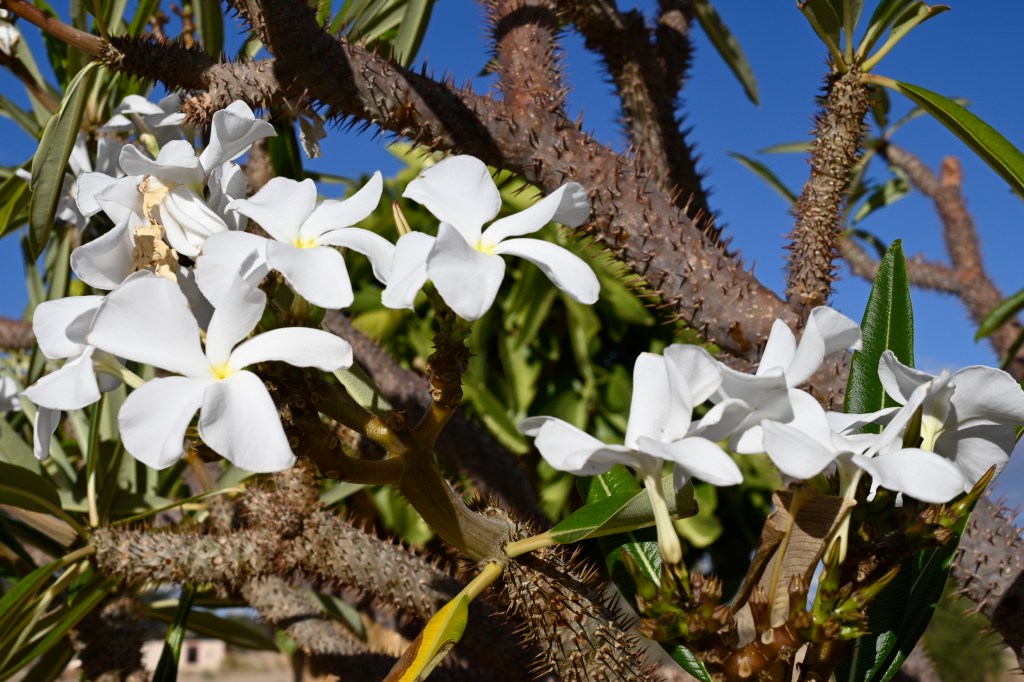
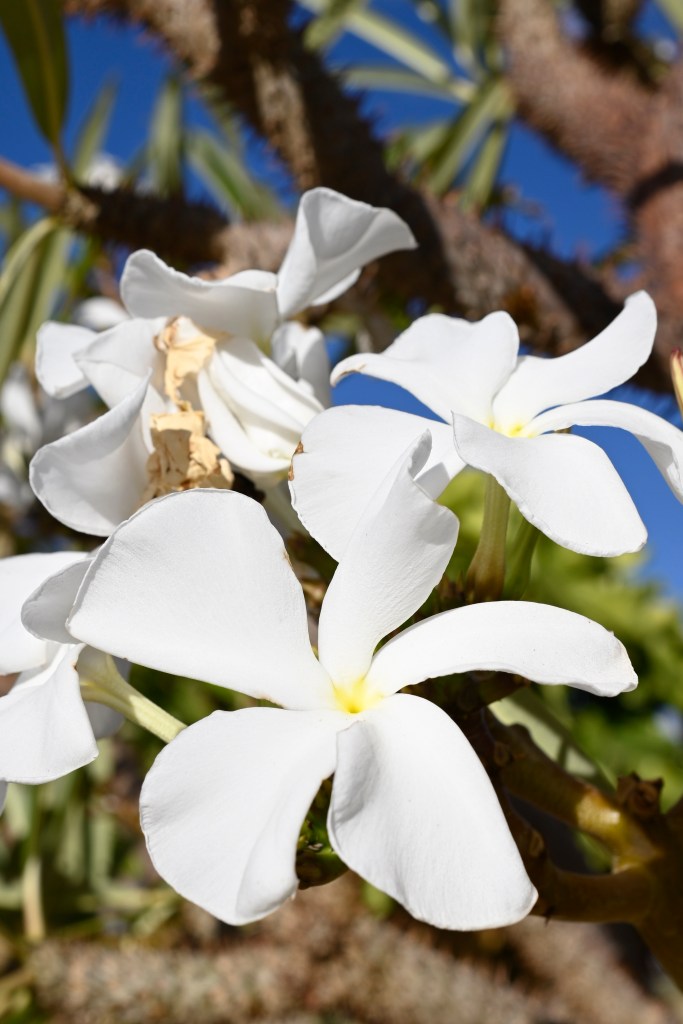
We also hot to se many other plants, trees and flowers, but I lack names on most of them. One bush that I have seen many places, and especially in the dry, flat and stony highlands between Aus and Keetmashoop, was the “Milk bush”. According to our guide this was very poisonous, so I’m glad I never tried to look closer at it. He used a long stick to break off a small branch and a white, milky liquid came out. This was apparently used by the San people, to dip the tip of the arrows in. That would weaken the prey when they got shot by the arrow and make it more easy to hunt the prey down. The oryxes was one of the few animals that could eat this plant, but just in small portions.

 Laila’s travel blog
Leave a comment